







Question: Please discuss in five hundred words explaining how the articles connect the resources to concepts in Chapter 8. I have upload chapter 8 of the
Please discuss in five hundred words explaining how the articles connect the resources to concepts in Chapter 8.
I have upload chapter 8 of the text book below and the articles to read.
(Samovar, L. A., Porter, R. E., McDaniel, E. R., & Roy, C. S. (2017). Communication between cultures (9th ed.). Cengage Learning.)
Pulled away: the experience of bilingual nurses as ad hoc interpreters in the emergency department - PubMed (nih.gov)
Overcoming Language Barriers in Health Care Health Matters UF Health Jacksonville University of Florida (ufhealthjax.org)
https://www.thehastingscenter.org/medical-interpretation-in-the-u-s-is-inadequate-and-harming-patients/?mc_cid=66e0e4413a&mc_eid=51c0254489
https://gbpack14.com/how-interpreters-decreased-patient-satisfaction

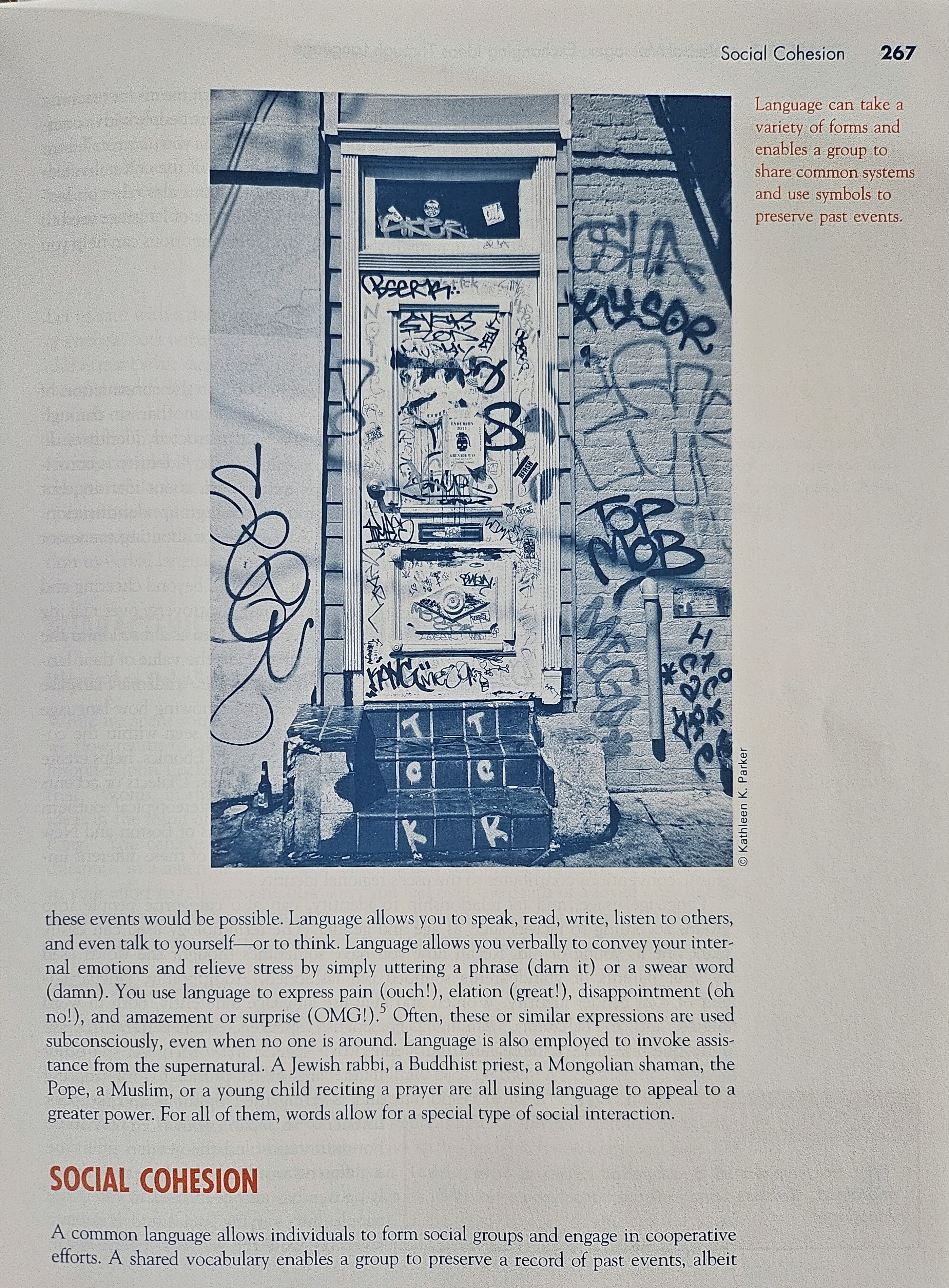
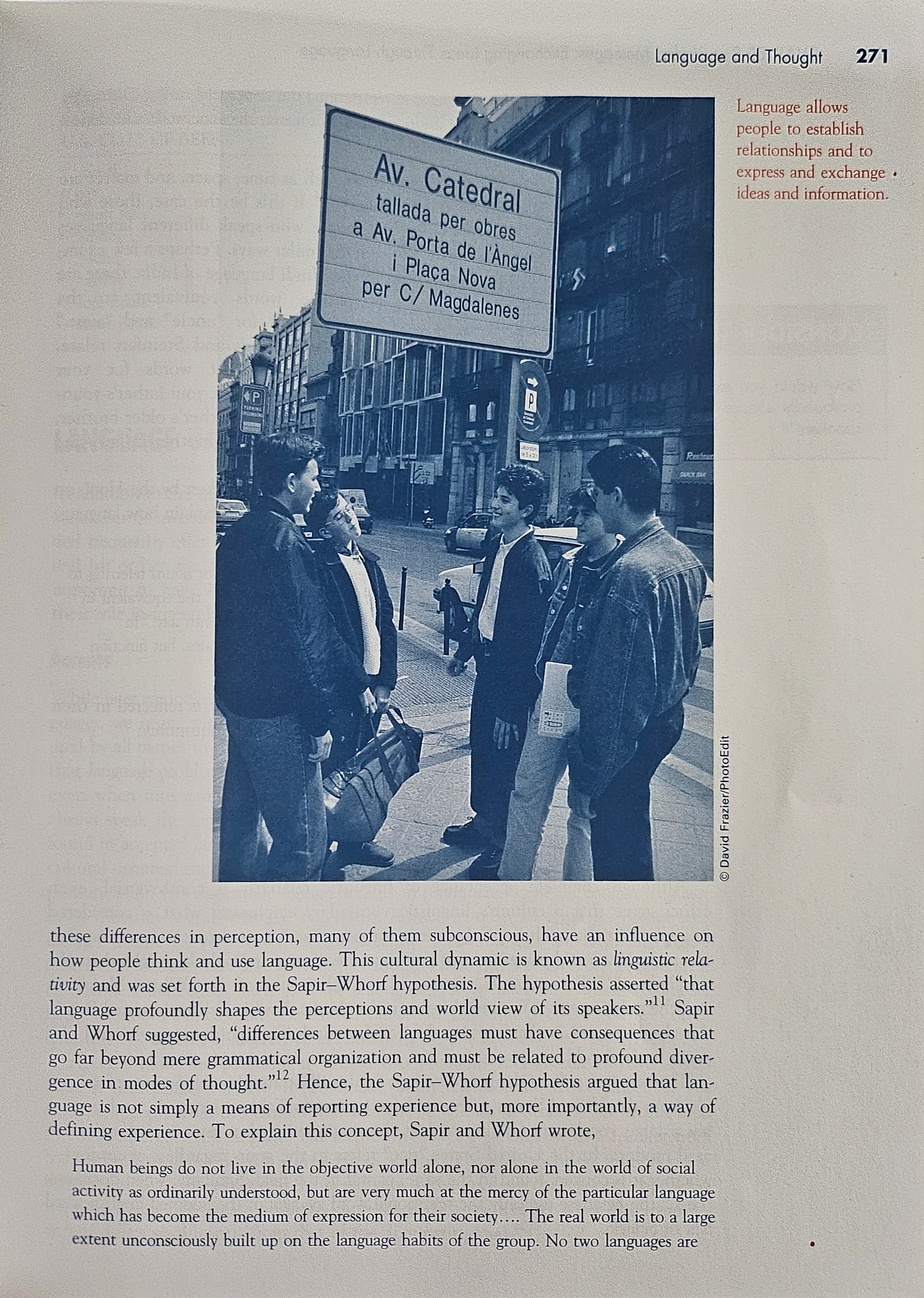
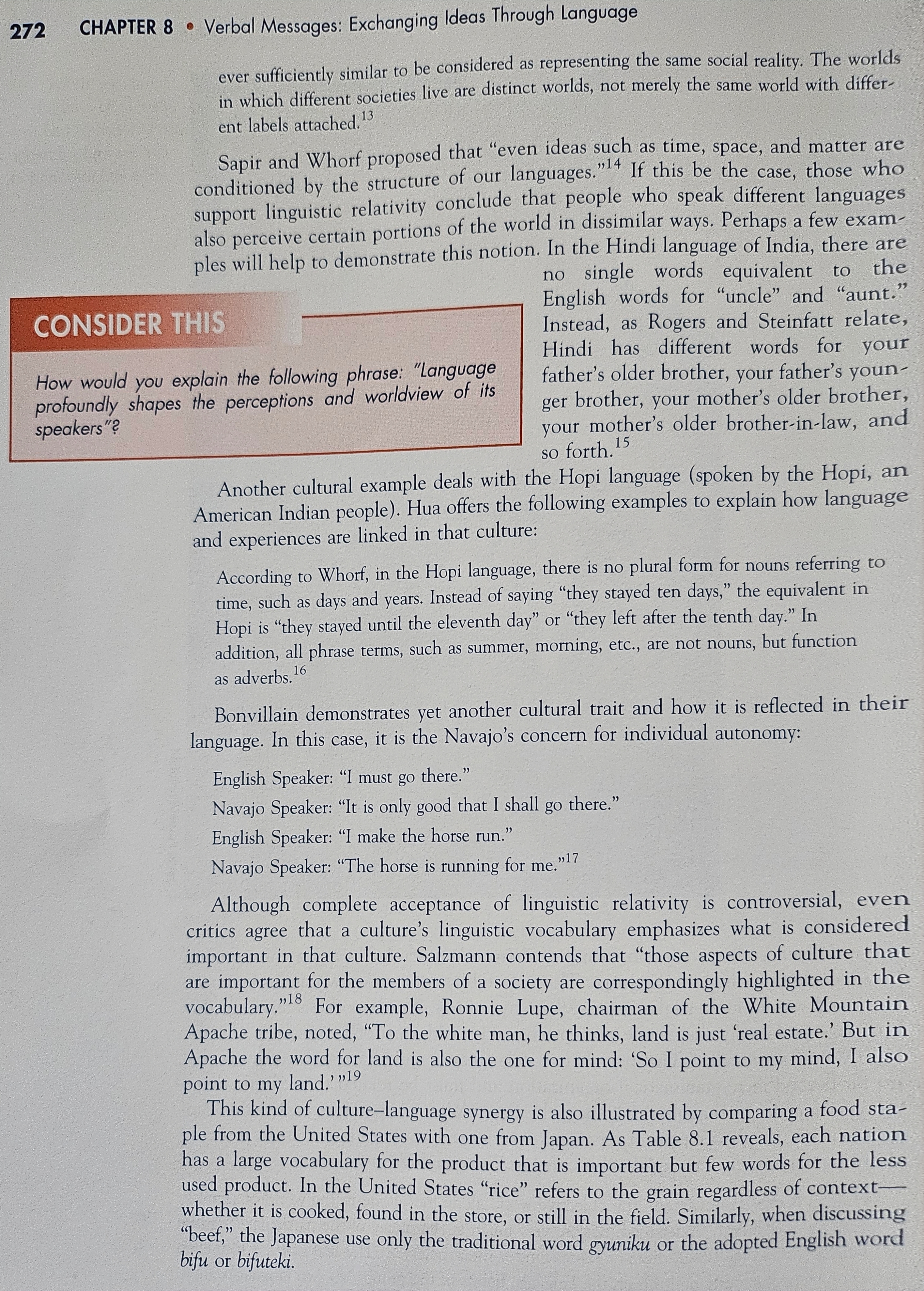
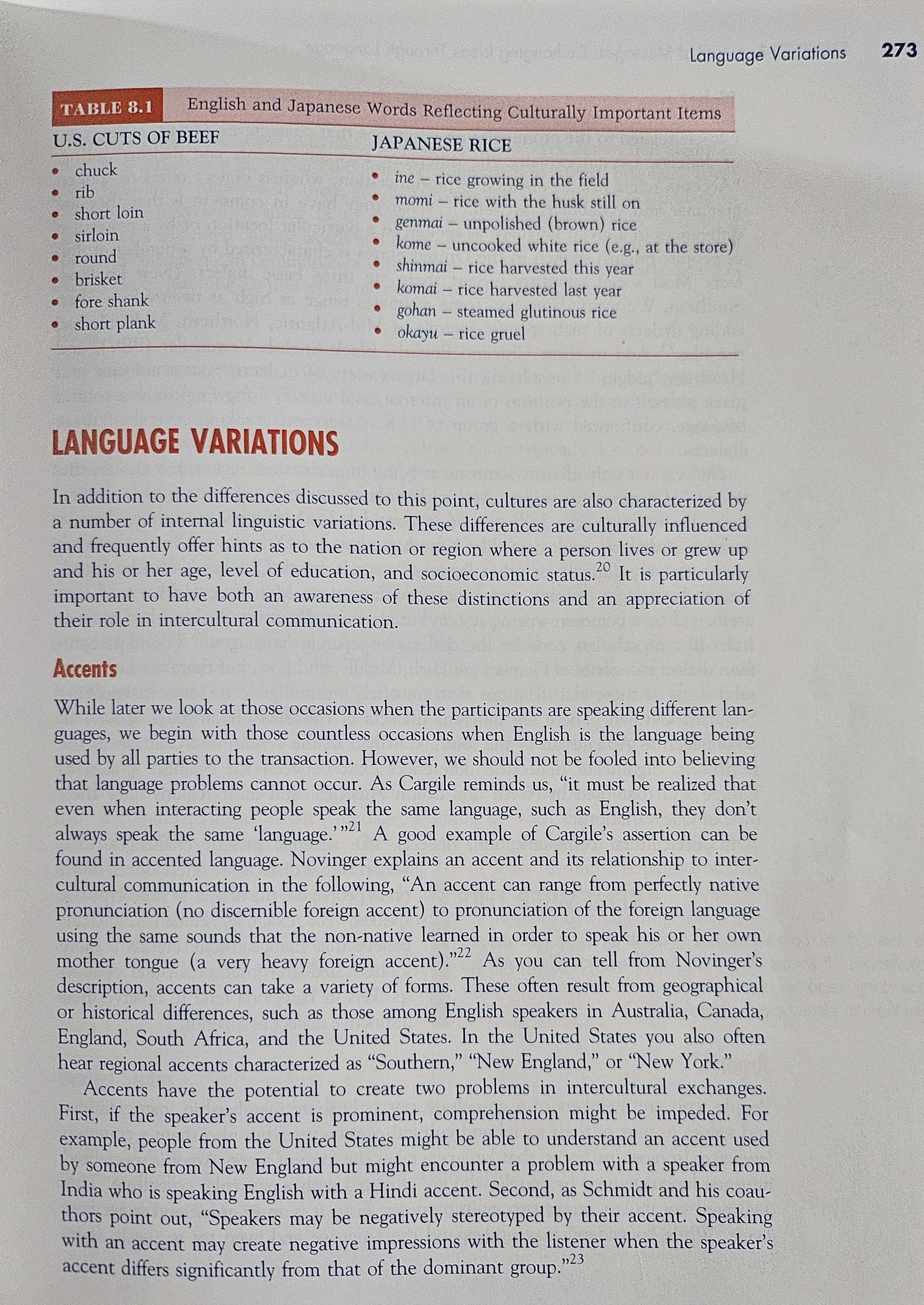
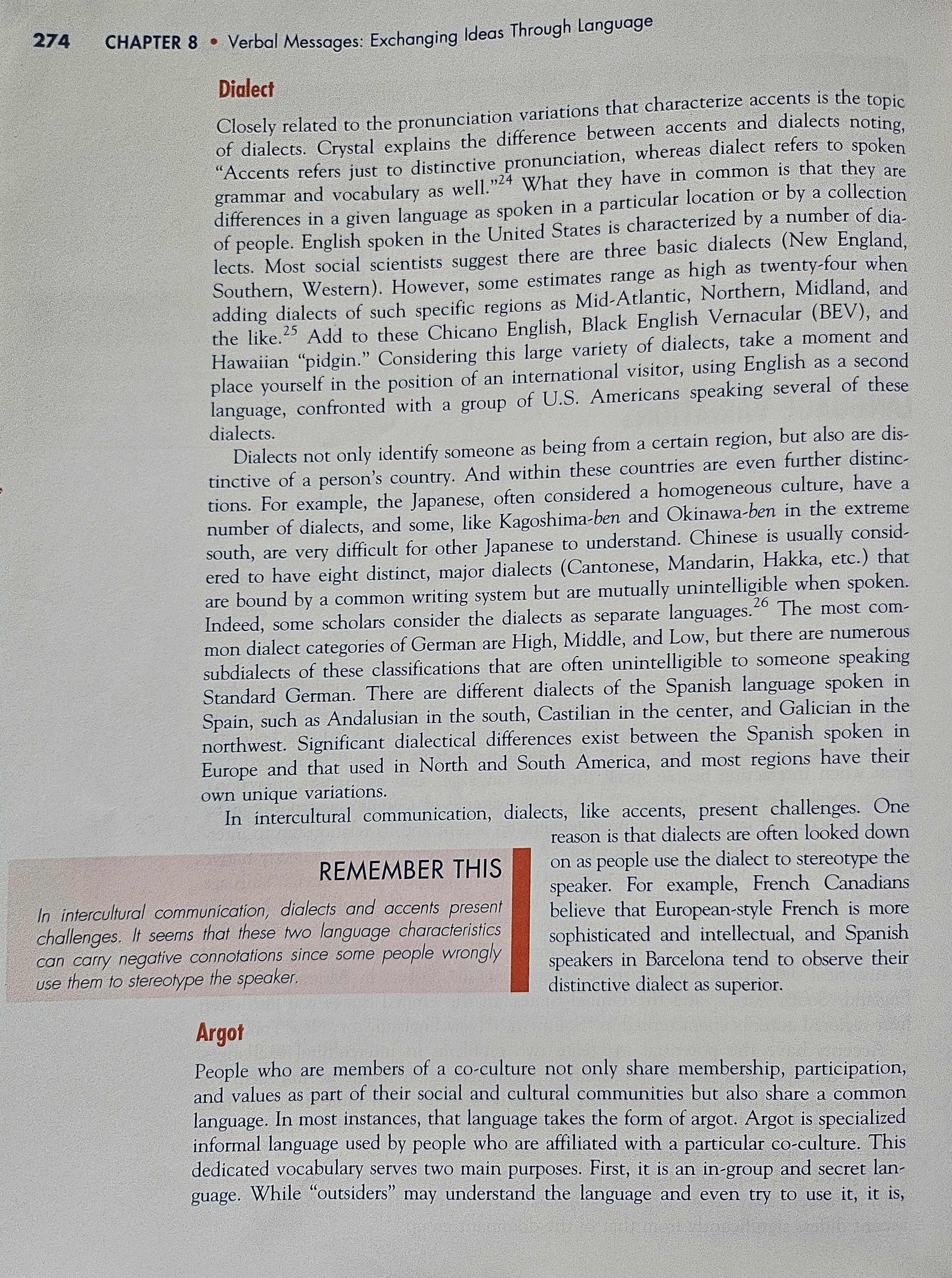
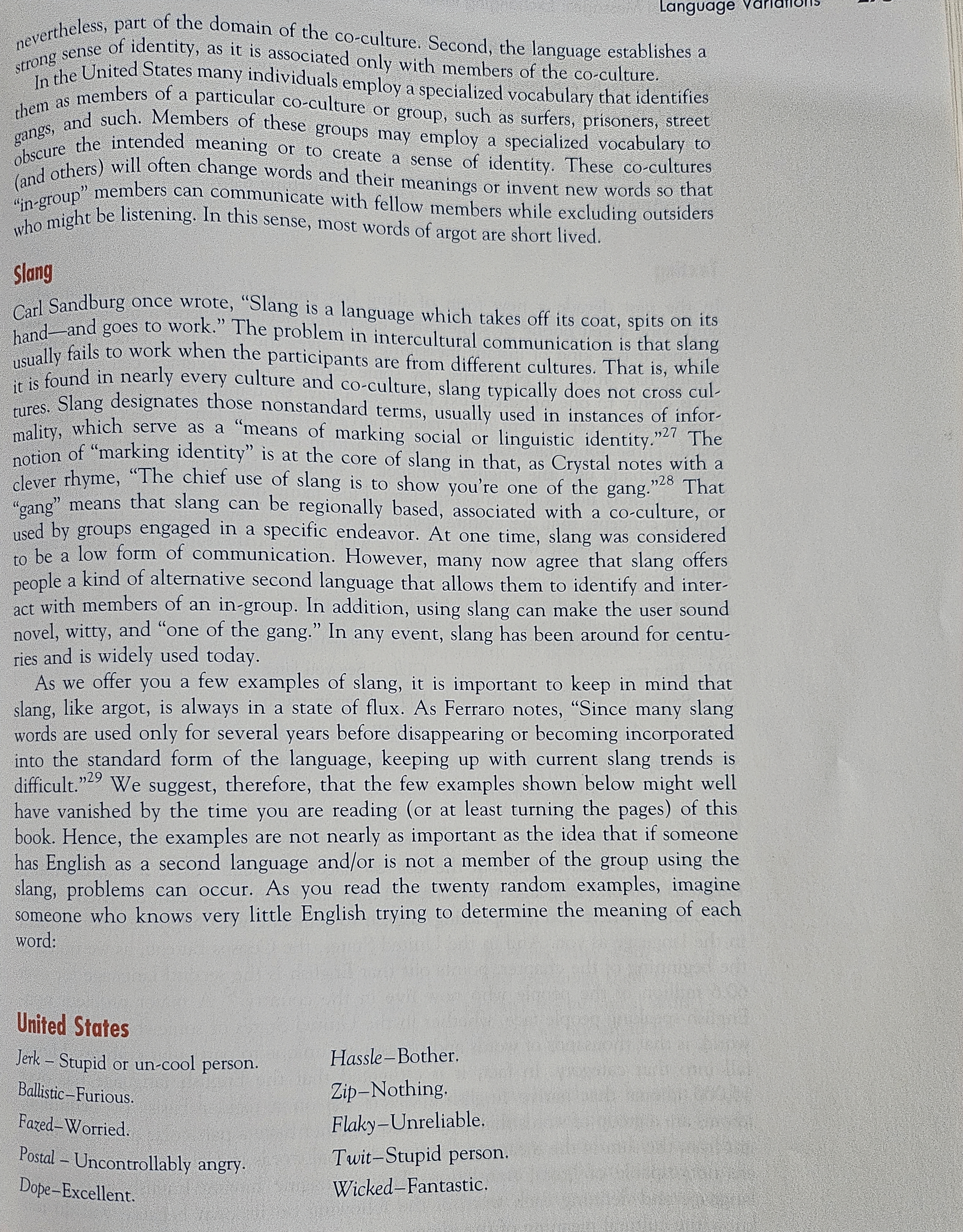
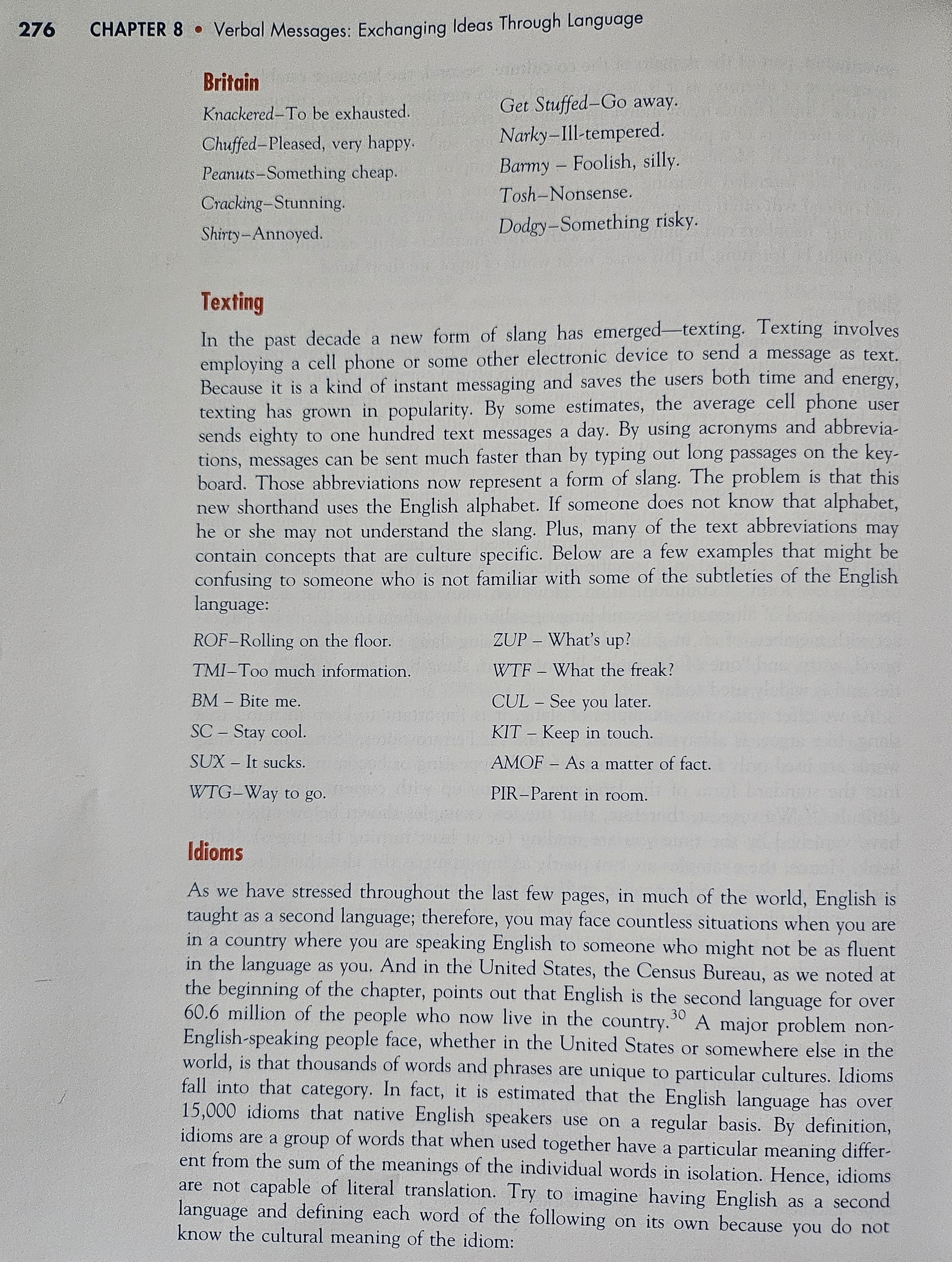
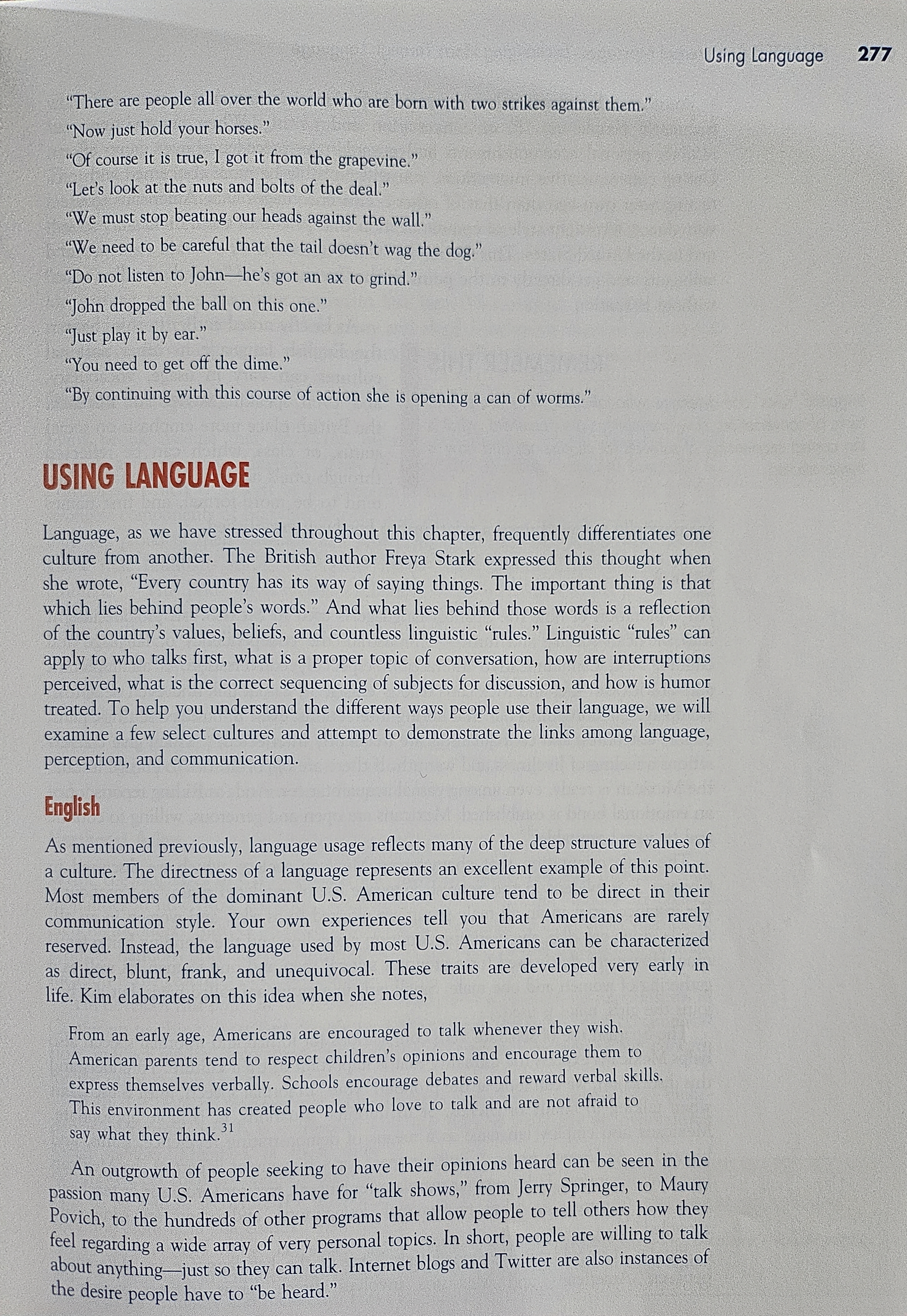
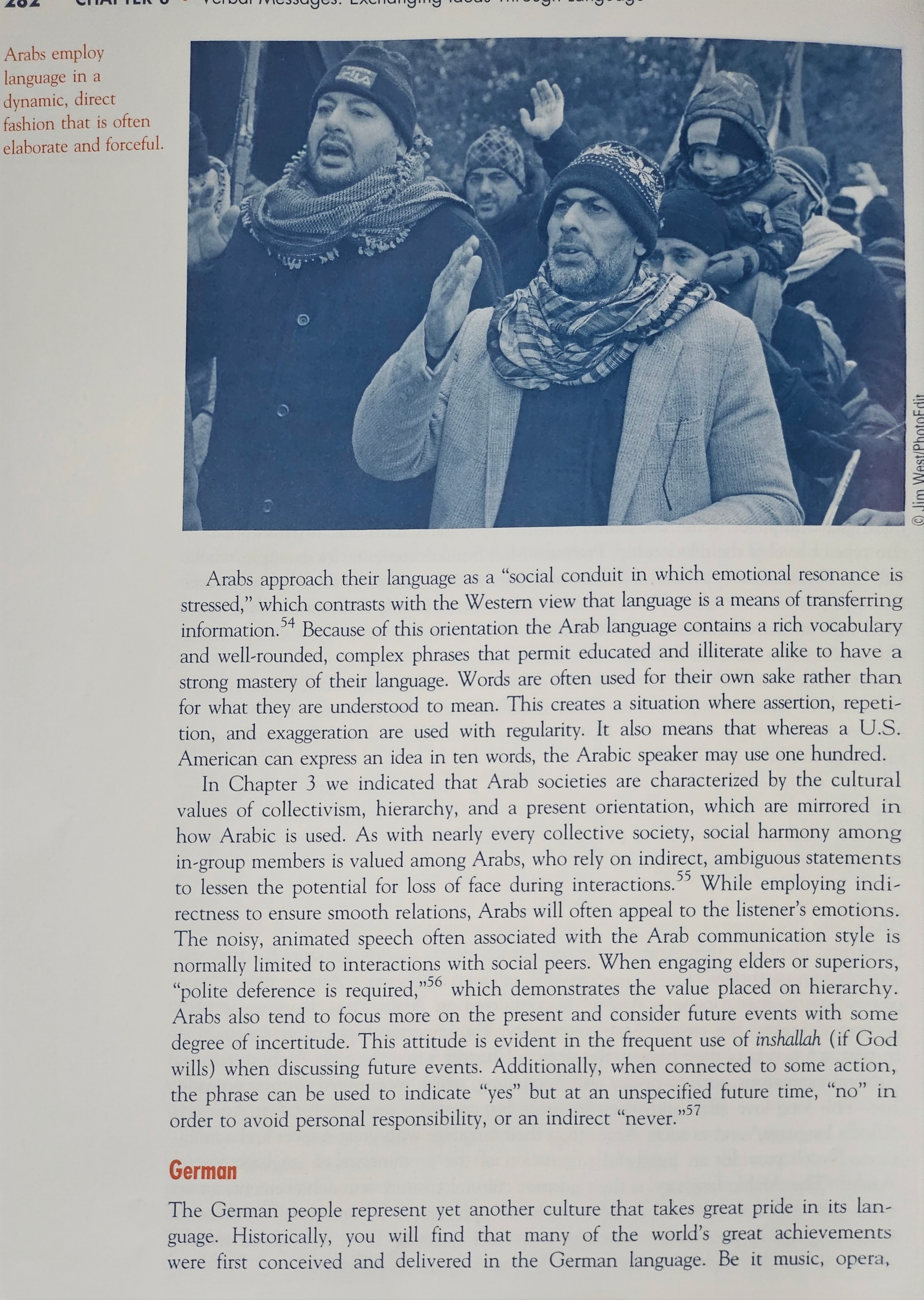
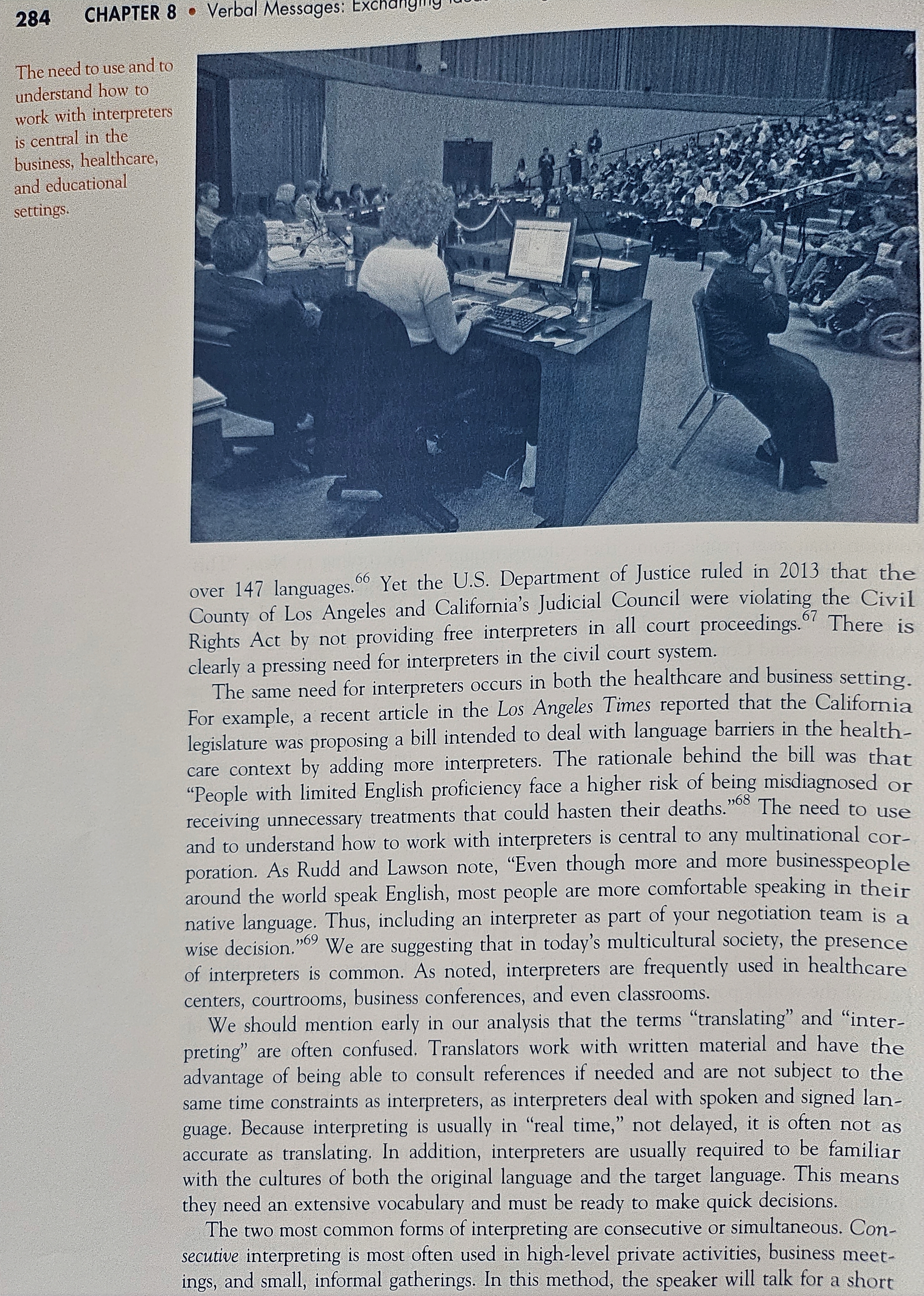
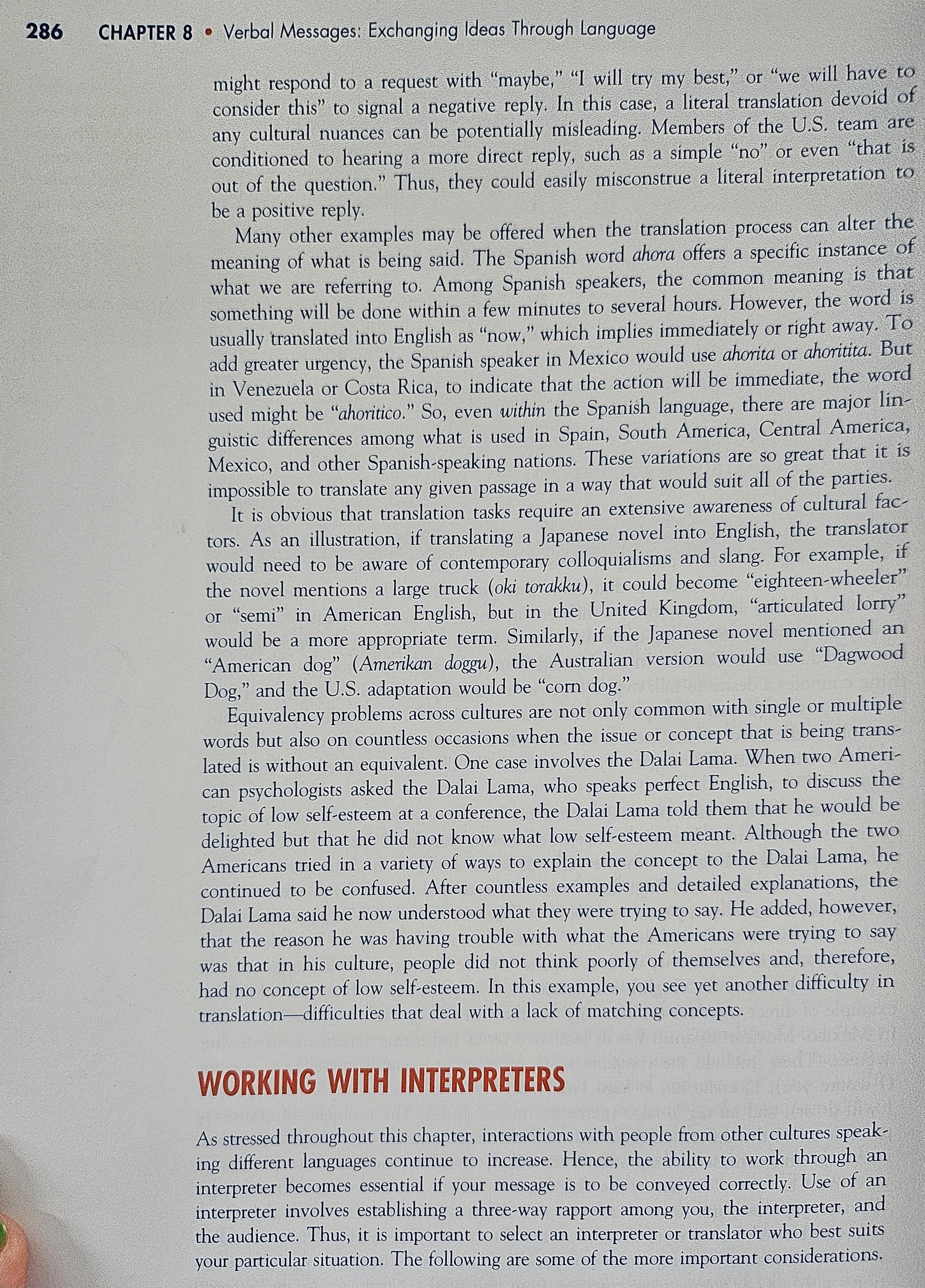
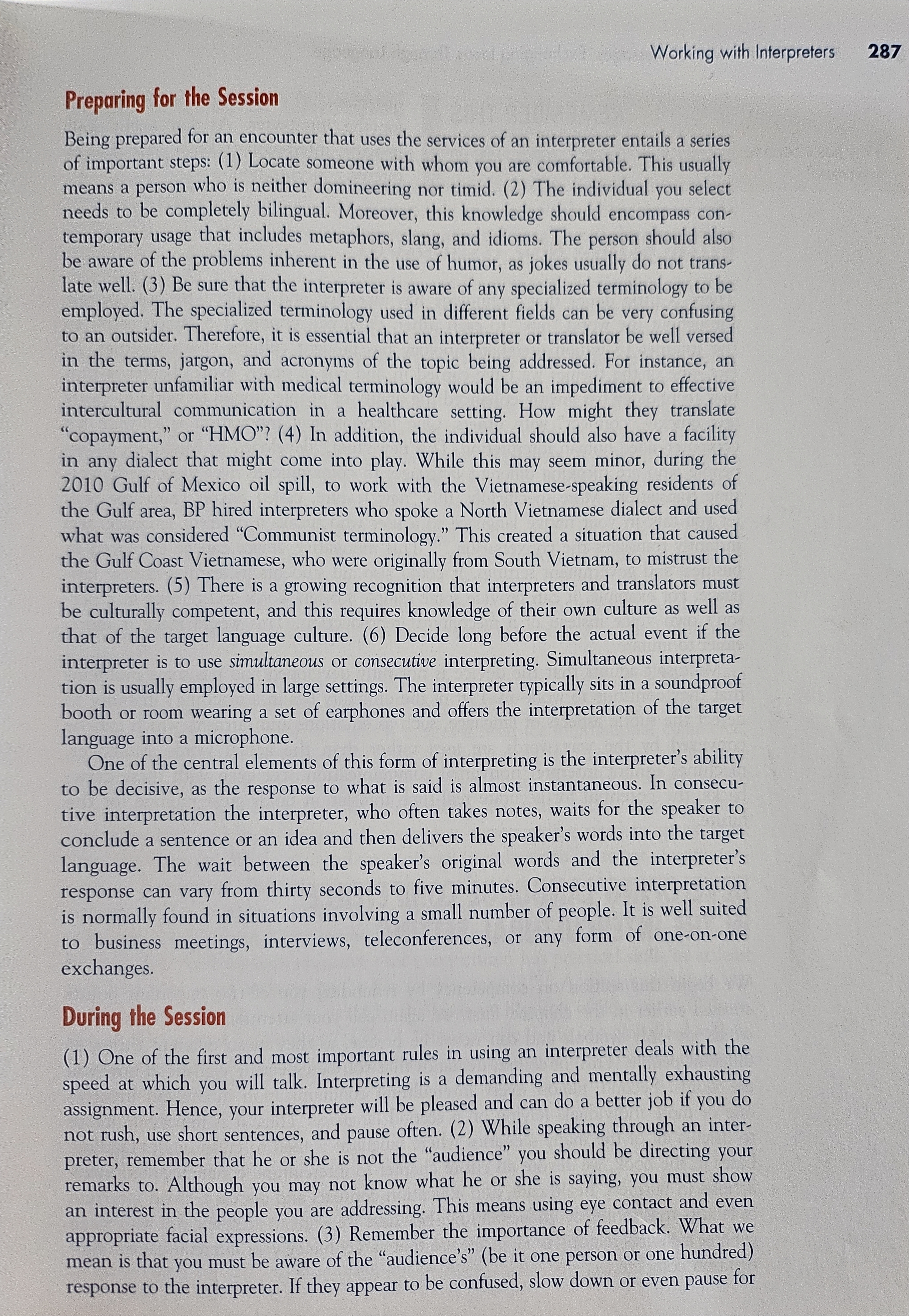
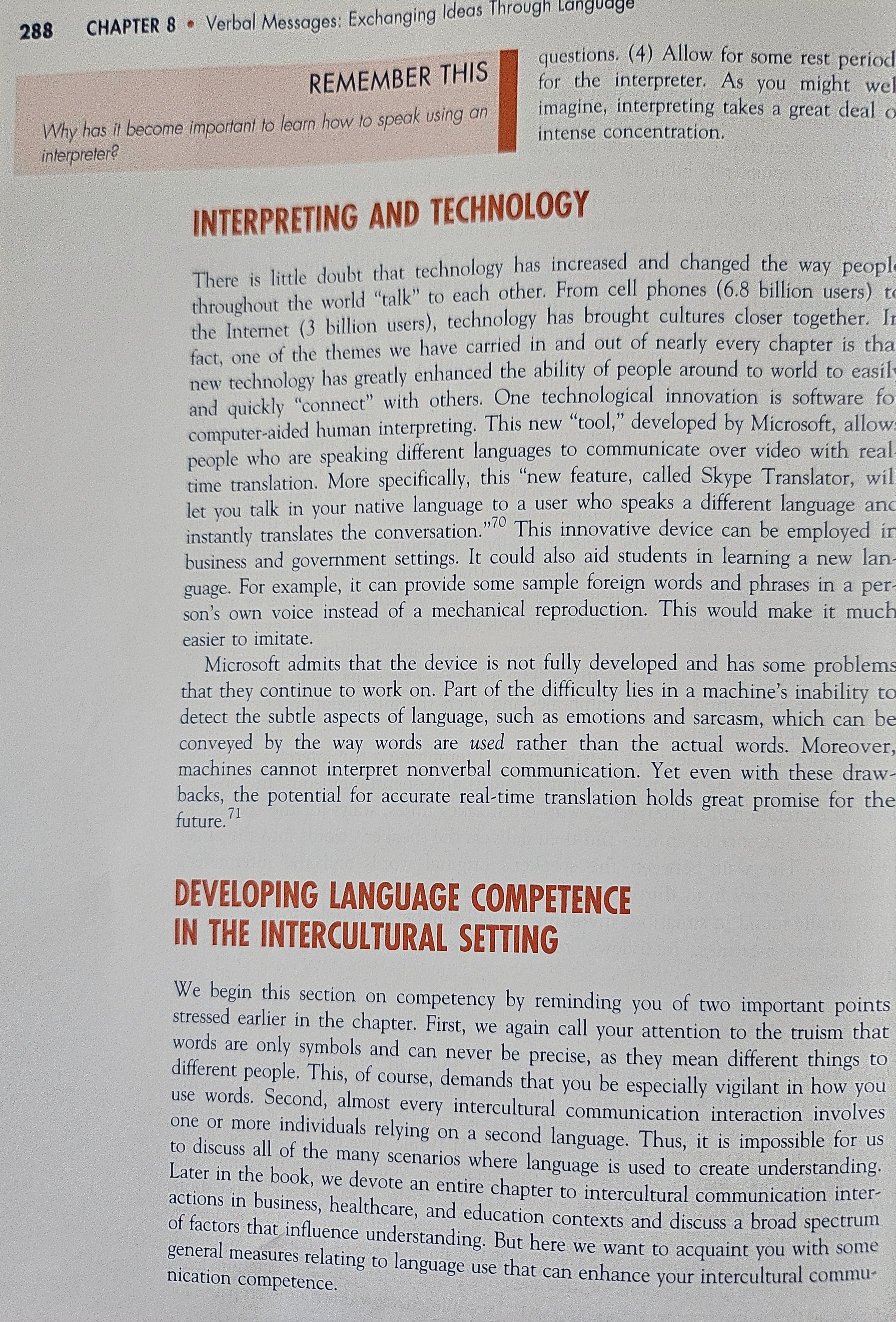
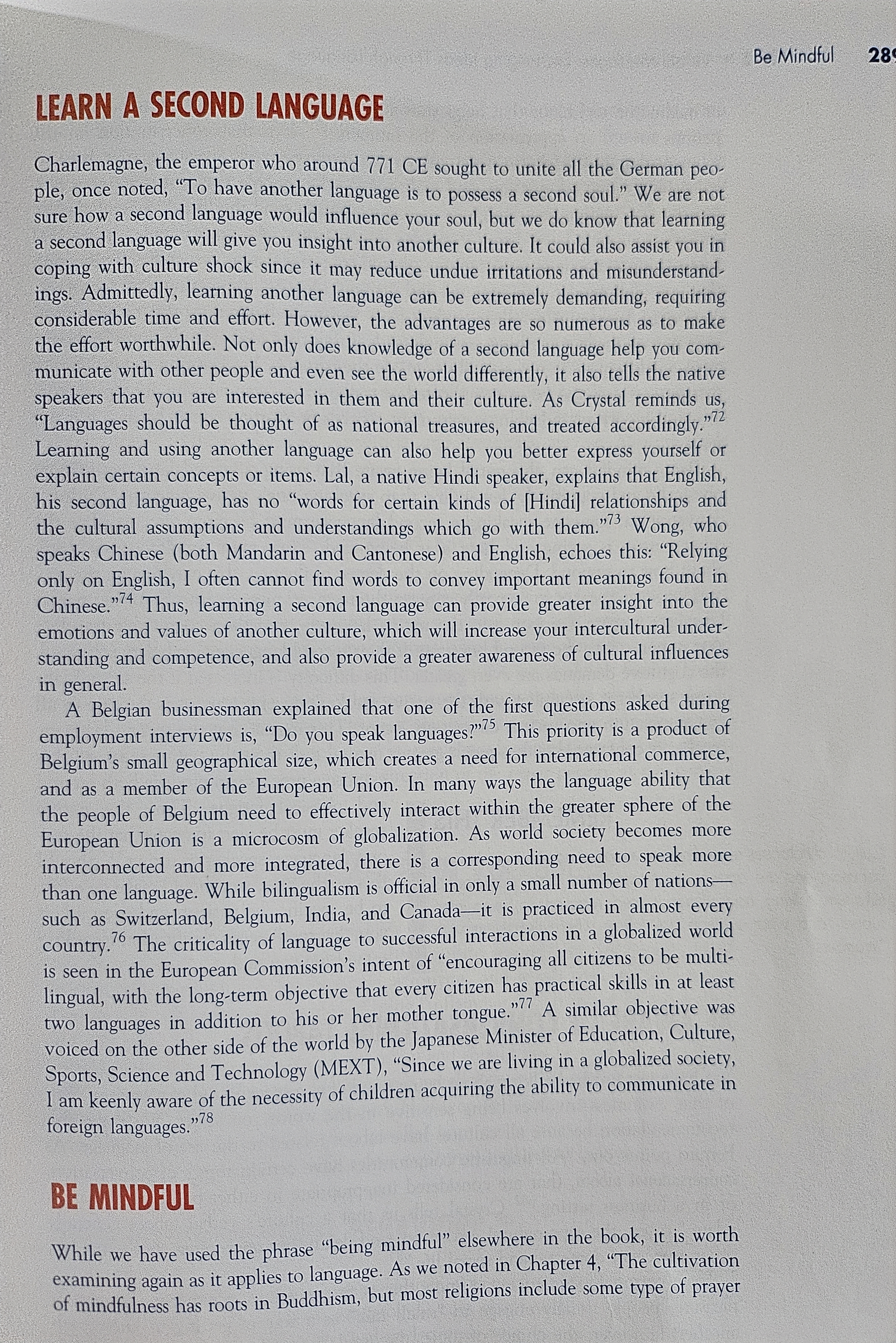
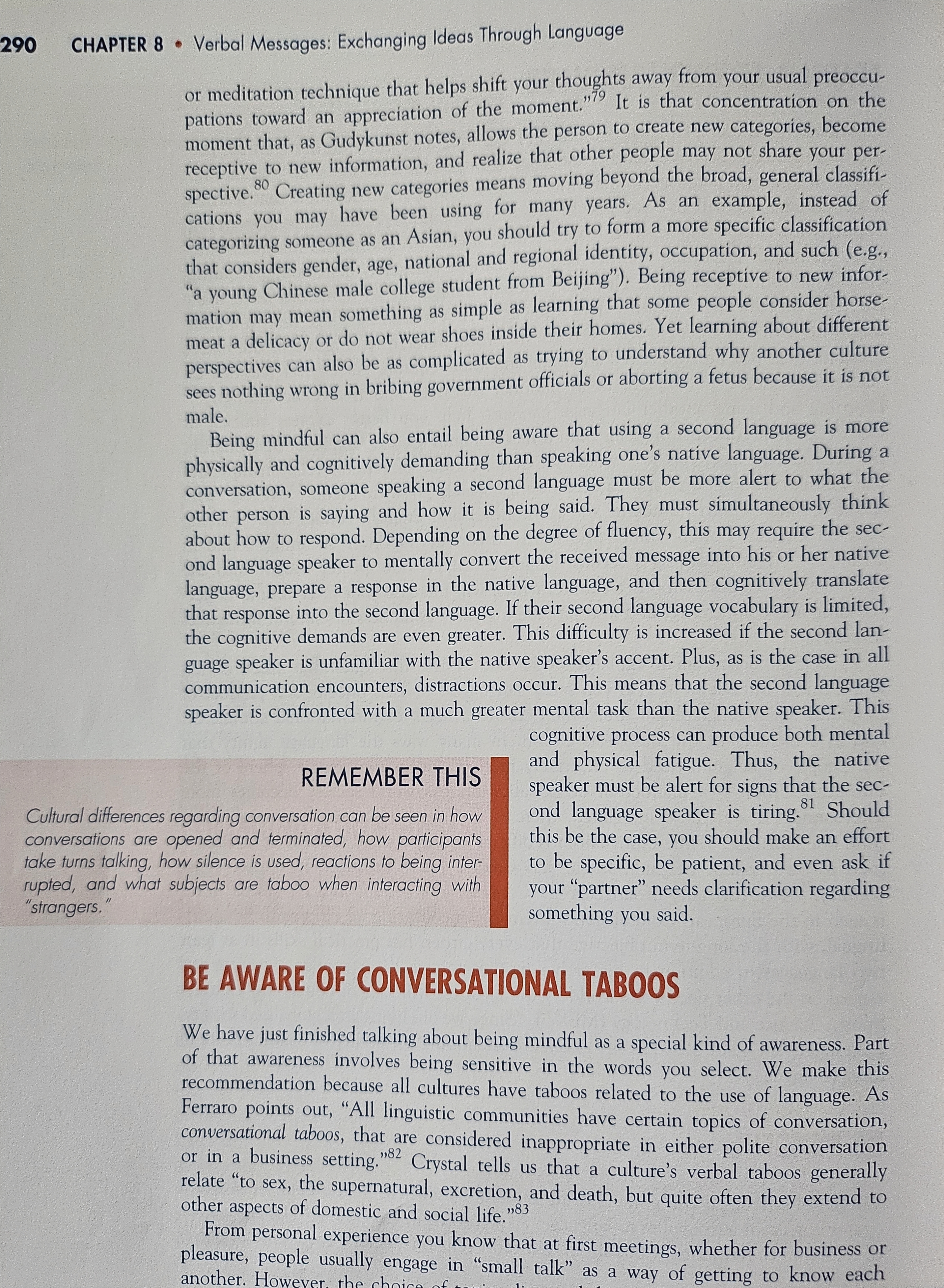
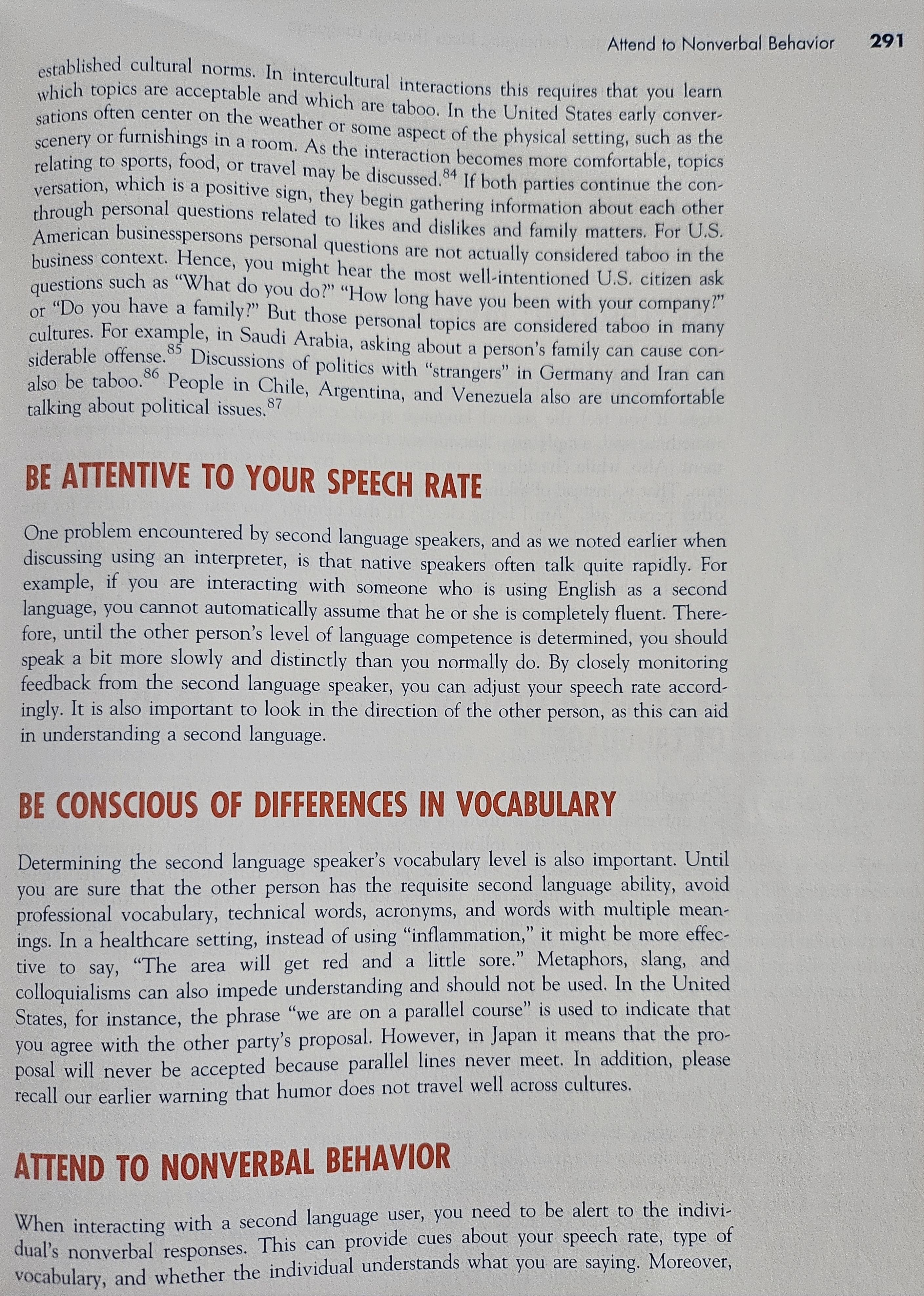
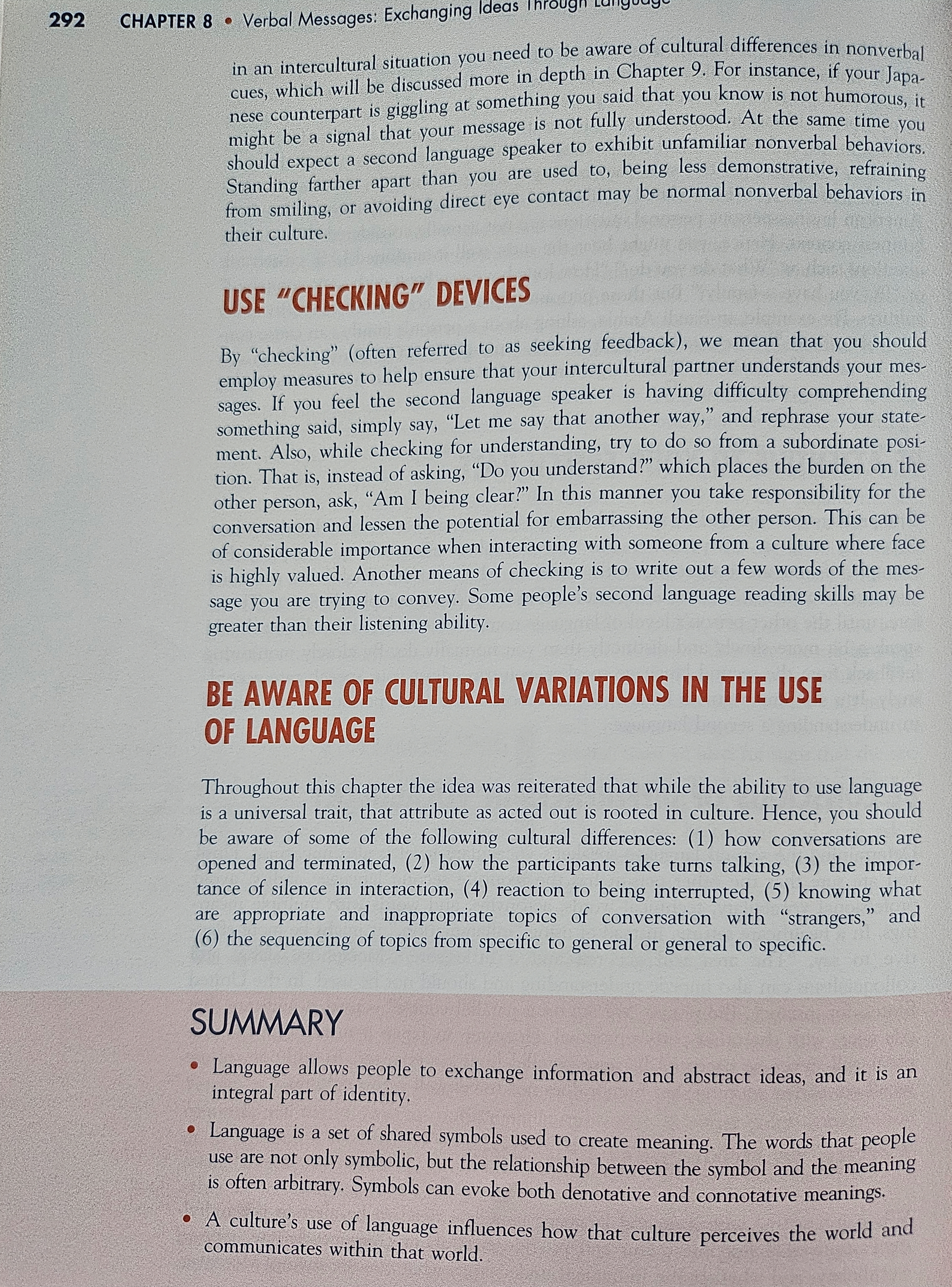
' \"I MeSSches: Ex'hangingldeas TthshI-unguage A language is a part of a culture, and a culture is a part of a language; the two are intricately interwoven so that one cannot separate the two without losing the significance of either language or culture. Q ' DOUGLAS BROWN We look around us, and are awed by the variety of several thousand languages and dialects, expressing a multiplicity of world views, literatures, and ways of life. DAVID CRYSTAL Whether clear or garbled, tumultuous or silent, deliberate or fatally inadvertent, communication is the ground of meeting and the foundation of community. It is, in short, the essential human connection. ASHLEY MONTAGU AND FLOYD MATSON_ A s is the case with many everyday activities, we seldom pause to appreciate the significance and power of language for human existence and survival. Schultz and Lavenda call attention to the importance of language in our lives when they write, \"All people use language to encode their experiences, to structure their under- standing of the world and of themselves, and engage one another interactively.\"1 Language gives meaning to humans by allowing them to symbolize their feelings and the world around them. That ability permits you to transmit to others your beliefs, values, attitudes, worldviews, emotions, aspects of identity, and myriad other personal features. In addition, as Newman writes, \"Language can also pack an enormous emo tional wallop. Words can make us happy, sad, disgusted, or angry, or even incite us to violence. Racial, ethnic, sexual, or religious slurs can be particularly volatile.\"2 A very Specific example of the power of words occurred when the French foreign miniSter urged the international community to no longer refer to the terrorist group ISIS as an Islamic state. His argument Was simple: Those two words grant credibility to ISIS as both Islamic and a state, The foreign minister's. point was that ISIS is neither. _ I ' ' ' l 265 266 CHAPTER, 8 Verbal Messages: Exchanging Ideas Through Language Because this book examines communication and culture, it should not be Surpris ' ing when We assert that language and culture are indispensable components of inter, cultural communication. Together, they illustrate synergism, each worklng to sustain and perpetuate the other while creating a greater phenomenon'language allows the dissemination and The link between language and culture should be obvious, for pher John Dewey remarked, \"language is...fundamentally \" Because it is a social instrument, language provides llective societal structure encompassing political, adoption of culture. as the American philoso and primarily a social instrument. the means for a group to create a co economic, social, and educational institutions. Since language and culture are linked, it behooves students of intercultural communi' cation to become aware of what can be learned by studying some of the language charac' teristics of cultures other than their own. In addition, contemporary society, both domestic and international, is increasingly characterized by interactions among people of different cultures speaking different languages. For example, a 2011 US. Census ascep tained that over 21 percent of the US. population, five years of age or older, speak a lan' guage other than English at home.3 This statistic offers a compelling reason to understand how culture and language complement each other. Not only is there a domestic need to understand language differences, but international interactions also demand an awareness of the connection between language and culture. As globalization increases, multiple business transactions each day between people who do not speak the same language also increase. Ferraro highlights the importance of those international exchanges, writing, \"If international business people are to succeed, there is no substitute for an intimate acquaintance with both the language and the culture of those with whom one is conduct, ing business.\"4 Hence, the objective of this chapter is to provide you with an appreciation and understanding of some of those lane guages and cultures. The statement by the REMEMBER THIS American writer Rita May Brown reflects language and culture are interconnected in a mu/fip/icifyv of our motivation: \"Language is the roadmap ways. of a culture. It tells you Where its people came from and where they are going.\" FUNCTIONS or LANGUAGE We have suggested to this point that language is a means of preserving culture, a medium for transmitting culture to new generations, and the chief means utilized by humans to communicate their ideas, thoughts, and feelings to others. Language is sig nificant because it is capable of performing a variety of functions. A look at some of these functions will serve as a vehicle for revealing the importance of language to the study of intercultural communication. SOCIAL INTERACTION Stop for a moment and consider some of your normal activities that necessitate the use of language. These activities might include chatting with your roommate, talking with your professor before class, asking a college librarian for help finding a journal, using your cell . phone, surfing the Internet, writing a report, or using your iPad. All of these activities , and many moreform a part of your daily routine. Without language, however, none of v Social Cohesion 267 these events would be possible. Language allows you to speak, read, write, listen to others, and even talk to yourselfor to think. Language allows you verbally to convey your inter nal emotions and relieve stress by simply uttering a phrase (darn it) or a swear word (damn). You use language to express pain (ouchi), elation (greatl), disappointment (oh no!), and amazement or surprise (OMGI).5 Often, these or similar expressions are used subconsciously, even when no one is around. Language is also employed to invoke assis tance from the supernatural. A Jewish rabbi, a Buddhist priest, a Mongolian shaman, the Pope, a Muslim, or a young child reciting a prayer are all using language to appeal to a greater power. For all of them, words allow for a special type of social interaction. SOCIAL COHESION Kathleen K. Parker A common language allows individuals to form social groups and engage in cOOperative efforts A shared vocabulary enables a group to preserve a record of past eyents, albeit Language can take a variety of forms and enables a group to . share commonsystems and use symbols to '4 preserve pasteVents. ' 3268 .CHAPTER 8 . Verbal Messages: Exchanging Ideas Through Language Why do members of (a culture or coculture have such . often with a selective interpretation Because the past is an important means for teaching' children their culture's normative behaviors, these records provide the people with a com; munal history that becomes a unifying force for future generations. As you may recall from Chapter 2, language allows a grOUp of people to maintain a record of the cultural values and expectations that bind them. The maintenance of social relations also relies on lanr guage for more than communicating messages. For example, the type of language used to express intimacy, respect, affiliation, formality, distance, and other emotions can help you sustain a relationship or disengage from one. EXPRESSIONS 0E IDENTITY with how culture contributes to the construction Of individual and cultural identity. Language, of course, is the major mechanism through which much of individual and group or cultural identity is constructed. Identities do not exist until they are enacted through language. As Hua asserts, \"Identity is consti' tuted in discourse.\"7 Not only does language present information about identity, bu t the linguistic expression of identity unites people by reinforcing group identification- Cheering at a football game, reciting the Pledge of Allegiance, or shouting names 01' slogans at public meetings can reinforce group identification. The deepseated loyalties attached to linguistic activities go well beyond cheering and slogans. In the United States, for example, there is an ongoing controversy over making English the official language of the United States, which is often seen as a reaction to the rising tide of illegal immigrants. The French believe so strongly in the value of their lan' guage and the need to keep it pure that in 1635 they established the Academie Frangaise to regulate and standardize their language. Yet another example showmg how language t in establishing and expressing ethnic identity can be seen Within the CO/ helps create In Chapter 7 we dealt extensively plays a par culture of African Americans. Black English Vernacular (BEV), or Ebonics, and reinforce a sense of mutual identity among African Americans. Dialects or accents can also be a part of one's identity. Think for a moment about the stereotypical southel'l\"1 drawl, the variety of accents encountered in the metropolitan areas of Boston and New York City, or the surfer's lingo heard in Southern California. Each of these different line guistic conventions contributes to the user's regional identity. Language usage, and its relationship to identity, can also categorize people into groups according to factors such as age and gender. The terminology used can easily mark one as young or old. Recall how you have sometimes thought the words used by your parents or grandparents sounded old fashioned. Additionally, language is part of your gender identity. Women and men use language differently, both in word choice and in behaviors. Among US. English speakers, women tend to 35k more questions, listen more, and use a supportive speech style. Men, on the other hand, are more prone to interrupting and asserting their opinions and are poor listeners.8 In Japan, women employ more honorific terms and the genders often use a different word to say the same thing. ingrained loyalties _ and intense . attachments .to their Language has also been used to categorize language? people into varying social and economiC levels. Because the way that people speak \f270 CHAPTER 8 0 Verbal Messages: Exchanging Ideas Through Language to call to mind the common domestic pet, or sometimes a larger wild animal, such as a tiger, lion, or leopard. It is also common to find significant differences within a major language group. Although English can vaiy within national boundaries, more prominent differences, such as pronunciation, spelling, and terminology, can be found when compar/ , ing English'spcaking countries such as Australia, England, and the United States; For example, in England, the trunk of a car is a \"boot," and the hood is the \"bonnet, Australians pronounce the \"ay\" sound as \"ai.\" Imagine the confusion and consternation asks his US. friend how she will celebrate \"Mother's Dai" when an Australian Words Evoke Denotave or Connotative Meanings We have already explored the idea that when someone selects a particular word or phrase, he or she may not be using it in precisely the same manner as someone else. Hence, iffer/ ent meanings for that word are built into the communication experience. In addition, meanings are also affected by the denotative or connotative meanings, The \"denotatiVe meaning refers to the literal, conventional meaning that most people in a culture have agreed is the meaning for the symbol.\"10 The category of words associated with denotatiVe meanings is somewhat impartial and neutral and seldom contains expressive overtones There can be general agreement as to what is a tree, a table, a car, and the like. Connotative meaning is the private, emotional meaning that the word evokes. It is the meaning that reects your personal and cultural experiences with the word 01' words being used. Because connotation in language involves the deep structure Of words and expressions that are strongly related to culture, they can be problematiC during intercultural exchanges. You may observe this point with words such as \"free/ dom,\" \"devotion,\" \"disgust,\" \"democracy,\" and \"love.\" For example, you may love good food, love your mate, love your parents, and love your country. Yet while YOU used the word \"love\" in all of these instances, the connotations are very different- Understanding the subtlety of these differences when communicating with someone of another culture often takes time to develop. LANGUAGE AND CULTURE One of the most difficult and persistent problems encountered in intercultural com' munication is that of language differences. We now turn to some of those differences and see how they might influence intercultural interactions. Our examination will include some examples (1) of how language and thought are linked; (2) cultural var; iations in accents, dialects, argot, slang, and texting; and (3) differences in the special ways cultures employ language. All of these examples illustrate the values of those cultures. Several features of interpretation, a critical link in intercultural communica tion, are then examined. We next explore some aspects of language in communica' tion technology. The chapter concludes with a look at language considerations that can increase intercultural communication competence. lANGUAGE AND THOUGHT You may assume that everyone speaks and thinks in much the same waythat they just use different words. This is not the case. While words and meanings differ from one culture to another, thought processes and perceptions of reality also differ. And LangUoge andThou'ght" 271 these differences in perception, many of them subconscious, have an inuence on how people think and use language. This cultural dynamic is known as linguistic rela tivity and was set forth in the SapirWhorf hypothesis. The hypothesis asserted \"that language profoundly shapes the perceptions and world View of its speakers.\"11 Sapir and Whorf suggested, \"differences between languages must have consequences that go far beyond mere grammatical organization and must be related to profound diver, gence inmodes of thought.\"12 Hence, the SapirWhorf hypothesis argued that lan guage is not simply a means of reporting experience but, more importantly, a way of defining experience To explain this concept, Sapir and Whorf wrote, Human beings do not live in the objective world alone, nor alone in the world of social activity as ordinarily understood, but are very much at the mercy of the particular language which has become the medium of expression for their society. \"The real world 15 to a large extent unConsciously built up on the language habits of the group No two languages are David FraZIer/PhotoEdIt Language allows ' . people to establish relationships and to express and exchange . ideas and information. \fLanguage Variations English and Japanesc words Reecting Culturally important. Items v, U.S. CUTS OF BEEF JAPANESE RICE . chuck ' inc rice growing in the field .' rib l . ' momi rice with the husk still on : :il'leitnom ' genmai unpolished (brown) rice .7 round kome . uncooked white rice (e.g., at the store) . brisket slimmer .rice harvested this year . fore shank ' komal rice harvested last year . short plank gohan steamed glutinous rice okayu rice gruel lANGUAGE VARIATIONS In addition to the differences discussed to this point, cultures are also characterized by a number of internal linguistic variations. These differences are culturally inuenced and frequently offer hints as to the nation or region where a person lives or grew up and his or her age, level of education, and socioeconomic status.20 It is particularly important to have both an awareness of these distinctions and an appreciation of their role in intercultural communication. Accents While later we look at those occasions when the participants are speaking different lan guages, we begin with those countless occasions when English is the language being used by all parties to the transaction. However, we should not be fooled into believing that language problems cannot occur. As Cargile reminds us, \"it must be realized that even when interacting people speak the same language, such as English, they don't always speak the same 'language.\"'21 A good example of Cargile's assertion can be found in accented language. Novinger explains an accent and its relationship to inter; cultural communication in the following, \"An accent can range from perfectly native pronunciation (no discernible foreign accent) to pronunciation of the foreign language using the same sounds that the nonnative learned in order to speak his or her own mother tongue (a very heavy foreign accent).\"22 As you can tell from Novinger's description, accents can take a variety of forms. These often result from geographical or historical differences, such as those among English speakers in Australia, Canada, England, South Africa, and the United States. In the United States you also often hear regional accents characterized as \"Southern,\" \"New England,\" or \"New York.\" Accents have the potential to create two problems in intercultural exchanges. First, if the speaker's accent is prominent, comprehension might be impeded. For example, people from the United States might be able to understand an accent used by someone from New England but might encounter a problem with a speaker from India who is speaking English with a Hindi accent. Second, as Schmidt and his coau' thors point out, \"Speakers may be negatively stereotyped by their accent. Speaking with an accent may create negative impressions with the listener when the speaker's accent differs significantly from that of the dominant group.\"23 273 \f\f276 CHAPTER 8 0 Verbal Messages: Exchanging ideas Through Language Britain KnackcredTo be exhausted. ChuffedPleased, very happy. Peanuts~Something cheap. Get StuffedGo away. NarkyIllatempered. Barmy Foolish, silly. ToshNonsense. DodgySomething risky. CrackingStunning. ShinyAnnoyed. Texting In the past decade a new form of slang has emergedtexting. Texting involves employing a cell phone or some other electronic dev1ce to send a message as text. Because it is a kind of instant messaging and saves the users both time and energy, texting has grown in popularity. By some estimates, the average cell phone user sends eighty to one hundred text messages a day. By using acronyms and abbrevia tions, messages can be sent much faster than by typing out long passages on the key board. Those abbreviations now repreSent a form of slang. The problem is that this new shorthand uses the English alphabet. If someone does not know that alphabet, he or she may not understand the slang. Plus, many of the text abbreviations may contain concepts that are culture specific. Below are a few examples that might be confusing to someone who is not familiar with some of the subtleties of the English language: ROERolling on the floor. ZUP What's up? TMIToo much information. WTF What the freak? BM Bite me. CUL See you later. SC Stay cool. KIT Keep in touch. SUX It sucks. , AMOF As a matter of fact. WTGWay to go. FIRParent in room. Idioms As we have stressed throughout the last few pages, in much of the world, English is taught as a second language; therefore, you may face countless situations when you are in a country where you are speaking English to someone who might not be as uent in the language as you. And in the United States, the Census Bureau as we noted at the beginning of the chapter, points out that English is the second lahgua e for OVer 60.6 million of the people who now live in the country.30 A major roilem non' English~speaking people face, whether in the United States or somewhepre else in the world, is that thousands of words and phrases are unique to particular cultures Idioms fall into that category. In fact, it is estimated that the English langua e has over l,OOO idioms that native English speakers use on a regular basis Bgdefinition idioms are a group of words that when used together have a particular melanin differ: ent from the sum of the meanings of the individual words in isolation Hen g'd' S are not capable of literal translation. Try to imagine having En lish a C6) 1 [omd language and defining each word of the following on its own b g 5 a sewn know the cultural meaning of the idiomtr ecause You do HOt \f278 CHAPTER 8 0 Verbal Messages: Exchanging ideas Through Language Another cultural value that is part of US. American interaction patterns is hoW frequently people use \"I\" in conversation and writing. When constructing your rsum, personal accomplishments and rewards take precedence over group efforts, During communicative interactions, you will probably be more concerned with prcy tecting your own ego than that of others. This encourages U.S. Americans to use a ve1y direct, forthright style of communication that promotes the individuality so val! ued in the United States. This means that US. Americans try to avoid vagueness ant}, ambiguity and get directly to the point. If that means saying \"no,\" they will say \"110 without hesitation. . As briefly noted earlier in this chapter! . the English language in other national REMEMBER THIS cultures can vary in usage, vocabulary, linguistic \"rules" can determine who talks first, what is a proper and even speaking style. For instance, topic of conversation, how interruptions are perceived, what is the British place more emphasis on social the correct sequencing of subjects for discussion, and how is status, or class, which can be reflected humor treated. through one's accent. Additionally, they tend to be more formal, and first names are normally not used until a relationship has been established. Spanish An exploration of how the Spanish language is used in Mexico can provide insight into Mexican society and further demonstrate the codependency of language and culture. First, communicative interaction, especially conversation, is an important part of Mexican life, and Mexicans readily engage in casual talk and even delight in wordplay. Condon points out that during interactions, even in business settings, puns, double entendres, and colloquialisms are frequently interjected,32 which give converz sations a feeling of liveliness and warmth. If there are opportunities to engage in talk, the Mexican is ready, even among casual acquaintances. And, as Riding reports, once an emotional bond is established, Mexicans are open and generous, willing to confide and be very hospitable.33 The male orientation that characterizes Mexican society, which we discussed in Chapter 3, is evident in the Spanish language use of gendered nouns and pronouns- For instance, men in an all'male group are referred to as ellos, and women in an all; female group are ellas, the 0 ending denoting masculine and the a ending being femi nine. However, 6le is used for a group of several men and one woman, as well as a gathering of women and one male. Small girls in a group are called nias, but if a boy joins the girls, nios is used. The Spanish use of separate verb conjugations for formal and informal speech also helps Mexicans express the formality that is important in their culture. To understand this distinction, we can look at the pronoun \"you.\" In formal speech, usted is used, but when talking to family or friends, or in informal situations, at is more appropriate. Mexicans also employ language as a means of demonstrating reverence, status, and hierarchy. As Crouch notes, \"Giving respect for achievement is part of the Mexican linguistic blueprint. Titles such as ingeniero (engineer), profesor (professor or teacher), licenciado (attorney or other professional designation), and others are generously accorded.\"34 Finally, it should be mentioned that \"One of the key language use differences between Americans and Mexicans involves direct versus indirect speech.\"35 Using Language 279 Therefore, you can observe the Mexican preference for indirectness in their use of language. Interpersonal relationships are very important among Mexicans, and they try to avoid situations that carry the potential for confrontation or loss of face. Their values of indirectness and facesaving are evident in their use of the Spanish language. Direct arguments are considered rude. The Mexican usually attempts to make every interaction harmonious and in so doing may appear to agree with the other person's opinion. In actuality, the Mexican will retain his or her own opinion unless he or she knows the person well or has enough time to explain his or her opinr ion without causing the other person to lose face. This indirect politeness is often viewed by North Americans as dishonesty and aloof detachment when in actuality it is a sign of individual respect and an Opportunity for the other person to save face. Brazilian Portuguese Many people assume that Brazilians, because they live in South America, have Spanish as their native language. They do not. The Brazilian national language is Portuguese, which is spoken by 99 percent of the population. It is also one of the strongest components of Brazilian identity and unity. As Novinger points out, \"Brazi' lians are proud of their language and protective of its use, and people who do not know that Brazilians speak Portuguese rather than Spanish label themselves as ignorant.\"36 This pride often creates exchanges where a pleasant sound to the word is just as important as what the word is conveying. The hierarchy found in interpersonal relationships is also a major characteristic of the Brazilian Portuguese language. This hierarchy \"governs forms of address such as the use of formal and informal pronouns, names, and titles.\"37 This use of language to mark status and rank also applies to the forms of address used to speak to the elderly. Younger people will show respect by \"using '0 Senhor' and 'a Senhora' in def; erence to the person's age, regardless of social rank.\"38 Here again, you can detect the link between a culture's values and the use of language. Northeast Asian While the languages of China, Korea, and Japan are quite different, there are come monalities in how those respective languages are used. All three nations are consid ered high/context cultures and commonly employ language in an indirect manner to promote harmony and face~saving measures. At the heart of this approach to commu nication is the teaching of Confucianism. Yin develops this point in the following: \"The care for harmonious relationships in Confucian teaching steers East Asians away from overreliance on direct communica tion. Indirect modes of communication are valued precisely because of the concern for the other person's face \"39 With this style of language use, you can appreciate how politeness takes prece' dence over truth, which is consistent with the cultural emphasis on maintaining social stability. Members of these three cultures expect their communication part nets to be able to recognize the intended meaning more from the context than the actual words used. The languages of the Northeast Asian cultures also reflect the need for formality and hierarchy. This CONSIDER What are some important ways that a culture' 5 Values might influence a cultUre' 5 use of language? 280 CHAPTER 8 0 Verbal Messages: Exchanging Ideas Through Language orientation varies sharply from the more direct, informal, lowcontext speech 6'0\"" mon among US. Americans. This contrast is, in part, a result of varying perceptions of the reason for communication. In Northeast Asia, communication is used to reduce one's selfishness and egocentrism. This is diametrically opposite to the Western perspective that views communication as a way to increase one's esteem and guard personal interests.40 To provide more insight, we will examine some specific examples of the similarities between how Chinese, Korean, and Japanese are used. ' Chinese. Wenzhong and Grove suggest that the three most fundamental values 017 Chinese culture are (1) collectivism or a group orientation, (2) intergroup harmony, and (3) societal hierarchy.\" The latter two values are easily discernible in Chinese language use. For instance, the focus on social status and position among the Chinese is of such importance that it also shapes how individuals communicatively interafit' Accordingly, a deferential manner is commonly used when addressing an authorltY figure.42 Widespread use of titles is another way of demonstrating respect and formal\" ity in Chinese culture. Among family members given names are usually replaced With a title, such as \"younger\" or \"older\" brother, which reects that individual's posrtlon within the family.43 The Chinese exhibit the importance of ingroup social stability, or harmony, through a number of different communication protocols. Rather than employing pref cise language, as is done in the United States, the Chinese will be vague and indirect, which leaves the listener to discern the meaning.44 Conict situations among in' groups will be avoided when possible, and intermediaries are used to resolve disputes- Any criticism will be issued in an indirect manner.\" The concern for others' face can be pervasive, and to demonstrate humility, Chinese will frequently engage in self, deprecation and attentively listen to others, especially seniors or elders.46 Korean. The cultural values of (I) collectivism, (2) status, and (3) harmony are also prevalent in the way Koreans use language. For instance, the family represents the: strongest in~group among Koreans, and a common way of introducing one's parent is to say \"this is our mother/father\" rather than using the pronoun \"my.\" This demon; strates the Korean collective orientation by signaling that one's family is a comprehen' sive unit, encompassing parents and siblings, extending beyond self'considerations.47 Status is another important cultural value, and one's position as a senior or a junior will dictate the appropriate communication style. As a result, Koreans will use small talk in an effort to ascertain each other's hierarchical position.48 In addition, it is considered improper behavior to address high status people by name when in the presence of lowerstatus people. This contact ignores the position of the person being addressed. Another manifestation of status and formality among Koreans can be seen in the fact that they \"distinguish five distinct styles of formality, each with a different set of inectional endings, address terms, pronouns, lexical items, honorific prefixes and suffixes, particles, among others.\"49 Because Korea is a high'context culture, communicative interactions are often characterized by indirectness, with the meaning embedded in the context of how something is expressed rather than what is actually said. For example, instead of ask mg a subordinate to work on a project over the weekend, a Korean manager may say, \"The success of t ' ' ~ ' deadline\" hls PIOJeCt is important to thecompany, and we cannot miss the Using Language Japanese. As with China and Korea, Japan is a (1) hightcontext, (2) hierarchical cul' ture with a distinct group orientation and (3) stresses social harmony. These cultural characteristics are manifest in the Japanese language, which is highly contextual and often ambiguous. There are many words that have identical pronunciations and writ, ten form but quite different meanings. For instance, sumimasen can mean \"excuse me,\" \"SONY,\" 01' \"thank YOU" 01' can be used simply to attract someone's attention. The listener is left to determine the meaning from the context. Osoi is another word that has dual meanings (\"slow\" or \"late\") but is written and pronounced identically. Japanese verbs come at the end of sentences, which impedes a full understanding until the sentence has been completed and allows the speaker to gauge listeners' reac/ tions before deciding on which verb form to use. Social position, or status, is an important consideration among the Japanese and is evi dent in their use of language. One's social position will determine the type of language and choice of words to use during every interaction. Even within \"the family, older children are addressed by younger ones with a term meaning 'older sister' or 'older brother,' some; times as a suffix to their names.\"50 Also within the family, women will use more honorific words than men. Within the business context, juniors will employ polite speech when addressing their seniors, who may reply with informal speech. Terms of address are also detennined by one's hierarchical positioning. Given names are rarely used between Japanese, who prefer to use last names followed by a suffix term that is determined by the type or level of the relationship. Professor Mari Suzuki's students, for example, would call her Suzuki sensei (teacher), and she would refer to the students by their last name and the san (Mr. or Ms.) suffix. There are many other hierarchically determined suffix terms used with an individual's name. In addition to the Japanese concern for social position, this practice also indicates that Japan is a formal culture. As is the case with the previous two cultures we examined, social harmony is a hallmark of Japanese interactions. Both Buddhism and Confucianism teach that in human relationships, it is crucial that harmony be maintained and that one's use of language not be acrimonious. One expression of this value is that there is less personal information being exchanged about people. As Barnlund points out, \"This tendency toward limited dis closure, combined with a desire to avoid or absorb differences, promotes the harmony so valued in the Japanese culture.\"51 Arabic Linguistic identity within Arab culture transcends ethnic origins, national borders, and with certain exceptions (e.g., Coptic, Jewish), religious affiliation.52 Among Arabs, \"any one whose mother tongue is Arabic\" is considered an Arab. Thus, language is what defines and unites the greater Arab community. The importance placed on language is, in part, a function of their history. Recall from Chapter 5 that the early Arabs developed cultural expressions, such as poetry and storytelling, which were suited to their nomadic life. This long love affair with their language has created a strong belief that Arabic is \"God's language,\" and as such, Arabs treat their language with great respect and admira tion. Nydell provides an insightful summation of the prominence of language among Arabs: \"The Arabic language is their greatest cultural treasure and achievement, an art form that unfortunately cannot be accessed or appreciated by outsiders.\"53 Arabs see their language as possessing a powerful emotional content. There is even an ancient. Arab proverb that highlights that power: \"A man's tongue is his sword.\" 281 'O' \\ul Iru I n.\" v Arabs employ language in a dynamic, direct fashion that is often elaborate and forceful. ' Vvlvul IVIUJJUHUJ. LAullulva-IU lvvvv ....VU.. -v...o_v.a_ Arabs approach their language as a \"social conduit in which emotional resonance is stressed,\" which contrasts with the Western view that language is a means of transferring information.54 Because of this orientation the Arab language contains a rich vocabulary and well/rounded, complex phrases that permit educated and illiterate alike to have a strong mastery of their language. Words are often used for their own sake rather than for what they are understood to mean. This creates a situation where assertion, repeti tion, and exaggeration are used with regularity. It also means that whereas a US. American can express an idea in ten words, the Arabic speaker may use one hundred. In Chapter 3 we indicated that Arab societies are characterized by the cultural values of collectivism, hierarchy, and a present orientation, which are mirrored in how Arabic is used. As with nearly every collective society, social harmony among inrgroup members is valued among Arabs, who rely on indirect, ambiguous statements to lessen the potential for loss of face during interactions.55 While employing indi rectness to ensure smooth relations, Arabs will often appeal to the listener's emotions. The noisy, animated speech often associated with the Arab communication style is normally limited to interactions with social peers. When engaging elders 0r superiors, \"polite deference is required,\"56 which demonstrates the value placed on hierarchy. Arabs also tend to focus more on the present and consider future events with some degree of incertitude. This attitude is evident in the frequent use of inshallah (if God wills) when discussing future events. Additionally, when connected to some action, the phrase can be used to indicate \"yes\" but at an unspecified future time, \"no\" in order to avoid personal responsibility, or an indirect \"never.\"57 German The German people represent yet another culture that takes great pride in its lana guage. Historically, you will find that many of the world's great achievements were first conceived and delivered in the German language. Be it music, opera, .lim Westhhmanii E) i Using Language literature, science, or other fields of endeavor, the German language was the vehicle that revealed these creations and discoveries to the world. As is the case with all ' cultures, the Germans also have their unique way of using language. This uniqueness \"Shouts itself in their approach to (1) formality, (2) concern for detail, and ' (3)\".direcmess. In German culture, special forms of address are employed when conducting busi' ness'. One feature deals With formality. As Hall and Hall point out, \"Germans are very conscious of their status and insist on proper forms of address.\"8 This desire for _ fOrrriality not only is used in the business context but also can be found when com~ '- municating among close relationships. Germans almost always address people by their last name. They even make a distinction between the formal you (Sie) and the famile iar (du). You can also observe the link between language and formality in the fact that if someone inquires about an individual's name, the person being asked usually . offers his or her last name. This desire to remain formal when using language can also be seen in how Germans perceive and cope with conict. If and when conicts do arise, Germans generally avoid them \"not by emphasizing harmony in personal rela' tionships or by smoothing over differences of opinion, but rather by maintaining fore mality and social distance.\"59 Another major characteristic of German language use can be found in the degree to which they detail when they speak. That is, \"Germans provide much more infore mation than most people from other cultures require.\"60 According to Ness, \"This leads to an explicit style of speech in which precision of expression, exactness of defi nition, and literalness play important parts.\"61 Not only do Germans employ great detail, but they also tend to ask the people they are interacting with to supply detail. As Morrison and Conaway note, \"Germans will ask every question you can imagine and some you can't.\"62 German fondness for directness is actually an extension of our last two explana~ tions of the German language. Because Germans are rather straightforward, they often appear to be very blunt and directand they are. They will get to the point quickly during conversations and assume others will do the same. They will ask you directly \"for the facts.\" In many ways, according to Ness, their directness is related to their desire for clarity. We urge you not to be misled by their directness. Germans are a very polite and caring people. lNTERPRETING In a world in which 80 percent of the world's translated books are in English63 and half of the world's population speaks that language,64 it seems that learning a foreign language is no longer a major necessitybut it is. As noted previously, the impact of globalization on the world community presents all of us with countless situations that demand the use of an interpreter. The importance of interpreting in our globalized, multicultural society is exemplified by the requirements of the European Union. Today, the European Union, with its twentyeeight country members, must manage meetings and correspondence in its twentyfour official languagess as well as several others, such as Arabic, Chinese, and Russian. While the United Nations has only six official languages (Arabic, Chinese, English, French, Russian, and Spanish), it utilizes over 190 interpreters. International agencies are not the only government groups where you might deal with interpreters. For example, the Judicial Council of California reports that its court system maintains a pool of interpreters representing 281 284 7' 'f CHAPTERS 0' VerbalMessoge's: txcnqnywu {vif " busmess, vliealthcare, . i'ad'Tducatioall 1. "Settings. " ' ' ' 66 Yet the US. Department of Justice ruled in 2013 that the over 147 languages. County of Los Angeles an Rights Act by not providing clearly a pressing need for interpreters in The same need for interpreters occurs in both the healthcare and business setting, For example, a recent article in the Los Angeles Times reported that the California legislature was proposing a bill intended to deal with language barriers in the health, care context by adding more interpreters. The rationale behind the bill was that \"People with limited English proficiency face a higher risk of being misdiagnosed Or receiving unnecessary treatments that could hasten their deaths.\"68 The need to use and to understand how to work with interpreters is central to any multinational Cor poration. As Rudd and Lawson note, \"Even though more and more busineSSpeople around the world speak English, most people are more comfortable speaking in their native language. Thus, including an interpreter as part of your negotiation team is a wise decision.\"69 We are suggesting that in today's multicultural society, the presenCQ of interpreters is common. As noted, interpreters are frequently used in healthcare centers, courtrooms, business conferences, and even classrooms. We should mention early in our analysis that the terms \"translating\" and \"inter preting\" are often confused. Translators work with written material and have th advantage of being able to consult references if needed and are not subject to th: same time constraints as interpreters, as interpreters deal with spoken and signed lan. guage. Because interpreting is usually in \"real time,\" not delayed, it is often not as accurate as translating. In addition, interpreters are usually required to be famili with the cultures of both the original language and the target language. This mean: d California's Judicial Council were Violating the Civil free interpreters in all court proceedings,67 There is the civil court system. they need an extensive vocabulary and must be ready to make quick decisions. ,The two most. common forms of interpreting are consecutive or simultaneous. Con- secunveinterpreting is most often used inhighalevel private activities, business meet- ings, and small, informal gatherings. In this method, the speaker will talk for a short \f\fWorking with Interpreters Preparing for the Session Being prepared for an encounter that uses the services of an interpreter entails a series of important steps: (1) Locate someone with whom you are comfortable. This usually means a person who is neither domineering nor timid. (2) The individual you select needs to be completely bilingual. Moreover, this knowledge should encompass cont temporary usage that includes metaphors, slang, and idioms. The person should also beaware of the problems inherent in the use of humor, as jokes usually do not trans; late well. (3) Be sure that the interpreter is aware of any specialized terminology to be employed. The specialized terminology used in different fields can be very confusing to an outsider. Therefore, it is essential that an interpreter or translator be well versed in the tenns, jargon, and acronyms of the topic being addressed. For instance, an interpreter unfamiliar with medical terminology would be an impediment to effective intercultural communication in a healthcare setting. How might they translate \"Copayment,\" or \"HMO\"? (4) In addition, the individual should also have a facility in any dialect that might come into play. While this may seem minor, during the 2010 Gulf of Mexico oil spill, to work with the Vietnamesespeaking residents of the Gulf area, BP hired interpreters who spoke a North Vietnamese dialect and used what was considered \"Communist terminology.\" This created a situation that caused the Gulf Coast Vietnamese, who were originally from South Vietnam, to mistrust the interpreters. (5) There is a growing recognition that interpreters and translators must be culturally competent, and this requires knowledge of their own culture as well as that of the target language culture. (6) Decide long before the actual event if the interpreter is to use simultaneous or consecutive interpreting. Simultaneous interpreta tion is usually employed in large settings. The interpreter typically sits in a soundproof booth or room wearing a set of earphones and offers the interpretation of the target language into a microphone. One of the central elements of this form of interpreting is the interpreter's ability to be decisive, as the response to what is said is almost instantaneous. In consecue tive interpretation the interpreter, who often takes notes, waits for the speaker to conclude a sentence or an idea and then delivers the speaker's words into the target language. The wait between. the speaker's original words and the interpreter's response can vary from thirty seconds to five minutes. Consecutive interpretation is normally found in situations involving a small number of people. It is well suited to business meetings, interviews, teleconferences, or any form of oneeon'one exchanges. During the Session (1) One of the first and most important rules in using an interpreter deals with the speed at which you Will talk. Interpreting is a demanding and mentally exhausting assignment. Hence, your interpreter will be pleased and can do a better job if you do not rush, use short sentences, and pause often. (2) While speaking through an inter' preter, remember that he or she is not the \"audience\" you should be directing your remarks to. Although you may not know what he or she is saying, you must show an interest in the people you are addressing. This means using eye contact and even appropriate facial expressions. (3) Remember the importance of feedback. What we mean is that you must be aware of the \"audience's\" (be it one person or one hundred) response to the interpreter. if they appear to be confused, slow down or even pause for 287 238 CHAPTER 8 ' Verbal Messages: Exchan I \\A/hy lids II become impatio'il idle inierpleiere . , . ging Ideas Through Language A a. . , . , .. questions, (4) Allow for someirestfperiod ,_ , - REMEMBER THIS for the interpreter. As YOU might wel ' I L imagine, interpreting takes a great deal 0 intense cencentration; . ' 'a'rn lion/to Speak using an INTERPRETING AND TECHNOLOGY T] . ' I'itle doubt that technology has increased and changed the way peoplt mu IS I I each other. From cell phones (6.8 billion users) tr ' * ' world \"talk" to throughout ihk technology has brought cultures closer together. Ir he Inremet (3 billion users), ' ' . f t mt if the themes we have carried in and out of nearly every chapter is tha 8C . it ' t . - ' new technology has greatly enhanced the ability of people around to world to easili and quickly \"connect\" with others. One technologial ipnovation is software f0 computerqaided human interpreting This new tOOL eve oped by MICTOSOfF, 3110'\": people who are speaking different languages to communlcate over Video With real time translation. More specifically, this new feature, called Skype Translator, wrl let you talk in your native language i8 3 user who speaks a different language ant instantly translates the conversation.\" Thls Innovatlve dev1ce can be employed 1r business and government settings. It could also aid students in learning a new lan- guage. For example, it can provide some sample foreign words and phrases in a per; son's own voice instead of a mechanical reproduction. This would make it much easier to imitate. Microsoft admits that the device is not fully developed and has some problems that they continue to work on. Part of the difficulty lies in a machine's inability to detect the subtle aspects of language, such as emotions and sarcasm, which can be conveyed by the way words are used rather than the actual words. Moreover, machines cannot interpret nonverbal communication. Yet even with these draw! backs, the potential for accurate realtime translation holds great promise for the future. 71 DEVELOPING lANGUAGE COMPETENCE IN THE INTERCULTURAI. SETTING We begin this section on competency by reminding you of two important pOiDtS stresdsed earlier in the chapter. First, we again call your attention to the truism that wor s are only symbols and can neVer be precise, as they mean different things [0 - _ _ _ '-BMindel 11231 * * lEARNgASE-COND lANGUAGE jshadepiagglgli,emperor Who lar9ud 771 CE sought to unite all the German peo/ . 131650110\" not? ,, 1.01119 have anotherlanguage is to pOSsess a second soul.\" We are not _ . 5}" how .. secon ainguage would inuence your soul, but we do know that learning ' ascend - . coping 1 culture shock Since it may reduce undue irritations and misunderstand 7_ --ing AdmlttedlY, learning another language can be extremely demanding, requiring comrderable time and effort. However, the advantages are so numerous as to make the effort'worthwhile. Not only does knowledge of a second language help you come i'yliiluflrlilatwlth OthEY people and even see the world differently, it also tells the native 'ipeakers that you are interested in them and their culture. As Crystal reminds us, > "'-',Lat}guages should be thought of as national treasures, and treated accordingly.\"72 Leammg and 115ng another language can also help you better express yourself or "explain certain concepts or items. Lal, a native Hindi speaker, explains that English, 'his'second language, has no \"words for certain kinds of [Hindi] relationships and the cultural assumptions and understandings which go with them,\"73 Wong, who speaks Chinese (both Mandarin and Cantonese) and English, echoes this: \"Relying only on English, I often cannot find words to convey important meanings found in Chinese.\"74 Thus, learning a second language can provide greater insight into the emotions and values of another culture, which will increase your intercultural under~ standing and competence, and also provide a greater awareness of cultural influences in general. A Belgian businessman explained that one of the first questions asked during employment interviews is, \"Do you speak languages?\"75 This priority is a product of Belgium's small geographical size, which creates a need for international commerce, and as. a member of the European Union. In many ways the language ability that the people of Belgium need to effectively interact within the greater sphere of the European Union is a microcosm of globalization. As world society becomes more interconnected and. more integrated, there is a corresponding need to speak more than one language. While bilingualism is Official in only a small number of nations such as Switzerland, Belgium, lndia, and Canadait is practiced in almost every _Country.76 The criticality of language to successful interactions in a globalized world is seen in the European Commission's intent of \"encouraging all citizens to be multi' lingual, with the long'term objective that every citizen has practical skills in at least ' tWOlanguages in addition to his or her mother tongue.\"77 A similar objective was voiced on the other side of the world by the Japanese Minister of Education, Culture, V'LVSwpor'ts, Science and Technology (MEXT), \"Since we are living in a globalized society, I am keenly aware of the necessity of children acquiring the ability to communicate in 'foreign,ylanguages.\"78 BE MINDFUI. While wehave used thephrase \"being mindful\" elsewhere in the book, it is worth. ' . u , - - examining again as it applies to languag~ As we noted in Chapter 4, The cultivation b - - ' _ L ' of mindfulness has roots in Buddhism, but most religions include some type of prayer 290 CHAPTER 8 0 Verbal Messages: Exchanging ideas Through Language , . . ' hts awa from our usual re c , 01' meditation technique that helps Shift your th0g789 I ' 3}" V ' P 0, C1111, pations toward an appreciation of the moment. t is t .at concentration on t e moment that, as Gudykunst notes, allows the person to crefte new categories, become receptive to new information, and realize that other peOp e may not share your per~ spective.80 Creating new categories means moving beyond the broad, general ClaSSIfk ' been using for many years. As an example, instead, of an Asian, you should try to form a more specific classification 1 and regional identity, occupation, and such (e.g., lent from Beijing\"). Being receptive to new infor~ mation may mean something as simple as leirning that some people consider horse/ meat a delicacy or do not wear shoes inside their homes. Yet learning about different perspectives can also he as complicated as trying to understand why anotherlculture sees nothing wrong in bribing government officials or abortlng a fetus because it 15 not male. Being mindful can also entail being physically and cognitively demanding th cations you may have categorizing someone as that considers gender, age, nariona \"a young Chinese male college stut aware that using a second language is more an speaking one's native language. During a conversation, someone speaking a second language must be more alert to what the other person is saying and how it is being said. They must simultaneously think about how to respond. Depending on the degree of fluency, this may require the sec! ond language speaker to mentally convert the received message into his or her native language, prepare a response in the native language, and then cognitively translate that response into the second language. If their second language vocabulary is limited, the cognitive demands are even greater. This difficulty is increased if the second lan' guage speaker is unfamiliar with the native speaker's accent. Plus, as is the case in all communication encounters, distractions occur. This means that the second language speaker is confronted with a much greater mental task than the native speaker. This cognitive process can produce both mental and physical fatigue. Thus, the native REMEMBER THIS speaker must be alert for signs that the sec Cu/tura/ differences regarding conversation can be seen in how 0nd language speaker is tiring'Bl Should conversations are opened and terminated, how participants this be the Case, You ShOUlCl make an effort take turns talking, how silence is used, reactions to being inter to be specific, be patient, and even ask if rupted, and what sublects ore taboo when interacting with your \"partner\" needs clarification regarding 1/ ll strangers. something you said. BE AWARE 0F CONVERSATIONAL TABOOS We have just finished talking abOUt being mindful as a special kind of awareness Part Of that awareness involves being sensitive in the words you select We make this gilifggnergdsttsion bepiulse all cultures have taboos related to the useof language. As conversagonal [5:13:23 thatllgirguistic communities have certain topics of conversation, or in a business settin 3,826CC0n51dered mappropriate in either polite conversation g rystal tells us that a culture's verbal taboos generally relate \"to sex, the su pernatural, excretion a d i n death b ' 1 other aspects of domestic and social life \"3 ' UE qmte Often they eXtend to From personal experience \f\f
Step by Step Solution
There are 3 Steps involved in it

Get step-by-step solutions from verified subject matter experts
 Study Help