







Question: PLEASE SHOW CLEAR WORK THANK YOU FOR HELPING If we know an object is moving at constant velocity, we may assume: O There are no
PLEASE SHOW CLEAR WORK THANK YOU FOR HELPING
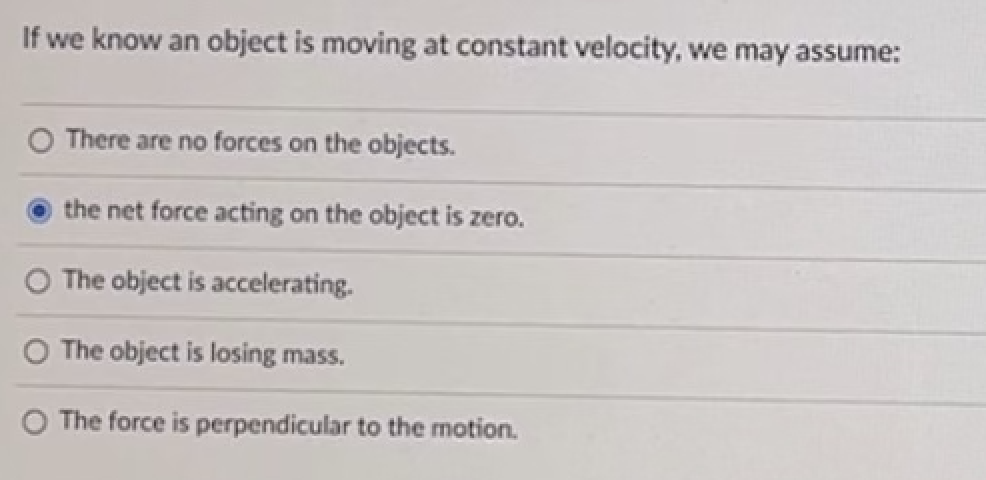
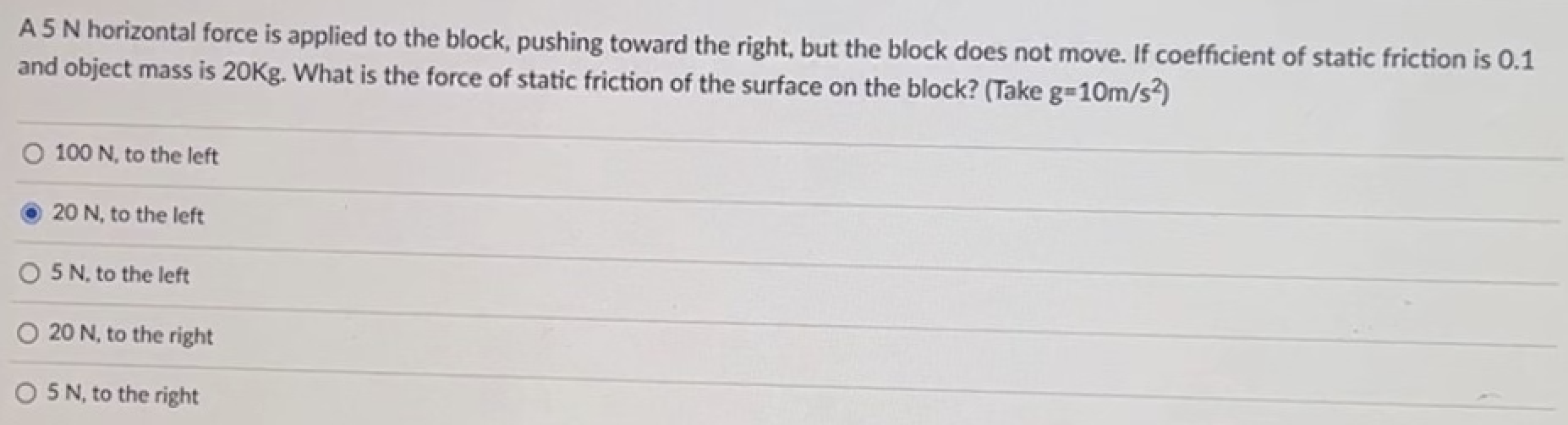
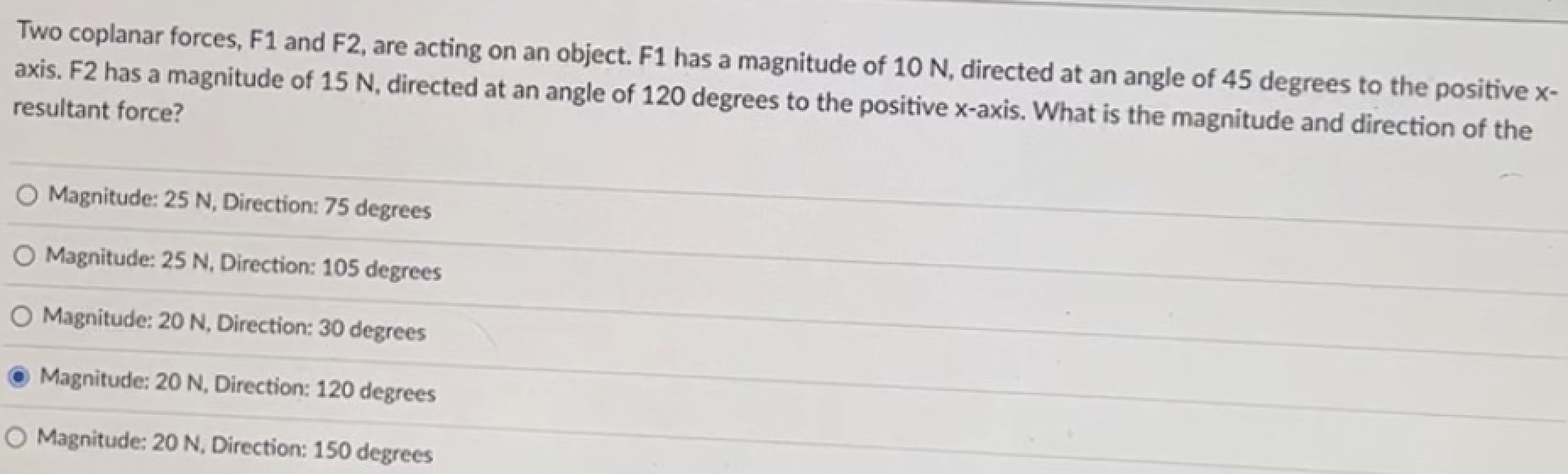
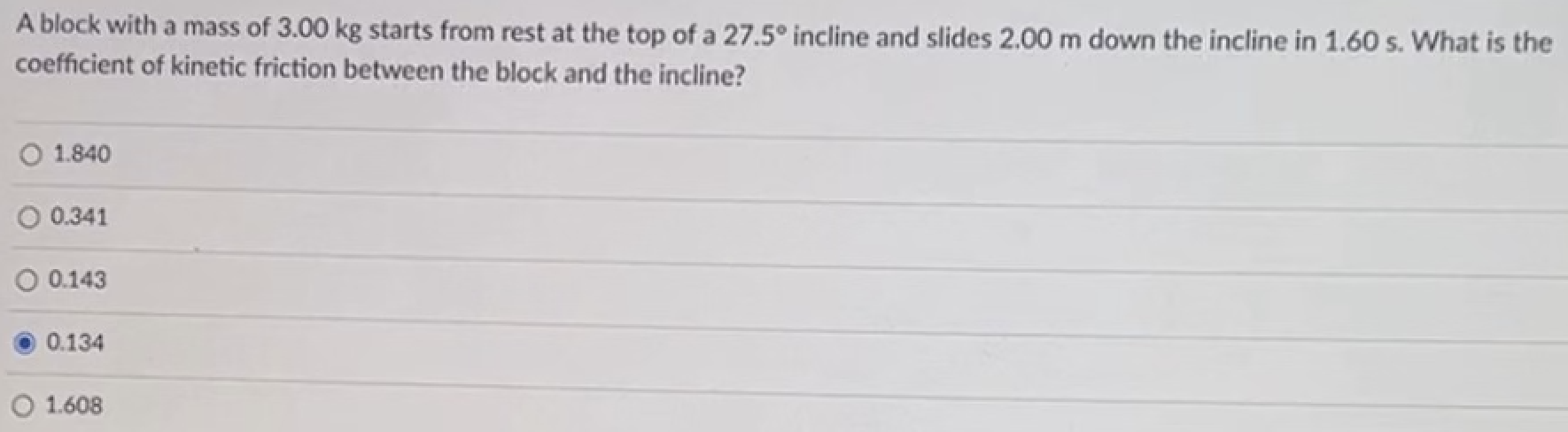
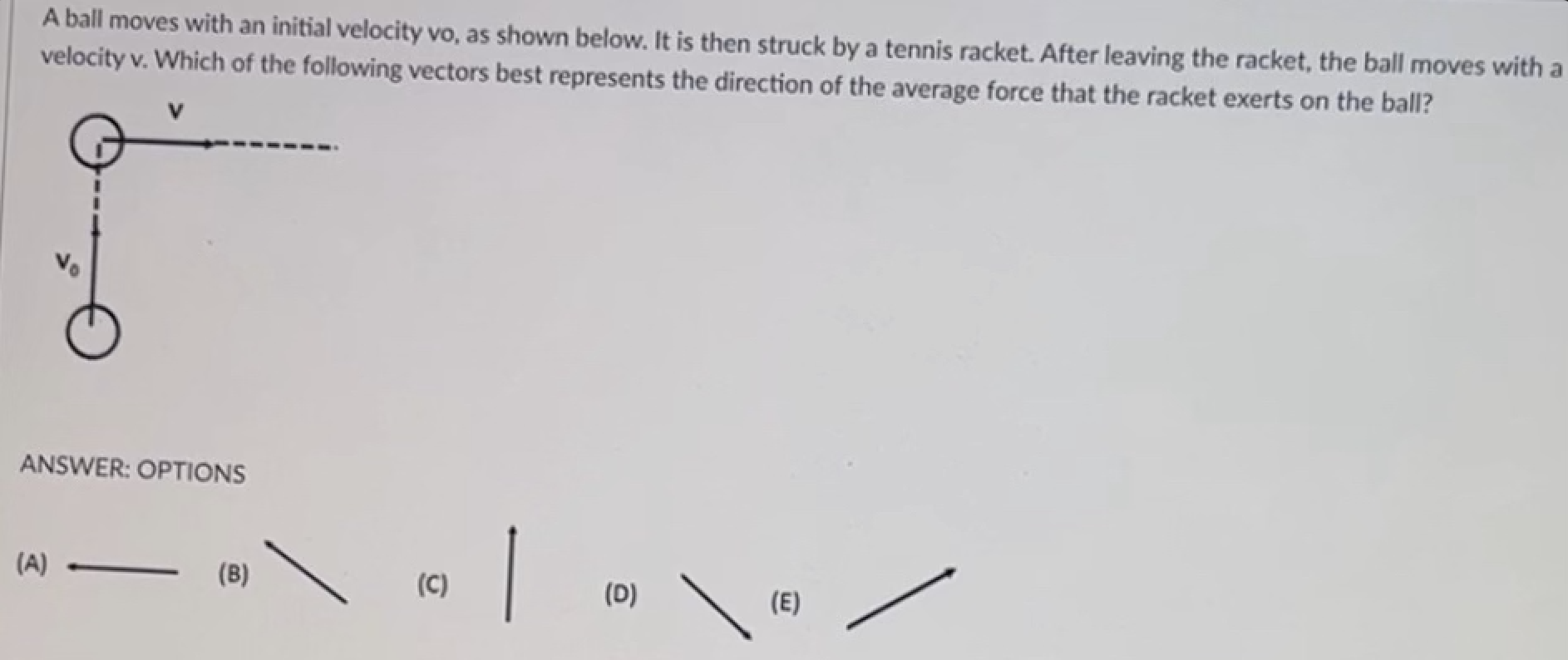
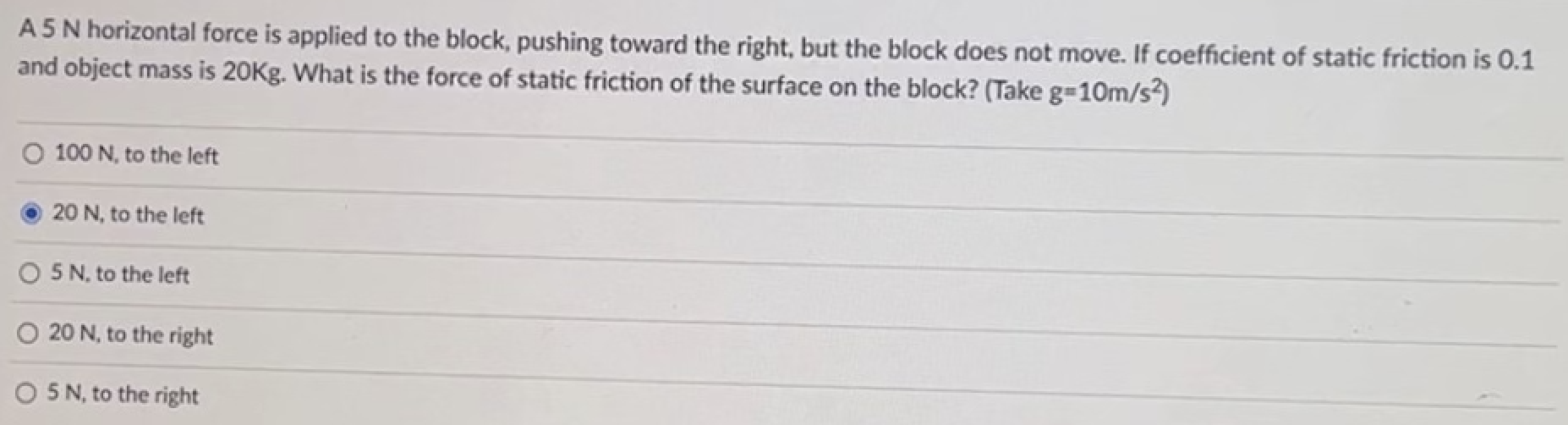
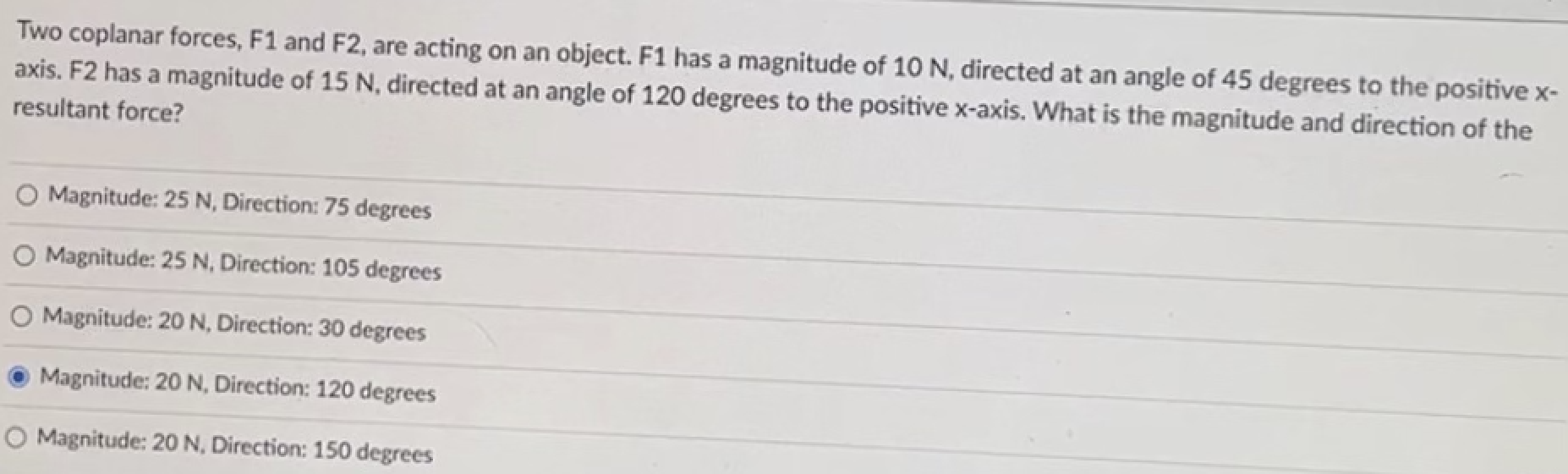
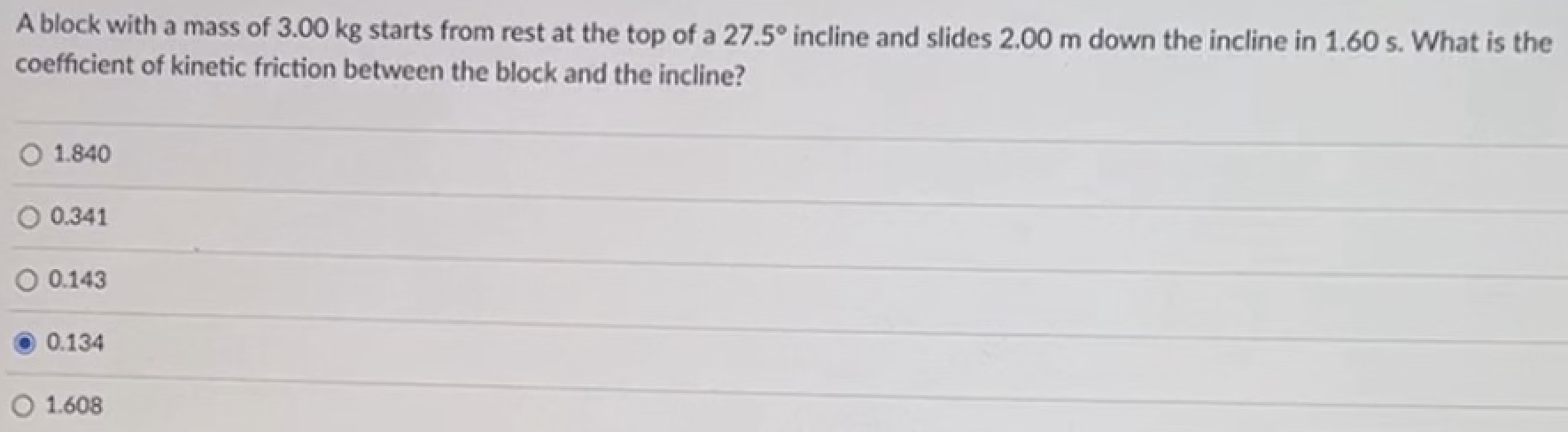
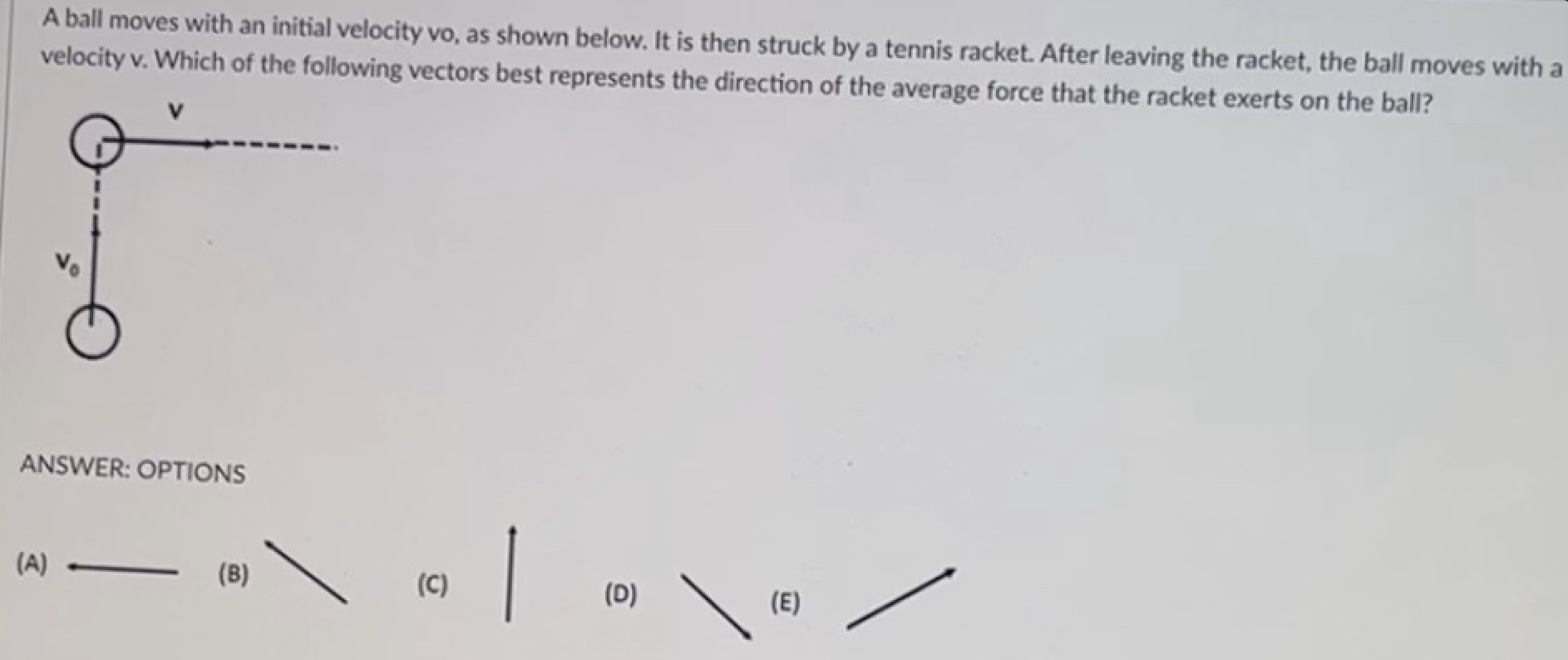
If we know an object is moving at constant velocity, we may assume: O There are no forces on the objects. the net force acting on the object is zero. O The object is accelerating. O The object is losing mass. O The force is perpendicular to the motion.A 5 N horizontal force is applied to the block, pushing toward the right, but the block does not move. If coefficient of static friction is 0.1 and object mass is 20Kg. What is the force of static friction of the surface on the block? (Take g=10m/s?) O 100 N, to the left 20 N, to the left O 5 N. to the left O 20 N, to the right O 5 N, to the rightTwo coplanar forces, F1 and F2, are acting on an object. F1 has a magnitude of 10 N, directed at an angle of 45 degrees to the positive x- axis. F2 has a magnitude of 15 N, directed at an angle of 120 degrees to the positive x-axis. What is the magnitude and direction of the resultant force? O Magnitude: 25 N, Direction: 75 degrees O Magnitude: 25 N, Direction: 105 degrees O Magnitude: 20 N, Direction: 30 degrees Magnitude: 20 N, Direction: 120 degrees O Magnitude: 20 N. Direction: 150 degreesA block with a mass of 3.00 kg starts from rest at the top of a 27.5 incline and slides 2.00 m down the incline in 1.60 s. What is the coefficient of kinetic friction between the block and the incline? O 1.840 O 0.341 O 0.143 O 0.134 O 1.608A ball moves with an initial velocity vo, as shown below. It is then struck by a tennis racket. After leaving the racket, the ball moves with a velocity v. Which of the following vectors best represents the direction of the average force that the racket exerts on the ball? Vo ANSWER: OPTIONS (A) (B) ( C ) (D) (E)
Step by Step Solution
There are 3 Steps involved in it

Get step-by-step solutions from verified subject matter experts
 Study Help