



Question: Q15 A*-CSCS 7 Points Recall that a dictionary, also known as a hashmap, works as follows: Inserting a key-value pair into a dictionary when the
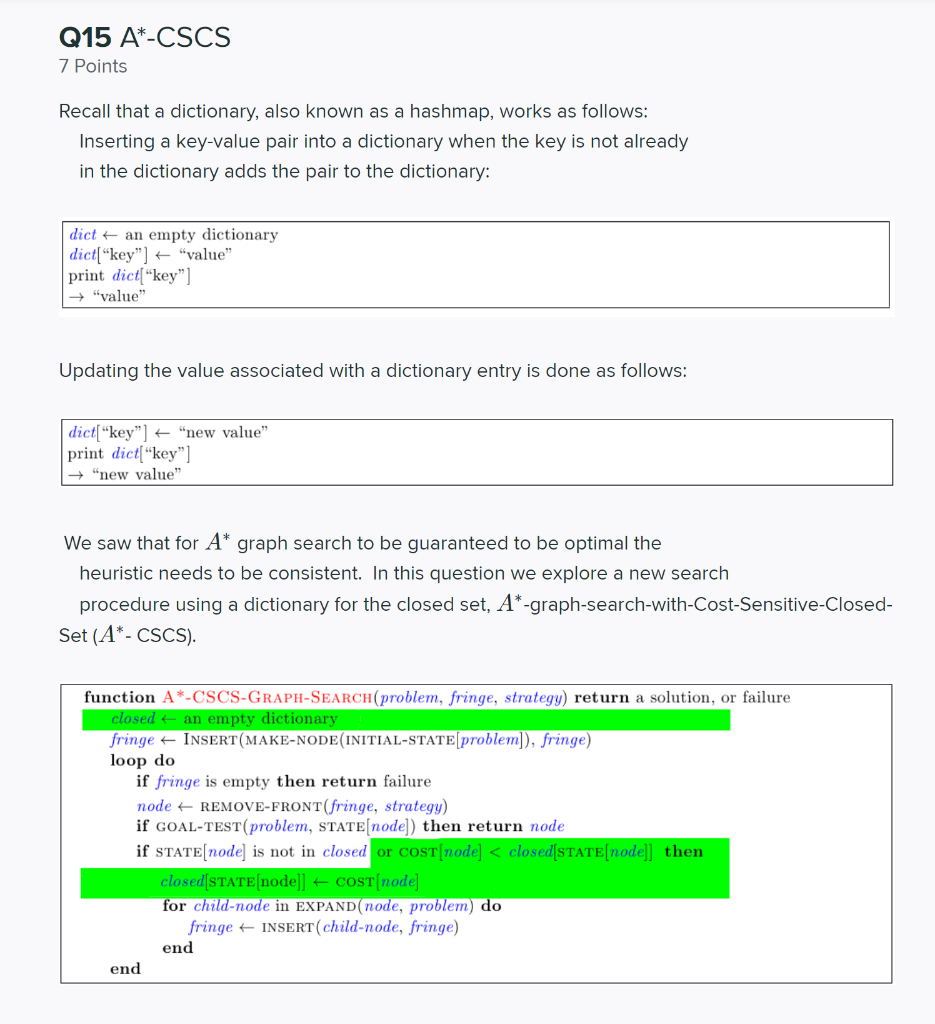
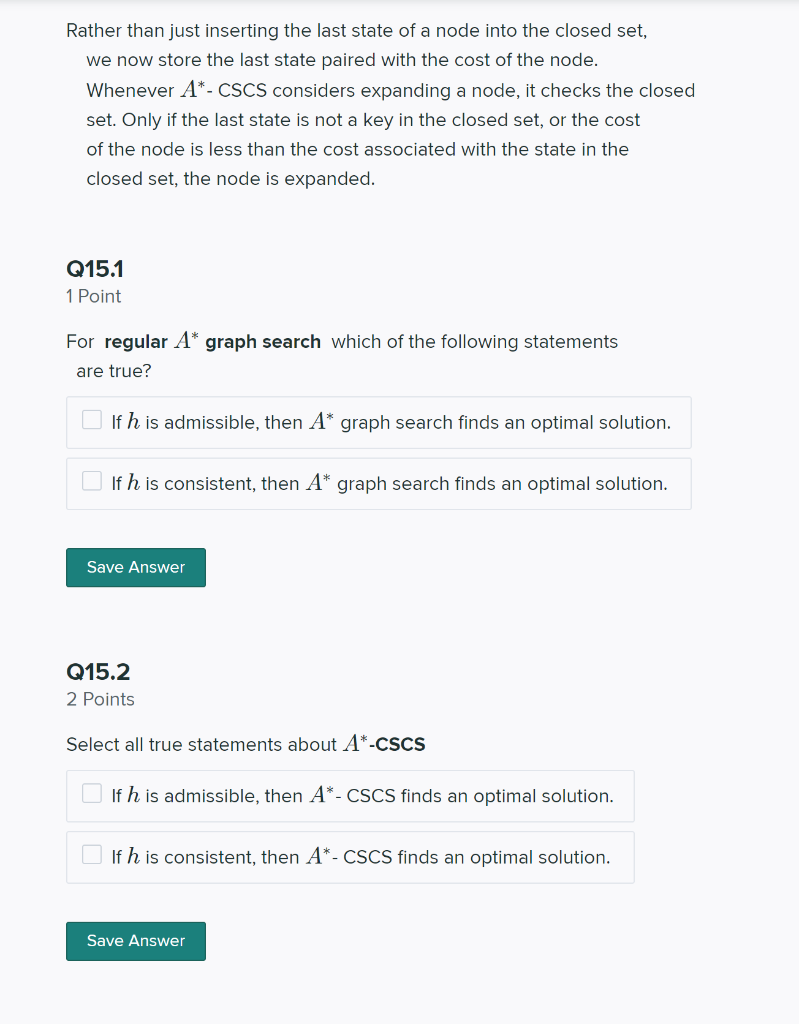
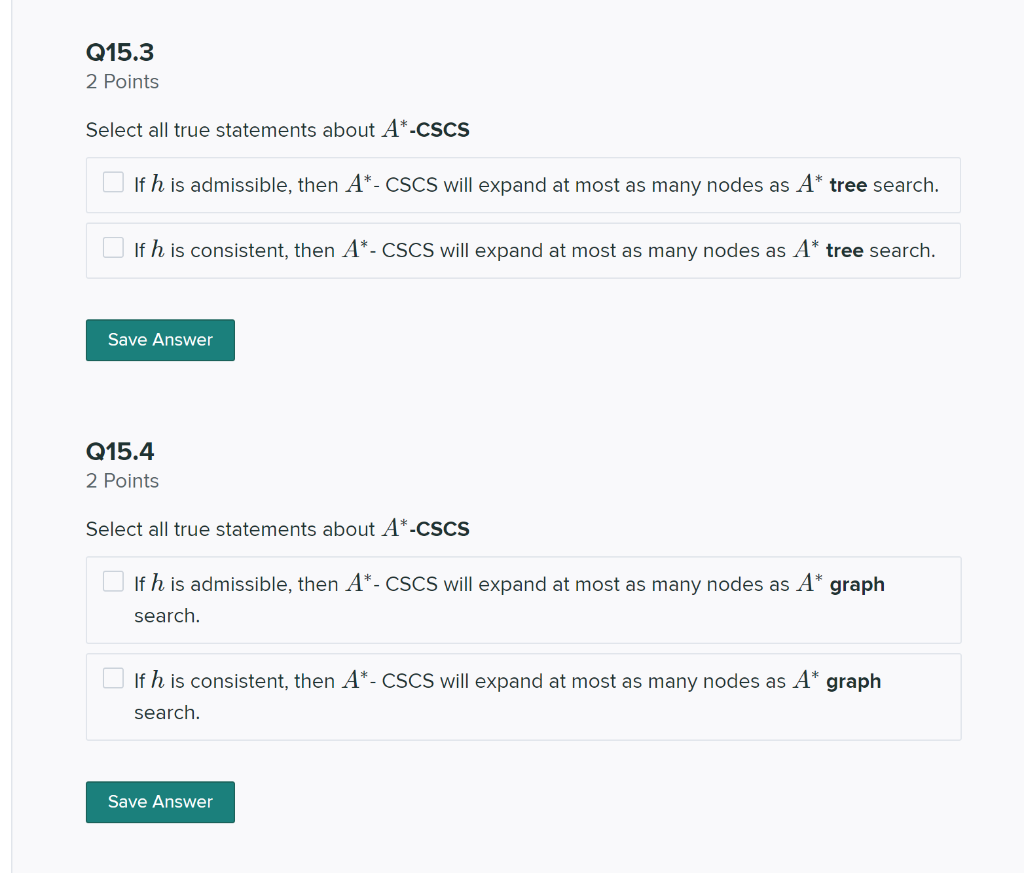
Q15 A*-CSCS 7 Points Recall that a dictionary, also known as a hashmap, works as follows: Inserting a key-value pair into a dictionary when the key is not already in the dictionary adds the pair to the dictionary: dict an empty dictionary dict["key"] + "value" print dict("key"] "value" Updating the value associated with a dictionary entry is done as follows: dict("key"] + "new value" print dict["key"] "new value" We saw that for A* graph search to be guaranteed to be optimal the heuristic needs to be consistent. In this question we explore a new search procedure using a dictionary for the closed set, A*-graph-search-with-Cost-Sensitive-Closed- Set (A*- CSCS). function A*-CSCS-GRAPH-SEARCH(problem, fringe, strategy) return a solution, or failure closed + an empty dictionary fringe + INSERT(MAKE-NODE(INITIAL-STATE[problem]), fringe) loop do if fringe is empty then return failure node + REMOVE-FRONT(fringe, strategy) if GOAL-TEST(problem, STATE[node]) then return node if STATE[node] is not in closed or cost[node]
Step by Step Solution
There are 3 Steps involved in it

Get step-by-step solutions from verified subject matter experts