







Question: Question 1 Q.1.1 The workbench process is similar to a testing process in which a software product (6) or project is tested in different
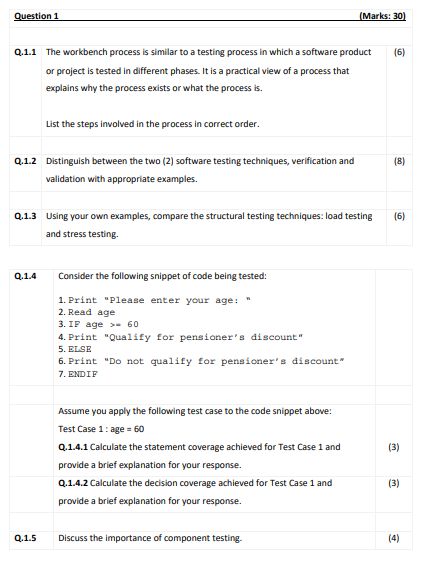
Question 1 Q.1.1 The workbench process is similar to a testing process in which a software product (6) or project is tested in different phases. It is a practical view of a process that explains why the process exists or what the process is. Q.1.2 Distinguish between the two (2) software testing techniques, verification and validation with appropriate examples. List the steps involved in the process in correct order. Q.1.4 Q.1.3 Using your own examples, compare the structural testing techniques: load testing and stress testing. Q.1.5 Consider the following snippet of code being tested: 1. Print "Please enter your age: " 2. Read age 3. IF age > 60 4. Print "Qualify for pensioner's discount" 5. ELSE 6. Print "Do not qualify for pensioner's discount" 7. ENDIF (Marks: 30) Assume you apply the following test case to the code snippet above: Test Case 1: age = 60 Q.1.4.1 Calculate the statement coverage achieved for Test Case 1 and provide a brief explanation for your response. Q.1.4.2 Calculate the decision coverage achieved for Test Case 1 and provide a brief explanation for your response. Discuss the importance of component testing. (8) (6) (3) (3) (4)
Step by Step Solution
There are 3 Steps involved in it
Q11 The workbench process is similar to a testing process and it provides a practical view of why th... View full answer

Get step-by-step solutions from verified subject matter experts
 Study Help