







Question: QUESTION 11 Chapter 6: Direct and Indirect Routing Visited Network-A Foreign Agent- Home Network Mobile Host Home Agent Visited Network-B Foreign Agent-B Correspondent-1 Visited Network-C
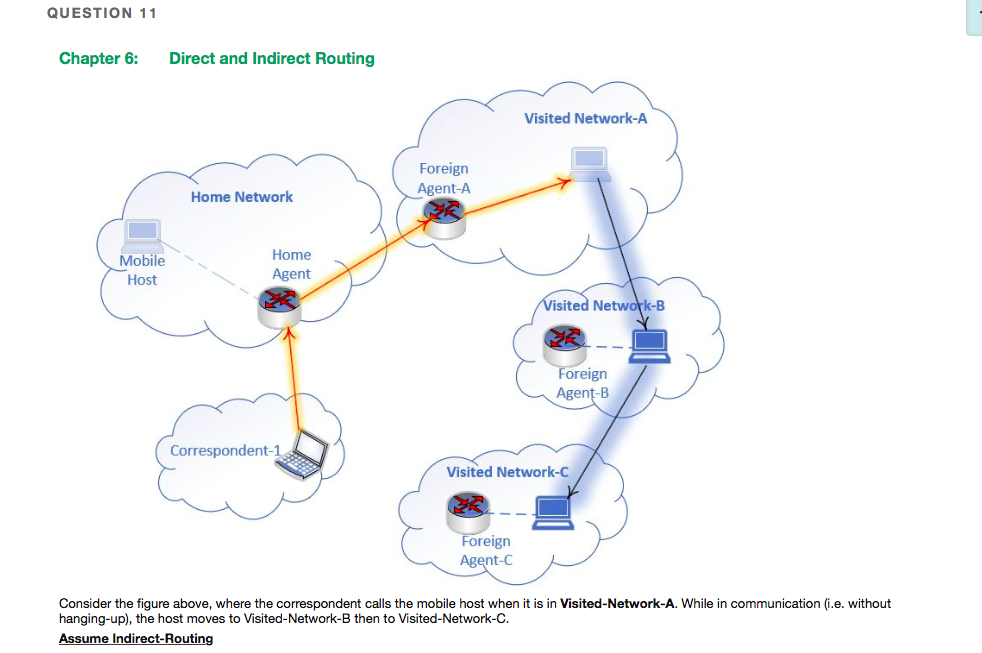
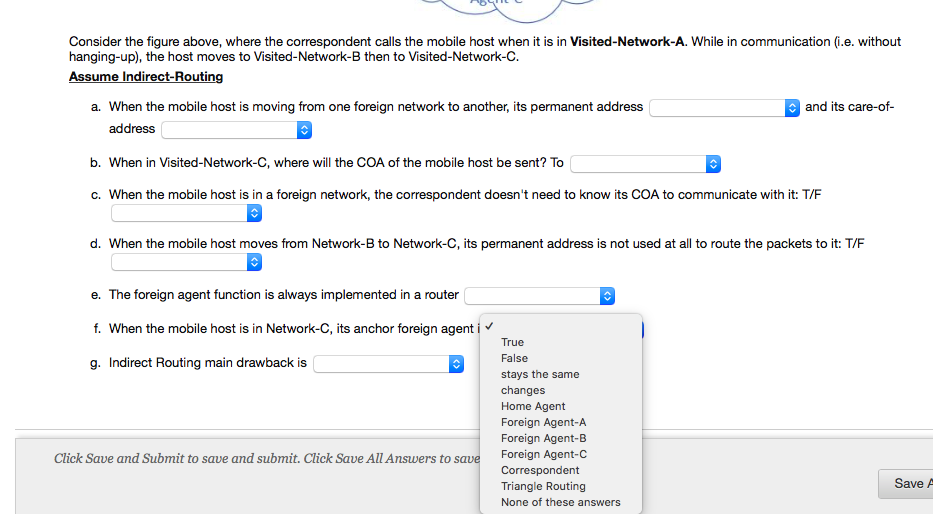
QUESTION 11 Chapter 6: Direct and Indirect Routing Visited Network-A Foreign Agent- Home Network Mobile Host Home Agent Visited Network-B Foreign Agent-B Correspondent-1 Visited Network-C Foreign Agent-c Consider the figure above, where the correspondent calls the mobile host when it is in Visited-Network-A. While in communication (i.e. without hanging-up), the host moves to Visited-Network-B then to Visited-Network-C. Assume Indirect-Routing Consider the figure above, where the correspondent calls the mobile host when it is in Visited-Network-A. While in communication (i.e. without hanging-up), the host moves to Visited-Network-B then to Visited-Network-C. Assume Indirect-Routing a. When the mobile host is moving from one foreign network to another, its permanent address and its care-of- address b. When in Visited-Network-C, where will the COA of the mobile host be sent? To C. When the mobile host is in a foreign network, the correspondent doesn't need to know its COA to communicate with it: T/F d. When the mobile host moves from Network-B to Network-C, its permanent address is not used at all to route the packets to it: T/F e. The foreign agent function is always implemented in a router f. When the mobile host is in Network-C, its anchor foreign agent i g. Indirect Routing main drawback is True False stays the same changes Home Agent Foreign Agent-A Foreign Agent-B Foreign Agent- Correspondent Triangle Routing None of these answers Click Save and Submit to save and submit. Click Save All Answers to save Save A
Step by Step Solution
There are 3 Steps involved in it

Get step-by-step solutions from verified subject matter experts
 Study Help