







Question: question is at the end CASES Heublein: Project Management and Control System Herbert F. Spirer and A. G. Hulvey Heublein, Inc., develops, manufactures, and markets
question is at the end 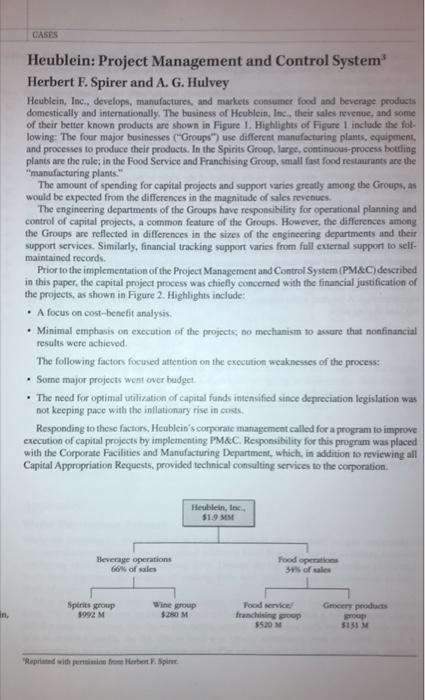
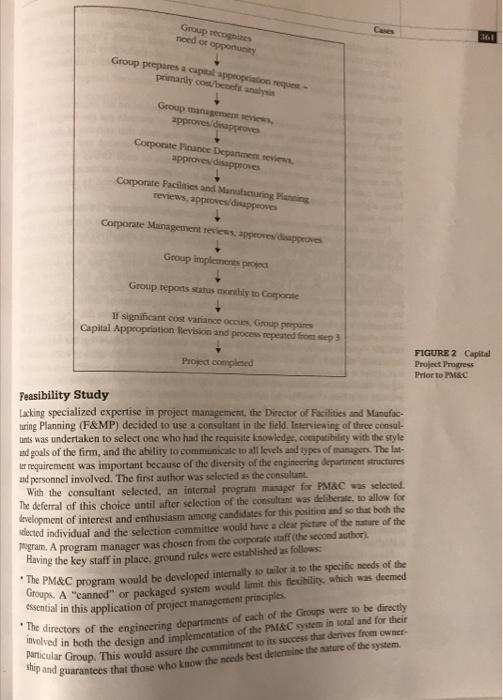
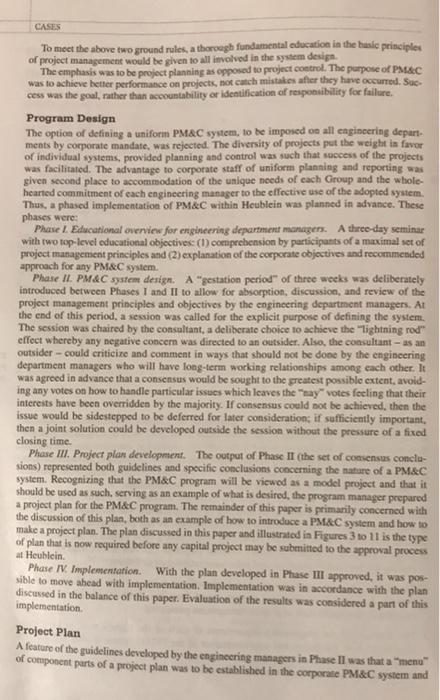
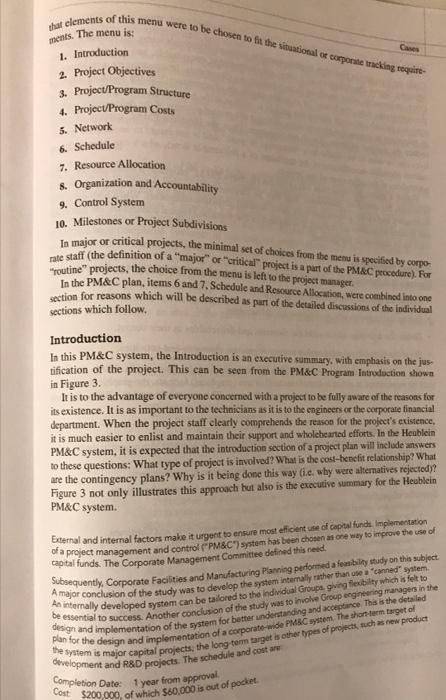
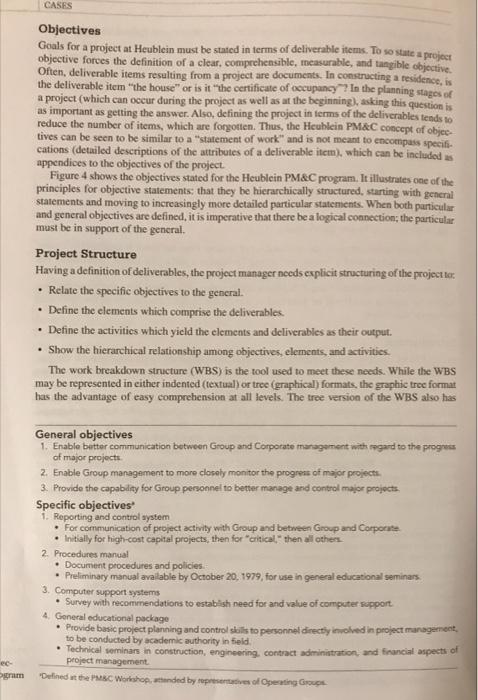
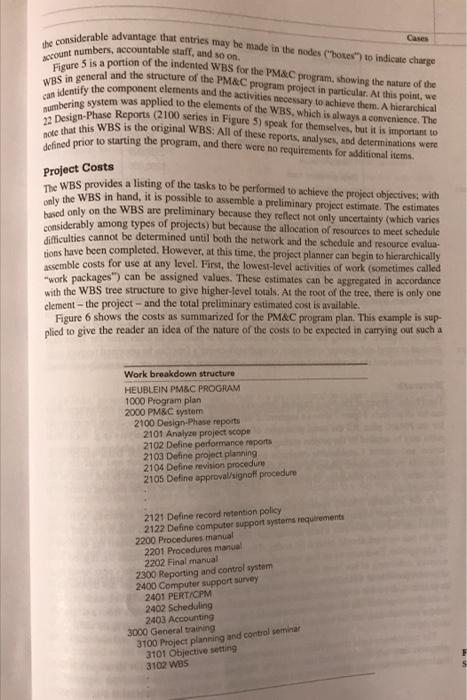
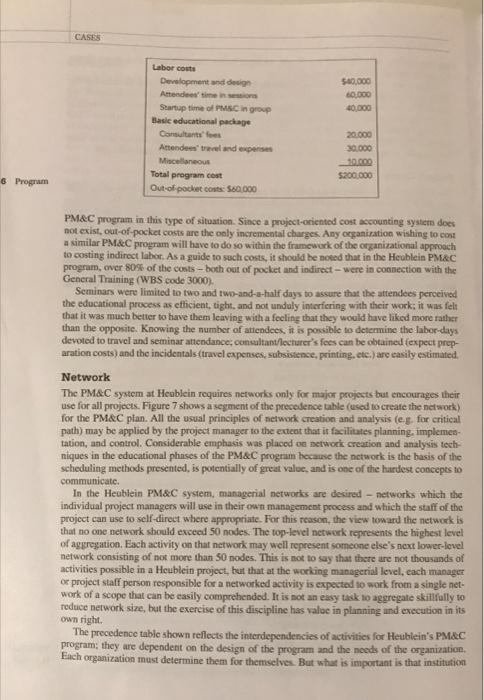
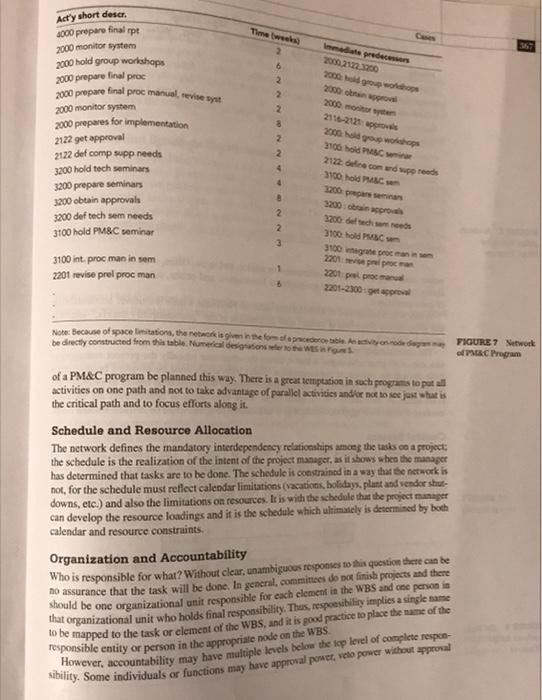
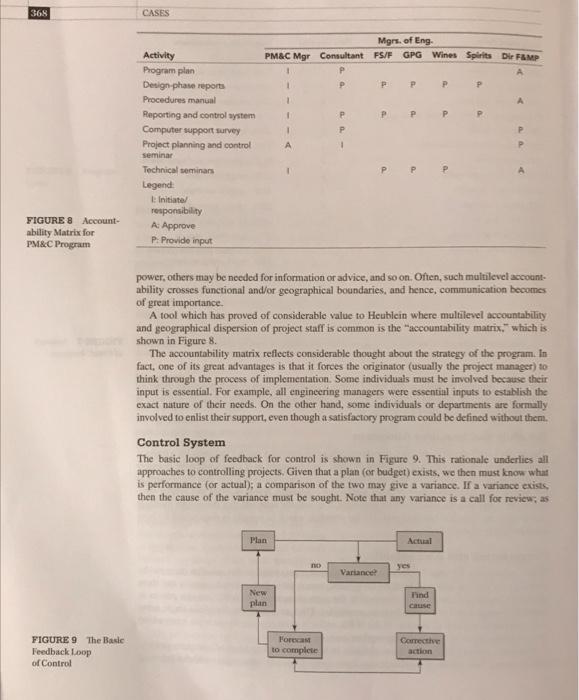
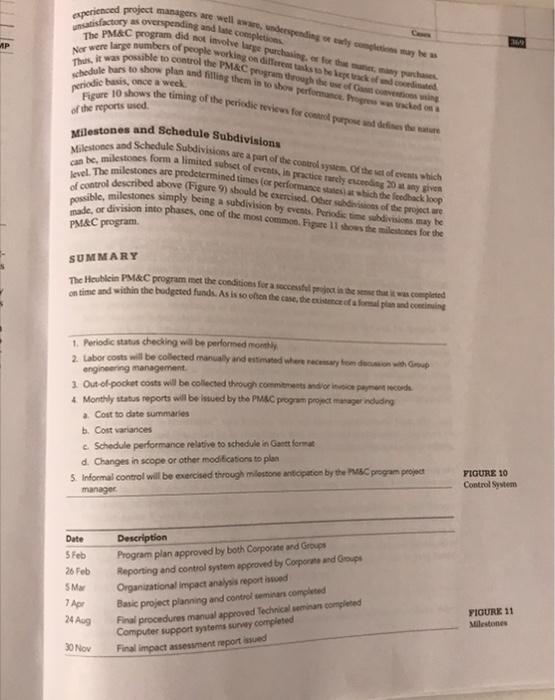
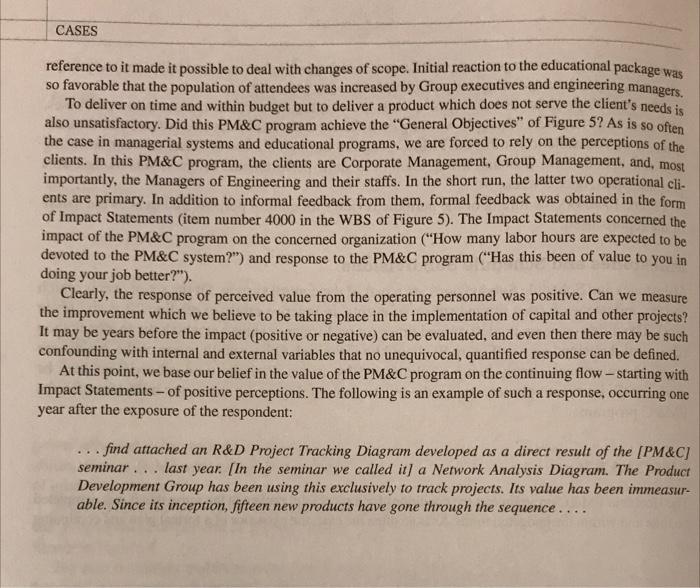
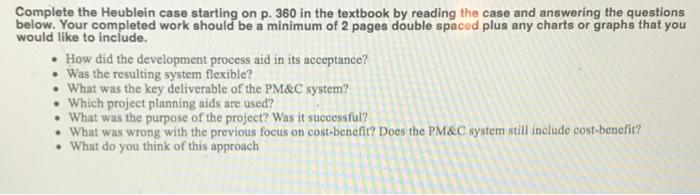
CASES Heublein: Project Management and Control System Herbert F. Spirer and A. G. Hulvey Heublein, Inc., develops, manufactures, and markets consumer food and beverage products domestically and internationally. The business of Heublein, Inc., their sales revenue, and some of their better known products are shown in Figure 1. Highlights of Figure 1 include the fol lowing: The four major businesses ("Groups") use different manufacturing plants, equipment, and processes to produce their products. In the Spirits Groop, large, continuous-process bottling plants are the role in the Food Service and Franchising Group, small fast food restaurants are the "manufacturing plants." The amount of spending for capital projects and support varies greatly among the Groups, as would be expected from the differences in the magnitude of sales revenues The engineering departments of the Groups have responsibility for operational planning and control of capital projects, a common feature of the Groups. However, the differences among the Groups are reflected in differences in the sizes of the engineering departments and their support services. Similarly, financial tracking support varies from full external support to self- maintained records Prior to the implementation of the Project Management and Control System (PM&C) described in this paper, the capital project process was chiefly concerned with the financial justification of the projects, as shown in Figure 2. Highlights include: A focus on cost-benefit analysis Minimal emphasis on exceution of the projects, no mechanism to assure that nonfinancial results were achieved The following factors focused attention on the execution weaknesses of the process . Some major projects went over budget The need for optimal utilization of capital funds intensified since depreciation legislation was not keeping pace with the inflationary rise in costs Responding to those factors. Heublein's corporate management called for a program to improve execution of capital projects by implementing PM&C. Responsibility for this program was placed with the Corporate Facilities and Manufacturing Department, which, in addition to reviewing all Capital Appropriation Requests, provided technical consulting services to the corporation. Heubles, Inc $1.9 MM Beverage operations 66% of sales Food op 3 of sales Spis group 1992 M Wine group $280 M In, Food service franchising op $520 M Gery products op 3131 M Repriated with formimin from Herbert F. Spiru. Group recognies need or opportuny Cue ML Group prepares a capital appropriation request primany content analysis Group management, approves disapproves Corporate Finance Department tevi approve disapproves Corporate Facilitics and Macaring Ping reviews, approves/disapproves Corporate Management reviews approves deppers Group implement per Group reports status monthly to Compacte If significant cost variance Occus Group peopuros Capital Appropriation Revision and process repeated from Project comploed FIGURE 2 Capital Project Progress Prior to PMC Feasibility Study Lacking specialized expertise in project management, the Director of Facilities and Manufac- turing Planning (F&MP) decided to use a consultant in the field. Interviewing of three consul- tants was undertaken to select one who had the requisite knowledge, compatibility und goals of the firm, and the ability to communicate to all levels and types of managers. The lat- style et requirement was important because of the diversity of the engineering department structures and personnel involved. The first author was selected as the consultant With the consultant selected, an internal program manager for PM&C was selected. The deferral of this choice until after selection of the consultant was deliberate to allow for development of interest and enthusiasm among candidates for this positive and so that both the selected individual and the selection committee would have a clear picture of the nature of the gram. A program manager was chosen from the corporate staff (the second author Having the key staff in place, ground rules were established as follows The PM&C program would be developed internally to tailor to the specific needs of the Groups. A "canned" or packaged system would limit this flexibility, which was deemed essential in this application of project management principles "The directors of the engineering departments of each of the Groups were to be directly involved in both the design and implementation of the P&C stem in total and for their particular Group. This would assure the commitment to its success that derives from own . CASES To meet the above two ground rules, a thorough fundamental education in the basic principles of project management would be given to all involved in the system design The emphasis was to be project planning as opposed to project control. The purpose of PM&C was to achieve better performance on projects, not catch mistakes after they have occurred. Suc. cess was the goal, rather than accountability or identification of responsibility for failure. Program Design The option of defining a uniform PM&C system, to be imposed on all engineering depart ments by corporate mandate was rejected. The diversity of projects put the weight in favor of individual systems, provided planning and control was such that success of the projects was facilitated. The advantage to corporate staff of uniform planning and reporting was given second place to accommodation of the unique needs of each Group and the whole hearted commitment of each engineering manager to the effective use of the adopted system. Thus, a phased implementation of PM&C within Houblein was planned in advance. These phases were: Phase . Educational overview for engineering department managers. A three-day seminar with two top-level educational objectives: (1) comprehension by participants of a maximal set of project management principles and (2) explanation of the corporate objectives and recommended approach for any PM&C system Phase II. PM&C system design. A "gestation period of three weeks was deliberately introduced between Phases I and II to allow for absorption, discussion, and review of the project management principles and objectives by the engineering department managers. At the end of this period, a session was called for the explicit purpose of defining the system. The session was chaired by the consultant, a deliberate choice to achieve the lightning rod effect whereby any negative concer was directed to an outsider. Also, the consultant - as an outsider - could criticize and comment in ways that should not be done by the engineering department managers who will have long-term working relationships among each other. It was agreed in advance that a consensus would be sought to the greatest possible extent, avoid- ing any votes on how to handle particular issues which leaves the way votes feeling that their interests have been overridden by the majority. If consensus could not be achieved, then the issue would be sidestepped to be deferred for later consideration, if sufficiently important, then a joint solution could be developed outside the session without the pressure of a fixed closing time. Phase III. Project plan development. The output of Phase II (the set of consensus conclu- sions) represented both guidelines and specific conclusions concerning the nature of a PM&C system. Recognizing that the PM&C program will be viewed as a model project and that it should be used as such, serving as an example of what is desired, the program manager prepared a project plan for the PM&C program. The remainder of this paper is primarily concerned with the discussion of this plan, both as an example of how to introduce a PM&C system and how to make a project plan. The plan discussed in this paper and illustrated in Figures 3 to 11 is the type of plan that is now required before any capital project may be submitted to the approval process at Heublein. Phase IV. Implementation. With the plan developed in Phase III approved, it was pos- sible to move ahead with implementation. Implementation was in accordance with the plan discussed in the balance of this paper. Evaluation of the results was considered a part of this implementation Project Plan A feature of the guidelines developed by the engineering managers in Phase II was that a "meno of component parts of a project plan was to be established in the corporate PM&C system and Cases that elements of this menu were to be chosen to the situational or corporate tracking require ments. The menu iss 1. Introduction 2. Project Objectives 3. Project/Program Structure 4. Project Program Costs 5. Network 6. Schedule 7. Resource Allocation s. Organization and Accountability 9. Control System 10. Milestones or Project Subdivisions In major or critical projects, the minimal set of choices from the menu is specified by corpo rate staff (the definition of a "major" or "critical project is a part of the P&C procedure). For routine" projects, the choice from the menu is left to the project manager In the PM&C plan, items 6 and 7. Schedule and Resource Allocation, were combined into one section for reasons which will be described as part of the detailed discussions of the individual sections which follow Introduction In this PM&C system, the Introduction is an executive summary, with emphasis on the jus- tification of the project. This can be seen from the PM&C Program Introduction shown in Figure 3. It is to the advantage of everyone concerned with a project to be fully aware of the reasons for its existence. It is as important to the technicians as it is to the engineers or the corporate financial department. When the project staff clearly comprehends the reason for the project's existence, it is much easier to enlist and maintain their support and wholehearted efforts. In the Heahlein PM&C system, it is expected that the introduction section of a project plan will include answers to these questions: What type of project is involved? What is the cost-benefit relationship? What are the contingency plans? Why is it being done this way i.e. why were alternatives rejected? Figure 3 not only illustrates this approach but also is the executive summary for the Heablein PM&C system. Eternal and internal factors make a urgent to ensure most efficient use of capital funds implementation of a project management and control (PM&C")system has been chosen as one way to improve the use of capital funds The Corporate Management Committee defined this need Subsequently, Corporate Facilities and Manufacturing Planning performed a forbilty study on the subject A major conclusion of the study was to develop the tem recensity rather than we cannersysteme An internally developed system can be tailored to the individual Group guingebilty which is felt to be essential to success. Another conclusion of the study was to involve Group engineering managers in the Design and implementation of the system for better understanding and acceptance. This is the detailed plan for the design and implementation of a corporate-wide PM&C system. The short-term wget of the system is major capital projects, the long-term target is other types of projects, such as new product Development and R&D projects. The schedule and cost a Completion Date: 1 year from approval Cost $200,000, of which $60,000 is out of pocket CASES Objectives Goals for a project at Heublein must be stated in terms of deliverable items. To so state a project objective forces the definition of a clear, comprehensible, measurable, and tangible objective Often, deliverable items resulting from a project are documents. In constructing a residence, is the deliverable item "the house" or is it the certificate of occupancy? In the planning stages of ? a project (which can occur during the project as well as at the beginning), asking this question is as important as getting the answer. Also, defining the project in terms of the deliverables tends to reduce the number of items, which are forgotten. Thus, the Heuhlein PM&C concept of objec tives can be seen to be similar to a "statement of work and is not meant to encompass specifi- cations (detailed descriptions of the attributes of a deliverable item), which can be included appendices to the objectives of the project. Figure 4 shows the objectives stated for the Heublein PM&C program. It illustrates one of the principles for objective statements that they be hierarchically structured, starting with general statements and moving to increasingly more detailed particular statements. When both particular and general objectives are defined, it is imperative that there be a logical connection, the particular must be in support of the general. Project Structure Having a definition of deliverables, the project manager needs explicit structuring of the project ter Relate the specific objectives to the general. Define the elements which comprise the deliverables Define the activities which yield the elements and deliverables as their output. . Show the hierarchical relationship among objectives, elements, and activities. The work breakdown structure (WBS) is the tool used to meet these needs. While the WBS may be represented in either indented (textual) or tree (graphical) formats, the graphic trec format has the advantage of easy comprehension at all levels. The tree version of the WBS also has General objectives 1. Enable better communication between Group and Corporate management with regard to the progress of major projects 2. Enable Group management to more closely monitor the progress of major projects 3. Provide the capability for Group personnel to better manage and control major projects Specific objectives 1. Reporting and control system For communication of project activity with Group and between Group and Corporate Initially for high-cost capital projects, then for "critical then all others 2. Procedures manual Document procedures and policies Preliminary manual available by October 20, 1979, for use in general educational seminars 3. Computer support systems Survey with recommendations to establish need for and value of computer support 4. General educational package Provide basic project planning and control skills to personnel directly involved in project management, to be conducted by academic authority in field Technical seminars in construction, engineering contract administration, and financial aspects of project management Defined at the PC Workshop, chanded by representatives of Operating Group Cases the considerable advantage that entries may be made in the nodes choses) to indicate charge account numbers, accountable stall, and so on. Figure S is a portion of the indented WBS for the PM&C program, showing the nature of the WBS in general and the structure of the PM&C program project in particular. At this point, we can identify the component elements and the activities necessary to achieve them. A hierarchical sumbering system was applied to the elements of the WBS, which is always a convenience. The 22 Design-Phase Reports (2100 series in Figure 5) speak for themselves, but it is important to ate that this WBS is the original WBS: All of these reports, analyses, and determinations were defined prior to starting the program, and there were no requirements for additional items. Project Costs The WBS provides a listing of the tasks to be performed to achieve the project objectives, with cally the WBS in hund, it is possible to assemble a preliminary project estimate. The estimates based only on the WBS are preliminary because they reflect not only uncertainty (which varies considerably among types of projects, but because the allocation of resources to meet schedule difficulties cannot be determined until both the network and the schedule and resource evaluan tions have been completed. However, at this time, the project planner can begin to hierarchically assemble costs for use at any level. First, the lowest-level activities of work (sometimes called -work packages) can be assigned values. These estimates can be aggregated in accordance with the WBS tree structure to give higher level totals. At the root of the tree, there is only one element - the project and the total preliminary estimated cost is available. Figure 6 shows the costs as summarized for the PM&C program plan. This example is sup plied to give the reader an idea of the nature of the costs to be expected in carrying out such a Work breakdown structure HEUBLEIN PM&C PROGRAM 1000 Program plan 2000 PM&C system 2100 Design-Phase reports 2101 Analyze project scope 2102 Define performance reports 2103 Define project planning 2104 Define revision procedure 2105 Define approvalsignol procedure 2121 Define record retention policy 2122 Define computer support system requirements 2200 Procedures manual 2201 Procedures manual 2202 Final manual 2300 Reporting and control system 2400 Computer support survey 2401 PERTICPM 2402 Scheduling 2403 Accounting 3000 General training 3100 Project planning and control seminar 3101 Objective setting 3102 WBS CASES $40,000 60.000 Labor costs Development and design Amendes Startup time of PMS in group Basic educational package Consultants Attendees travel and expenses Miscellaneous Total program cost Out-of-pocket costs: 580.000 20.000 30,000 10.000 $200.000 6 Program PM&C program in this type of situation. Since a project-oriented cost accounting system does not exist, out-of-pocket costs are the only incremental charges. Any organization wishing to co a similar PM&C program will have to do so within the framework of the organizational approach to costing indirect labor. As a guide to such costs, it should be noted that in the Heublein PMAC program, over 80% of the costs - both out of pocket and indirect - were in connection with the General Training (WBS code 3000). Seminars were limited to two and two-and-a-half days to assure that the attendees perceived the educational process as efficient, tight, and not unduly interfering with their work, it was felt that it was much better to have them leaving with a feeling that they would have liked more rather than the opposite. Knowing the number of attendees, it is possible to determine the labor-days devoted to travel and seminar attendance, consultant/lecturer's fees can be obtained (expect prep- aration costs) and the incidentals (travel expenses, subsistence, printing.etc.) are easily estimated Network The PM&C system at Heublein requires networks only for major projects but encourages their use for all projects. Figure 7 shows a segment of the precedence table (used to create the network) for the PM&C plan. All the usual principles of network creation and analysis (eg for critical path) may be applied by the project manager to the extent that it facilitates planning, implemen- tation, and control. Considerable emphasis was placed on network creation and analysis tech- niques in the educational phases of the PM&C program because the network is the basis of the scheduling methods presented, is potentially of great value, and is one of the hardest concepts to communicate In the Heublein PM&C system, managerial networks are desired - networks which the individual project managers will use in their own management process and which the staff of the project can use to self-direct where appropriate. For this reason, the view toward the network is that no one network should exceed 50 nodes. The top-level network represents the highest level of aggregation. Each activity on that network may well represent someone else's next lower-level network consisting of not more than 50 nodes. This is not to say that there are not thousands of activities possible in a Heublein project, but that at the working managerial level, cach manager or project staff person responsible for a networked activity is expected to work from a single net- work of a scope that can be casily comprehended. It is not an easy task to aggregate skillfully to reduce network size, but the exercise of this discipline has value in planning and execution in its own right. The precedence table shown reflects the interdependencies of activities for Heublein's PM&C program; they are dependent on the design of the program and the needs of the organization. Fach organization must determine them for themselves. But what is important is that institution Time week 6 Act'y short deser 1000 prepare final 2000 monitor system 2000 hold group workshops 2000 prepare final proc 2000 prepare final proc manual, reviews 2000 monitor system 2000 prepares for implementation 2122 get approval 2122 def comp supp needs 3200 hold tech seminars 3200 prepare seminars 3200 obtain approvals 3200 deftech sem needs 3100 hold PM&C seminar 2 2 3 2 2 4 In predecesso 2000.21721200 2000 hold group worlds 2000 2000 m 2116-22 2000 had group was 1100 hod PC 2122 con un suppres 3100 hold PMC 1200 prepare 3200 pro 1200 deles 3100 hold PC 4 2 2 3 3100 int. proc man in sem 2201 revise prel proc man 3100 g procman 2201 proce 220 proc 2201-2300.getpro Note: Because of space limitations, there is the folder wooded PIGURE 7 Network be directly constructed from this table. Numerical designer o were of C Program of a PM&C program be planned this way. There is a great temptation in such programs to put all activities on one path and not to take advantage of parallel activities and or not to see just what is the critical path and to focus efforts along it. Schedule and Resource Allocation The network defines the mandatory interdependency relationships among the tasks on a project: the schedule is the realization of the intent of the project manager, as it shows when the manager has determined that tasks are to be done. The schedule is constrained in a way that the network is not, for the schedule must reflect calendar limitations (vacations, bolidays, plant and vendor shut- downs, etc.) and also the limitations on resources. It is with the schedule that the project manager can develop the resource loadings and it is the schedule which ultimately is determined by both calendar and resource constraints. Organization and Accountability Who is responsible for what? Without clear , unambiguous responses to this question these can be 10 assurance that the task will be done. In general committees do not finish projects and there should be one organizational unit responsible for each element in the WBS and one person in that organizational unit who holds final responsibility. Thes, responsibility implies a single name to be mapped to the task or element of the WBS, and it is good practice to place the name of the responsible entity or person in the appropriate node on the WBS However, accountability may have multiple devels below the top level of complete respon sibility. Some individuals or functions may have approval power, veto power without approval 368 CASES Mgrs. of Eng PM&C Mgr Consultant FS/F GPG Wines Spirits Dir FMP P P PP P 1 P 1 A Activity Program plan Design phase reports Procedures manual Reporting and control system Computer support survey Project planning and control seminar Technical seminars Legend Initiated responsibility A: Approve P. Provide input 1 FIGURE 8 Account ability Matrix for PM&C Program power, others may be needed for information or advice, and so on. Often, such multilevel account ability crosses functional and/or geographical boundaries, and hence, communication becomes of great importance A tool which has proved of considerable value to Heubicin where multilevel accountability and geographical dispersion of project staff is common is the "accountability matrix." which is shown in Figure 8 The accountability matrix reflects considerable thought about the strategy of the program In fact, one of its great advantages is that it forces the originator (usually the project manager) to think through the process of implementation. Some individuals must be involved because their input is essential. For example, all engineering managers were essential inputs to establish the exact nature of their needs. On the other hand, some individuals or departments are formally involved to enlist their support, even though a satisfactory program could be defined without them. Control System The basic loop of feedback for control is shown in Figure 9. This rationale underlies all approaches to controlling projects. Given that a plan (or budget) exists, we then must know what is performance (or actual): a comparison of the two may give a variance. If a variance exists. then the cause of the variance must be sought. Note that any variance is a call for review, as Plan Actual Variance New plan Find Cause FIGURE 9 The Basic Feedback Loop of Control Forecast to complete Corrective action MP unsatisfactory as overspending and completion experienced project managers are well undepending om Nor were large number of people working on different beleucked did The PM&C program did not involve are purchasing or forway Thus it was possible to control the PM&C remote schedule bars to show plan and filling them in to show performance Progresados Figure 10 shows the timing of the periodic reviews for compone defines the periodic basis, once a week of the reports used Milestones and Schedule Subdivisions Milestones and Schedule Subdivisions are a part of the control system of the wolves which can be, milestones form a limited subset of events in actie rury deg ny v level. The milestones are predetermined times (or performances which the feedback loop of control described above (Figure should be exercised. Others of the project are possible, milestones simply being a subdivision by events. Periodisme subdivisions may be made, or division into phases. one of the most common bell shows the miles for the PM&C program SUMMARY The Hubicin P&C programmet the conditions for a seceratul part in the sense that it was completed con time and within the budgeted funds. As is so ohin the case, the compliandocining 1. Periodic status checking will be performed monthly 2. Labor costs will be collected manually and estimated where to do with Group engineering Management 3. Out of-pocket costs will be collected through comments or pay recorde Monthly status reports will be issued by the PC program project manager indung a Cost to date summaries b. Cost variances Schedule performance relative to schedule in Gantt format d. Changes in scope or other modifications to plan 5. Informal control will be exercised through milestone top ten by the program project manager YIGURE 10 Control System Date 5 Feb 26 Feb SM Description Program plan approved by both Corporate and Groups Reporting and control system approved by Corporate and Groups Organizational impact analysis report ined Basic project planning and control seminar completed Fra procedures manual approved Technical seminar completed Computer support systems sunway completed Final impact assessment report issued 7 Apr 24 Aug FIGURE 11 Milestones) 30 Nov CASES reference to it made it possible to deal with changes of scope. Initial reaction to the educational package was so favorable that the population of attendees was increased by Group executives and engineering managers. To deliver on time and within budget but to deliver a product which does not serve the client's needs is also unsatisfactory. Did this PM&C program achieve the "General Objectives of Figure 5? As is so often the case in managerial systems and educational programs, we are forced to rely on the perceptions of the clients. In this PM&C program, the clients are Corporate Management, Group Management, and, most importantly, the Managers of Engineering and their staffs. In the short run, the latter two operational cli- ents are primary. In addition to informal feedback from them, formal feedback was obtained in the form of Impact Statements (item number 4000 in the WBS of Figure 5). The Impact Statements concerned the impact of the PM&C program on the concerned organization (How many labor hours are expected to be devoted to the PM&C system?") and response to the PM&C program ("Has this been of value to you in doing your job better?"). Clearly, the response of perceived value from the operating personnel was positive. Can we measure the improvement which we believe to be taking place in the implementation of capital and other projects? It may be years before the impact (positive or negative) can be evaluated, and even then there may be such confounding with internal and external variables that no unequivocal, quantified response can be defined. At this point, we base our belief in the value of the PM&C program on the continuing flow-starting with Impact Statements - of positive perceptions. The following is an example of such a response, occurring one year after the exposure of the respondent: + find attached an R&D Project Tracking Diagram developed as a direct result of the [PM&C] seminar ... last year. [In the seminar we called it) a Network Analysis Diagram. The Product Development Group has been using this exclusively to track projects. Its value has been immeasur- able. Since its inception, fifteen new products have gone through the sequence.... Complete the Heublein case starting on p. 360 in the textbook by reading the case and answering the questions below. Your completed work should be a minimum of 2 pages double spaced plus any charts or graphs that you would like to include. How did the development process aid in its acceptance? Was the resulting system flexible? What was the key deliverable of the PM&C system? Which project planning aids are used? What was the purpose of the project? Was it successful? What was wrong with the previous focus on cost-benefit? Does the PM&C system still include cost-benefit? What do you think of this approach
Step by Step Solution
There are 3 Steps involved in it
1 Expert Approved Answer
Step: 1 Unlock

Question Has Been Solved by an Expert!
Get step-by-step solutions from verified subject matter experts
Step: 2 Unlock
Step: 3 Unlock
 Study Help