







Question: Step by step solution, attend to all questions... CRX Industries Inc. manufactures a lid for a hydroponic garden planter. The standard cost for one planter
Step by step solution, attend to all questions...
CRX Industries Inc. manufactures a lid for a hydroponic garden planter. The standard cost for one planter is as follows:
Std. Quality of Hours
Standard Price or Rate
Standard Cost
Direct Materials
2.2 kgs
$6.50
$14.30
Direct Labour
.45 hours
$9.00
$4.05
Variable Mfg. Overhead
.20 machine hours
$2.50 per machine hour
$0.50
Total Std. Cost
$18.85
The plant has been experiencing problems for some time, as is shown by its June income statement when it made and sold 15,000 planters; the normal volume is 15,150 planters per month. Fixed costs are allocated using machine-hours.
Flexible Budget
Actual
Sales (15,000 planters)
$750,000
$750,000
Less: Variable Expenses:
Variable COGS*
$282,750
$305,000
Variable Selling Exp.
$ 25,000
$ 25,000
Total Variable Expenses
$307,750
$330,000
Contribution Margin
$442,500
$420,000
Less: Fixed Expenses:
Mfg. Overhead
$260,580
$260,5680
Selling and Admin
$105,000
$105,000
Total Fixed Expenses
$366,580
$366,580
Net Income
$75,920
$53,420
* Includes direct materials, labour and variable mfg. overhead
Joe Bidenold, the general manager of the Plant, wants to get things under control. He needs information about the operations in June since the income statement signaled that the problem could be due to the variable cost of goods sold. Bidenold learns the following about operations and costs in June:
50,000 kilograms of materials were purchased at a cost of $6.25 per kilogram.
34,600 kilograms of materials were used in production. (Finished goods and work-in-process inventories are insignificant and can be ignored.)
14,800 direct labour-hours were worked at a cost of $10 per hour.
Variable manufacturing overhead cost totaling $28,290 for the month was incurred. A total of 7,900 machine hours was recorded.
It is the company's policy to close all variances to cost of goods sold on a monthly basis.
Required:
1. Pick 2 of the three below and calculate the following variances for January:
Direct materials price and quantity variances.
Direct labour rate and efficiency variances.
. Is Joe Bidenold correct in his assumption, please explain, if not why?
Question 2
Genuine Spice Inc. began operations on January 1 of the current year. The company produces eight- ounce bottles of hand and body lotion called Eternal Beauty. The lotion is sold wholesale in 12-bottle cases for $100 per case. There is a selling commission of $20 per case. The January direct materials, direct labor, and factory overhead costs are as follows:
DIRECT MATERIALS
Cost Behavior Units per Case Cost per Unit Cost per Case
Cream base Variable 100 oz. $0.02 $ 2.00
Natural oils Variable 30 oz. 0.30 9.00
Bottle (8-oz.) Variable 12 bottles 0.50 6.00
$17.00
DIRECT LABOR
Department Cost Behavior Time per Case Labor Rate per Hour Cost per Case
Mixing Variable 20 min. $18.00 $6.00
Filling Variable 5 14.40 1.20
25 min. $7.20
FACTORY OVERHEAD
Cost Behavior Total Cost
Utilities Mixed $600
Facility lease Fixed 14,000
Equipment depreciation Fixed 4,300
Supplies Fixed 660
$19,560
Part A?Break-Even Analysis
The management of Genuine Spice Inc. wants to determine the number of cases required to break even per month. The utilities cost, which is part of factory overhead, is a mixed cost. The following information was gathered from the first six months of operation regarding this cost:
Case Production
Utility Total Cost
January 500 $600
February 800 660
March 1,200 740
April 1,100 720
May 950 690
June 1,025 705
Required-Part A:
1. Determine the fixed and variable portion of the utility cost using the high-low method.
2. Determine the contribution margin per case.
3. Determine the fixed costs per month, including the utility fixed cost from part (1).
4. Determine the break-even number of cases per month.
Part B?August Budgets
During July of the current year, the management of Genuine Spice Inc. asked the controller to make August manufacturing and income statement budgets. Demand was expected to be 1,500 cases at $100 per case for August. Inventory planning information is provided as follows:
Finished Goods Inventory:
Cases
Cost
Estimated finished goods inventory, August 1 300 $12,000
Desired finished goods inventory, August 31 175 7,000
Materials Inventory:
Cream Base
Oils
Bottles
(oz.)
(oz.)
(bottles)
Estimated materials inventory, August 1 250 290 600
Desired materials inventory, August 31 1,000 360 240
There was negligible work in process inventory assumed for either the beginning or end of the month; thus, none was assumed. In addition, there was no change in the cost per unit or estimated units per case operating data from January.
Required-Part B:
5. Prepare the August production budget.*
6. Prepare the August direct materials purchases budget.*
7. Prepare the August direct labor cost budget. Round the hours required for production to the nearest hour.*
8. Prepare the August factory overhead cost budget. If an amount box does not require an entry, leave it blank. (Entries of zero (0) will be cleared automatically by CNOW.)*
9. Prepare the August budgeted income statement, including selling expenses. NOTE: Because you are not required to make a cost of goods sold budget, the cost of goods sold calculations will be part of the budgeted income statement.*
*Enter all amounts as positive numbers.
Part C?August Variance Analysis
During September of the current year, the controller was asked to perform variance analyses for August. The January operating data provided the standard prices, rates, times, and quantities per case. There were 1,500 actual cases produced during August, which was 250 more cases than planned at the beginning of the month. Actual data for August were as follows:
Actual Direct Materials
Price per Unit
Quantity per Case
Cream base $0.016 per oz. 102 oz.
Natural oils $0.32 per oz. 31 oz.
Bottle (8-oz.) $0.42 per bottle 12.5 bottles
Actual Direct
Actual Direct Labor
Labor Rate
Time per Case
Mixing $18.20 19.50 min.
Filling 14.00 5.60 min.
Actual variable overhead $305.00
Normal volume 1,600 cases
The prices of the materials were different from standard due to fluctuations in market prices. The standard quantity of materials used per case was an ideal standard. The Mixing Department used a higher grade labor classification during the month, thus causing the actual labor rate to exceed standard. The Filling Department used a lower grade labor classification during the month, thus causing the actual labor rate to be less than standard
Required-Part C:
10. Determine and interpret the direct materials price and quantity variances for the three materials.
11. Determine and interpret the direct labor rate and time variances for the two departments. Round hours to the nearest tenth of an hour.
12. Determine and interpret the factory overhead controllable variance.
13. Determine and interpret the factory overhead volume variance.
14. Why are the standard direct labor and direct materials costs in the calculations for parts (10) and (11) based on the actual 1,500-case production volume rather than the planned 1,375 cases of production used in the budgets for parts (6) and (7)?
Questions (Part A)
1. Determine the fixed and variable portion of the utility cost using the high-low method.
At High Point
At Low Point
Variable cost per unit
Total fixed cost
Total cost
2. Determine the contribution margin per case.
3. Determine the fixed costs per month, including the utility fixed cost from part (1).
1
Total fixed costs:
2
3
4
5
6
4. Determine the break-even number of cases per month. cases
Production Budget
5. Prepare the August production budget. Enter all amounts as positive numbers.
Genuine Spice Inc.
Production Budget
For the Month Ended August 31
Cases
Plus
Total cases required
Less
Direct Materials Purchases Budget
6. Prepare the August direct materials purchases budget. Enter all amounts as positive numbers.
Genuine Spice Inc.
Direct Materials Purchases Budget
For the Month Ended August 31
Cream Base (oz.) Natural Oils (oz.) Bottles (bottles) Total
Plus
Less
Direct materials to be purchased
X
Direct Labor Cost Budget
7. Prepare the August direct labor cost budget. Round the hours required for production to the nearest hour. Enter all amounts as positive numbers.
Genuine Spice Inc.
Direct Labor Cost Budget
For the Month Ended August 31
Mixing Filling Total
X
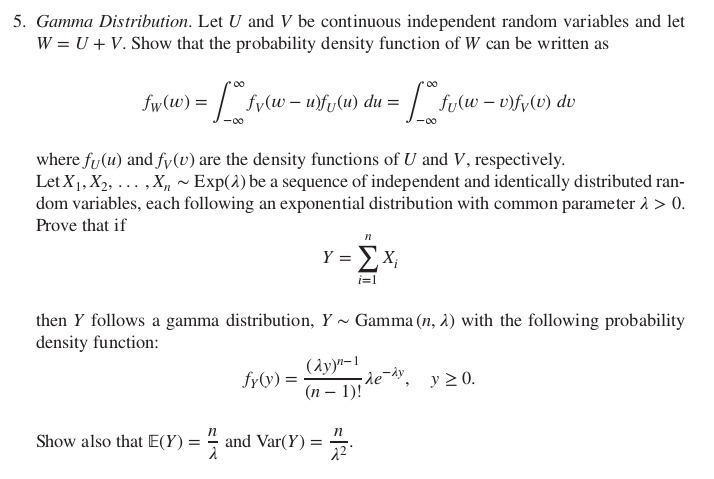
Juicy Lemonade Company The .luicy Lemonade Company manufactures premium flavored organic lemonade. Management is ready to close the books for the end of the rst quarter In 2020 and your supervisor has presented you with the following information. El. Total sales In gallons of flavored lemonade for January 2020 through March 2020 are as follows: January 14,000 February 15,000 March 11,000 Each gallon of lemonade is packaged in eight 15 ounce bottles and sold in a case that sells for $15.00 per case. The company produced 42-1500 units during the rst quarter of 2020. The company's Variable Costs include the following Direct Materials of 51.50 per gallon Direct Labor of 5_ per gallon (Each gallon of lemonade requires 15 minutes of direct labor time and the wage rate is $8.00 per hour) Variable MOH $_per gallon [The variable overhead rate is $2.00 per machine hour and processing one gallon of lemonade takes 45 minutes of machine time} Variable Selling and Administrative costs of $1.50 per gallon The company's Fixed Costs for the quarter include the following: Manufacturing Overhead 54?,500 Selling and Administrative $20,900 The company's fixed manufacturing overhead per gallon is 5 . [The Fixed Manufacturing Overhead rate is based on Fixed Costs for the quarter and the units produced for the quarter.} The company's manufacturing overhead ls applied based on the number of gallons produced using the Variable Manufacturing Overhead Rate per gallon calculated in 'b' and the Fixed Manufacturing Overhead Rate per gallon calculated in 'c'. Raw Materials inventory consists entirely of direct materials and, at the beginning of the year, consists of 500 units of direct material at a cost of $1.50 per unit. The company purchased 40,000 units of direct material at a cost of $1.50 per unit. Each gallon of lemonade requires one unit of direct materials. f. Beginning Work in process inventory consists of TCIIII gallons of partially processed lemonade. All raw materials are added at the beginning of the production process and these partially completed units are SUBS complete with respect to conversion costs. Ending work in process consists of SDI} gallons of partially processed lemonade that are SKIES complete with respect to conversion costs. The company completed and transferred out 4?,S units this quarter. The beginning work in process and current period costs are as follows Beginning WIP Direct Materials $1,225 Conversion Costs 51,995 Current period Costs Direct Materials S?1,25 Conversion Costs $213,?5 g. There are goo gallons of lemonade in Finished Goods Inventory at the beginning of the year carried at a cost of SSEIICI. There are LSDCI galions in ending Finished Goods Inventory carried at a cost of $5.130 per unit. 'ou are required to prepare all of the following: 1. A Production Cost Report using both the weighted average and FIFG methods of assigning costs to goods transferred out and ending inventory. {25 points) 2. Schedule of Cost of Goods Manufactured and a Schedule of Cost of Goods Sold using both the Weighted Average and FIFG methods of assigning costs to goods transferred out and ending inventory. {2.5 points) 3. Gross Margin and Contribution Margin Income Statements [HINT: For the Gross Margin Income Statement, Total Cost of Goods Sold should be equal to the Cost of Goods Sold calculated based on the FIFD method of assigning costs to goods transferred out and ending inventory}. {25 points} 4. A BreakEven Analysis that includes all of the following components (HINT: Use the information from parts a, b, and c above for your calculations} {25 points) 4a. BreakEven in gallons and dollars 4b. Target Profit in gallons and dollars if the company wants a net operating income of Sz after taxes. The tax rate is 25%. 4c. Margin of Safety expressed in dollars, units, and as a percentage of sales. 4. The United States is currently is at long-run equilibrium. The Natural Rate of Unemployment is 7%. The current level of inflation is 2%. a. Draw a fully labeled graph with both Long-Run and Short-Run Phillips Curves. b. Assume that Europe enters a reception. What effect will this likely have on United States GDP? Why? C. Given the change in part b, draw a fully-labeled AD-AS Model of the United States. Include the following: Current output ii. Long-run output iii. Current price level d. On your graph for part a, show the new positioning of the economy on the short-run Phillips curve. Label this "Point D" e. What are two actions that the Federal Reserve could take in order to push the economy back towards long-run equilibrium?Hari and Hannah were in partnership trading under the name 'Hana Traders' and sharing profits and losses in the ratio of 1:3 respectively. On 31 December 2004, a winding up petition was lodged against the firm on which date the balances extracted from the books of the firm and the partners' separate estates were as follows: Current Estimated value value Sh. '000' Sh. '000' Assets Freehold property: Hana 11,000 12,000 Traders Hari 7.000 10,000 Plant and machinery: Hana 3,000 1,500 Traders Furniture and fixtures: Hana 1,000 800 Traders Hari 1,500 1,200 Hannah 1,800 1,500 Inventory Hana Traders 8,000 6,500 Accounts receivable: Hana 12,000 See (note Traders 1 ) Investments: Hari 1.500 2,400 Hannah 2,000 1,900 Liabilities Mortgage on freehold property: 6,000 Hana Traders 5,000 Hari Bank overdraft: Hana Traders 7,000 Accounts payables: Hana Traders 19,000 Hari 700 Hannah 2,400 Additional Information:5. Gamma Distribution. Let U and V be continuous independent random variables and let W = U + V. Show that the probability density function of W can be written as fw(w) = fv(w- ufo(u) du = fu(w - v)fv(v) du where fo(u) and fv(v) are the density functions of U and V, respectively. Let X1, X2, ..., X,, ~ Exp(A) be a sequence of independent and identically distributed ran- dom variables, each following an exponential distribution with common parameter / > 0. Prove that if Y = Xi i=1 then Y follows a gamma distribution, Y ~ Gamma (n, 1) with the following probability density function: (Av)"-1 fr(y) = de-4Y, y 20. (n - 1)! E Show also that E(Y) = and Var(Y) =
Step by Step Solution
There are 3 Steps involved in it

Get step-by-step solutions from verified subject matter experts
 Study Help