



Question: Students will learn: Machines are not perfectly efficient because of energy losses to heat. EFFICIENCY The efficiency of a machine or device is the extent
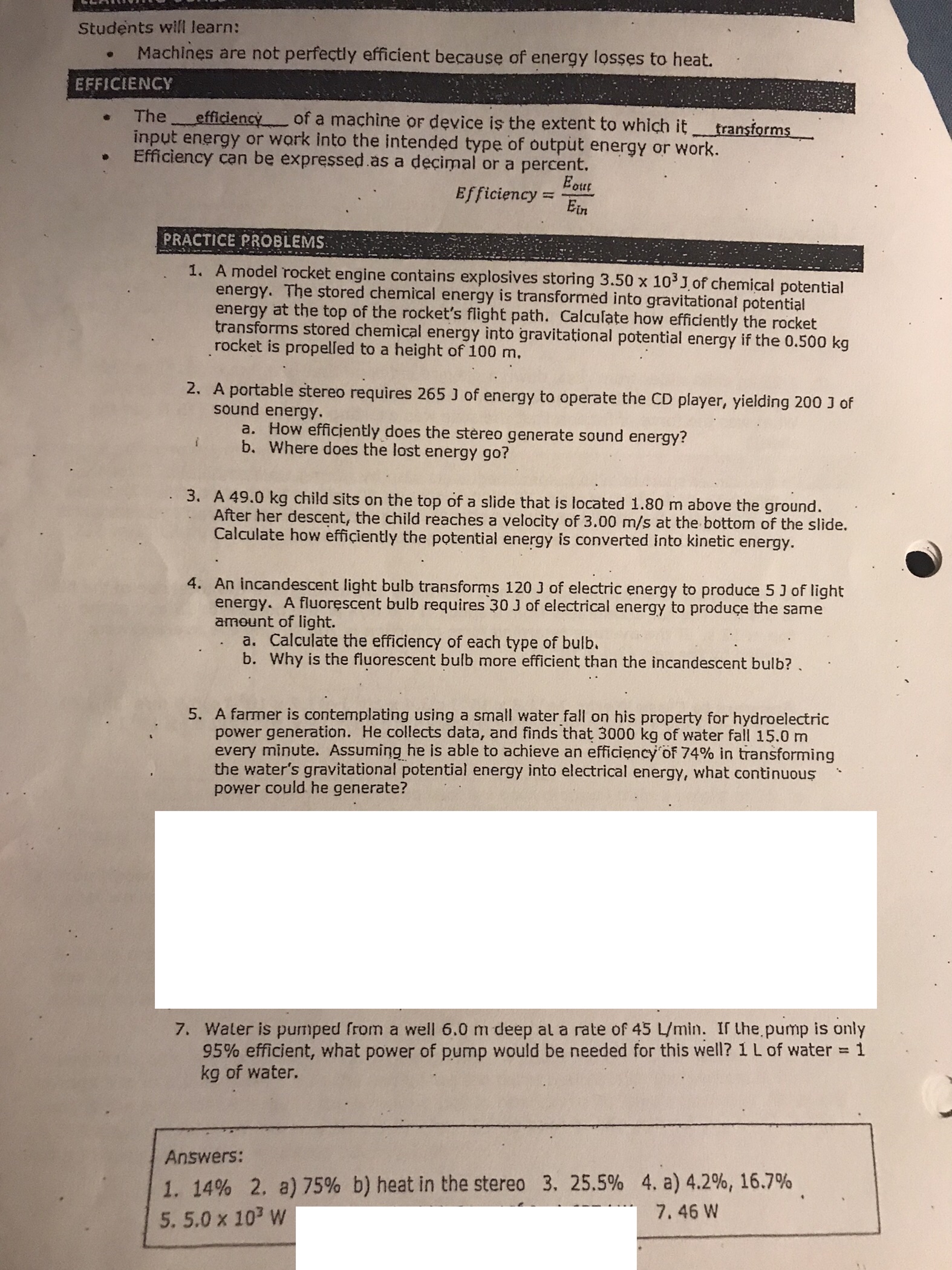
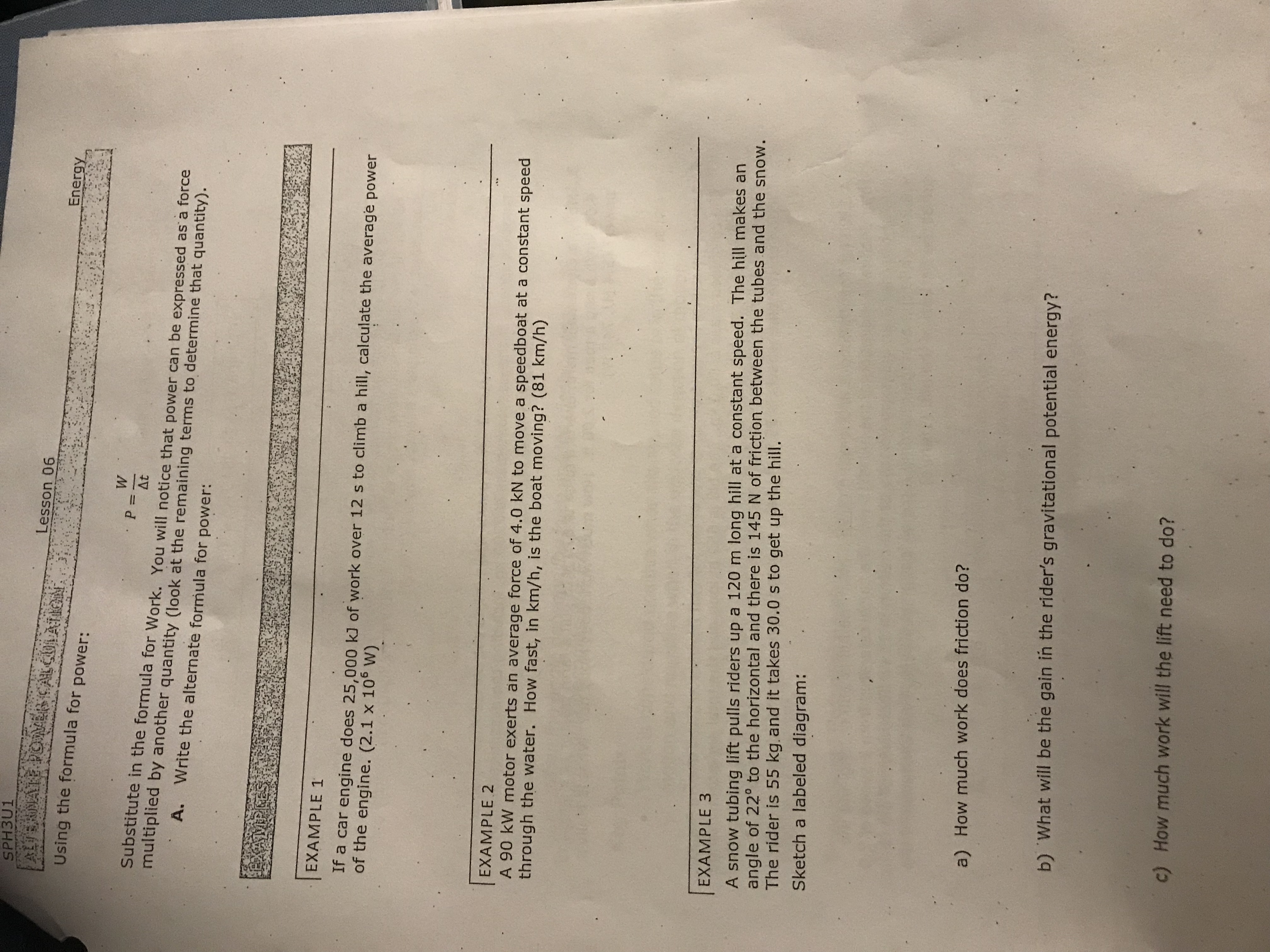
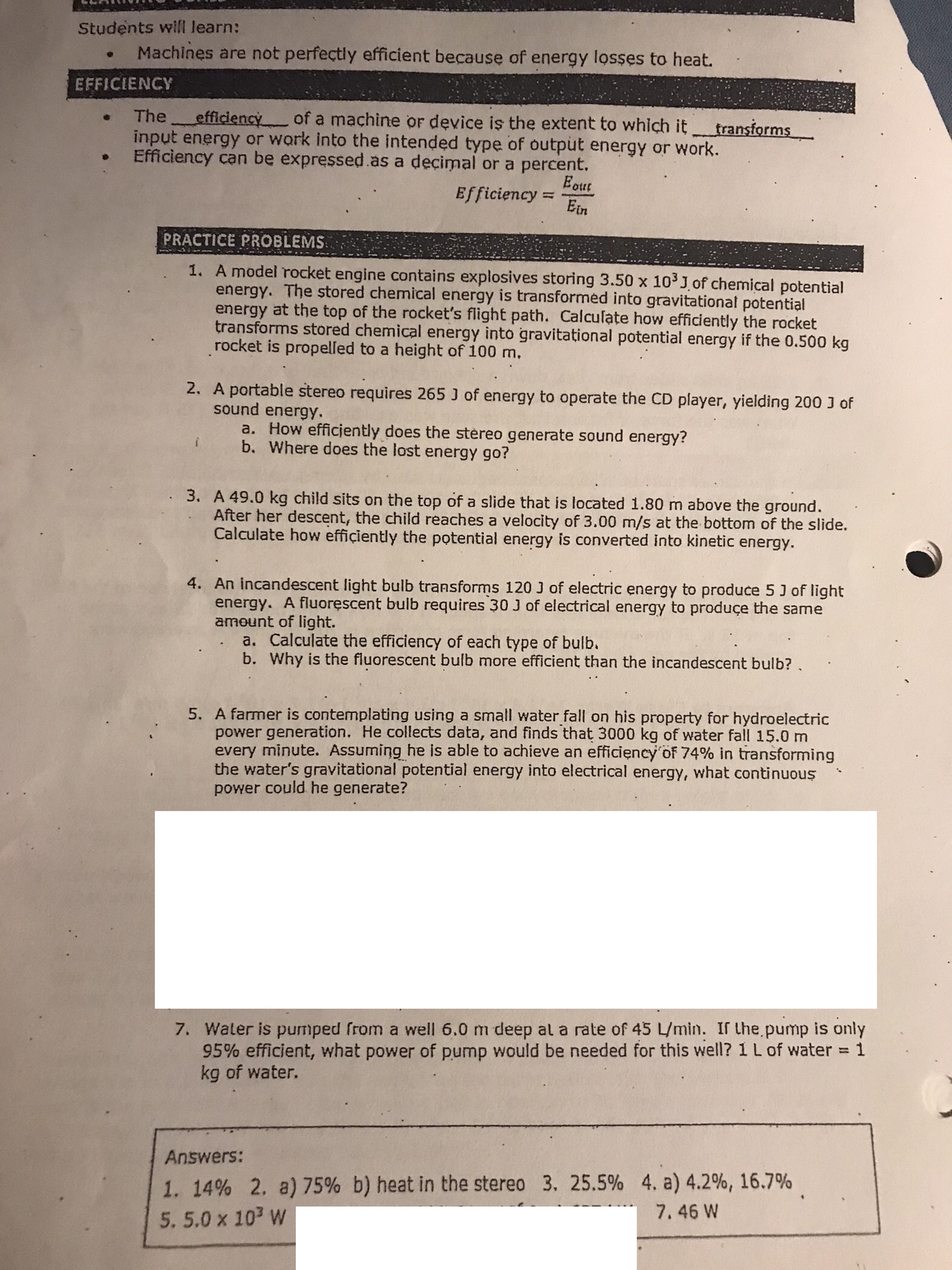
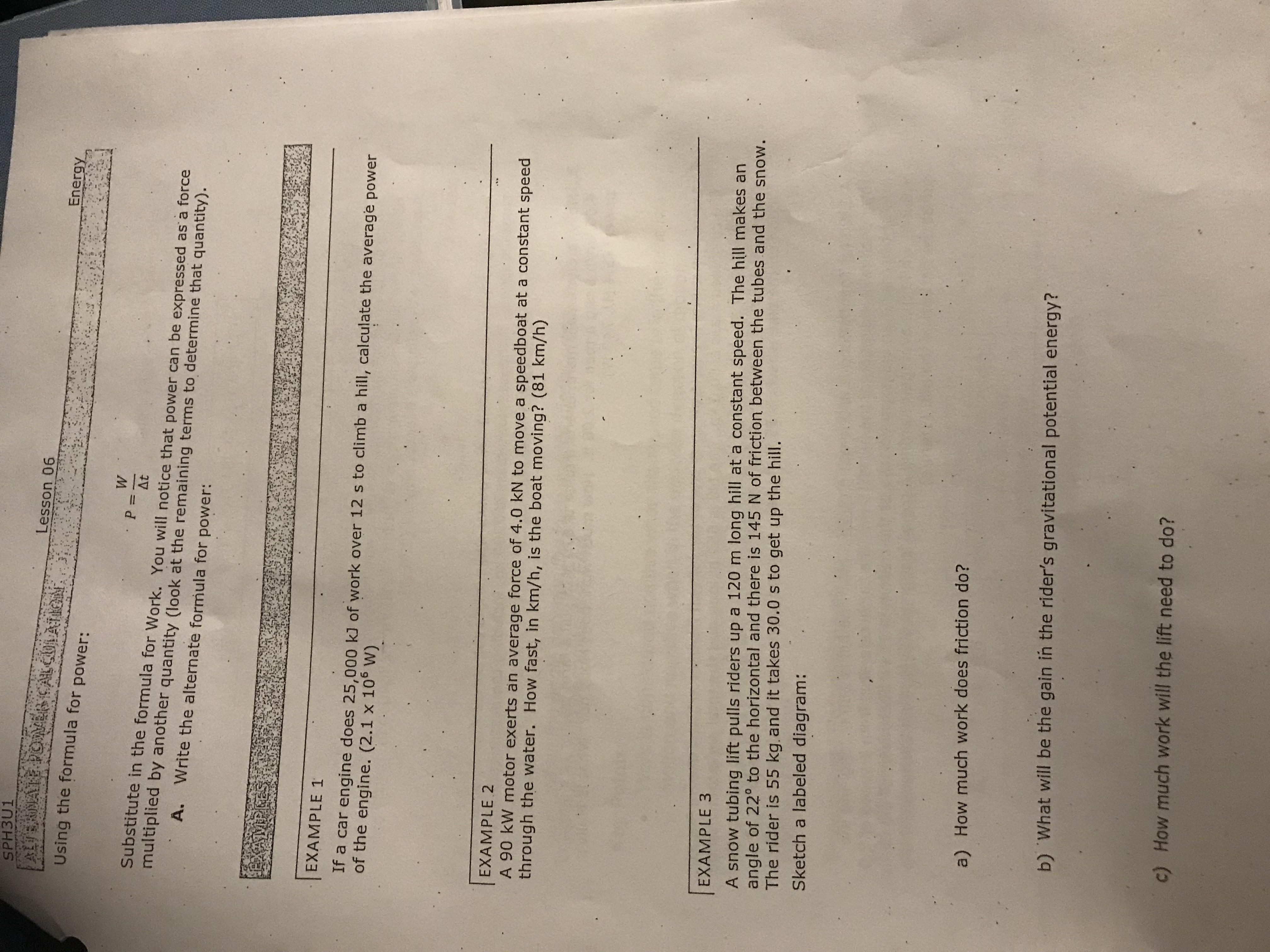
Students will learn: Machines are not perfectly efficient because of energy losses to heat. EFFICIENCY The efficiency of a machine or device is the extent to which it _transforms input energy or work into the intended type of output energy or work. Efficiency can be expressed as a decimal or a percent. Efficiency = Ein PRACTICE PROBLEMS: 1. A model rocket engine contains explosives storing 3.50 x 10'J. of chemical potential energy. The stored chemical energy is transformed into gravitational potential energy at the top of the rocket's flight path. Calculate how efficiently the rocket transforms stored chemical energy into gravitational potential energy if the 0.500 kg rocket is propelled to a height of 100 m. 2. A portable stereo requires 265 ] of energy to operate the CD player, yielding 200 ] of sound energy. a. How efficiently does the stereo generate sound energy? b. Where does the lost energy go? 3. A 49.0 kg child sits on the top of a slide that is located 1.80 m above the ground. After her descent, the child reaches a velocity of 3.00 m/s at the bottom of the slide. Calculate how efficiently the potential energy is converted into kinetic energy. 4. An incandescent light bulb transforms 120 J of electric energy to produce 5 ] of light energy. A fluorescent bulb requires 30 J of electrical energy to produce the same amount of light. a. Calculate the efficiency of each type of bulb. b. Why is the fluorescent bulb more efficient than the incandescent bulb? . 5. A farmer is contemplating using a small water fall on his property for hydroelectric power generation. He collects data, and finds that 3000 kg of water fall 15.0 m every minute. Assuming he is able to achieve an efficiency of 74% in transforming the water's gravitational potential energy into electrical energy, what continuous power could he generate? 7. Water is pumped from a well 6.0 m deep al a rate of 45 L/min. If the pump is only 95% efficient, what power of pump would be needed for this well? 1 L of water = 1 kg of water. Answers: 1. 14% 2, a) 75% b) heat in the stereo 3. 25.5% 4. a) 4.2%, 16.7% 5. 5.0 x 10³ W 7. 46 WSPH30 ALTERNA Lesson 06 Energy Using the formula for power: P = At Substitute in the formula for Work. You will notice that power can be expressed as a force multiplied by another quantity (look at the remaining terms to determine that quantity). A. Write the alternate formula for power: EXAMPLE 1 If a car engine does 25,000 kJ of work over 12 s to climb a hill, calculate the average power of the engine. (2.1 x 10⁶ W) EXAMPLE 2 A 90 KW motor exerts an average force of 4.0 kN to move a speedboat at a constant speed through the water. How fast, in km/h, is the boat moving? (81 km/h) EXAMPLE 3 A snow tubing lift pulls riders up a 120 m long hill at a constant speed. The hill makes an angle of 220 to the horizontal and there is 145 N of friction between the tubes and the snow. The rider is 55 kg. and it takes 30.0 s to get up the hill. Sketch a labeled diagram: a) How much work does friction do? b) What will be the gain in the rider's gravitational potential energy? c) How much work will the lift need to do
Step by Step Solution
There are 3 Steps involved in it

Get step-by-step solutions from verified subject matter experts