







Question: suppose that we once again aim to predict whether the students' final year grade is above or below average. This time, however, we are
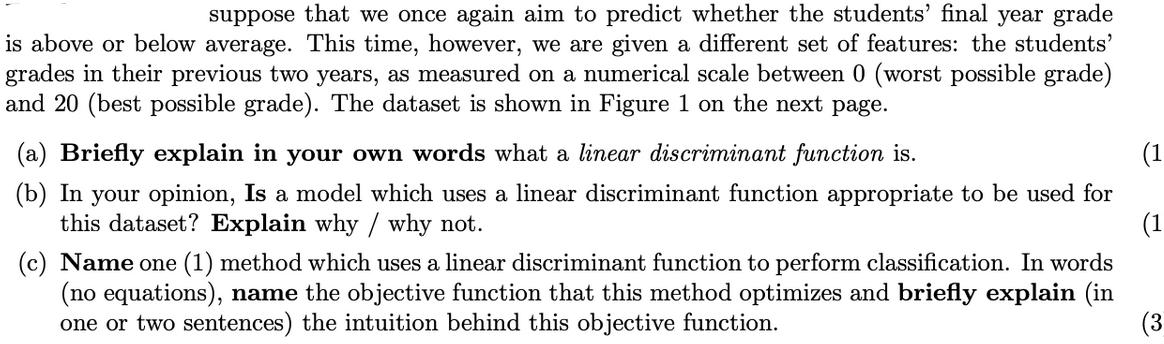
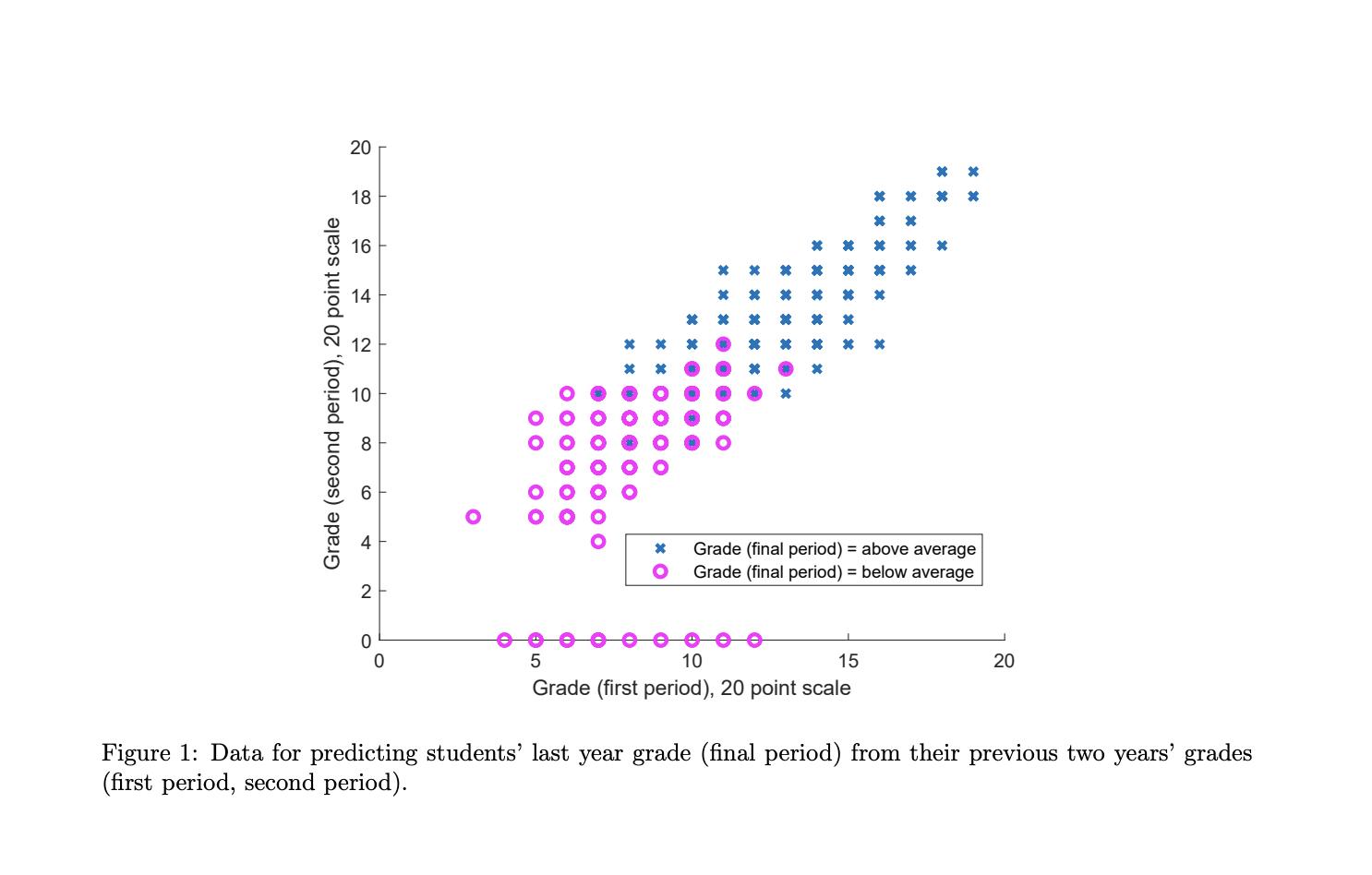
suppose that we once again aim to predict whether the students' final year grade is above or below average. This time, however, we are given a different set of features: the students' grades in their previous two years, as measured on a numerical scale between 0 (worst possible grade) and 20 (best possible grade). The dataset is shown in Figure 1 on the next page. (a) Briefly explain in your own words what a linear discriminant function is. (1 (b) In your opinion, Is a model which uses a linear discriminant function appropriate to be used for this dataset? Explain why / why not. (c) Name one (1) method which uses a linear discriminant function to perform classification. In words (no equations), name the objective function that this method optimizes and briefly explain (in one or two sentences) the intuition behind this objective function. Grade (second period), 20 point scale 20 18 16 14 12 10 co + 2 0 0 00 000000 00 OOOOOO OOO ** **0000 * O * * * * * * * * * * * * * * * * * * * 5 10 15 Grade (first period), 20 point scale * * * * * * Grade (final period) = above average Grade (final period) = below average 20 Figure 1: Data for predicting students' last year grade (final period) from their previous two years' grades (first period, second period).
Step by Step Solution
There are 3 Steps involved in it
Lets address each part of the question provided a A linear discriminant function is a decisionmaking function used in statistics and machine learning ... View full answer

Get step-by-step solutions from verified subject matter experts
 Study Help