Question: ts e Instructions ion Read the following writing samples and make notes as to whether or not each sample represents acceptable graduate- level writing. Writing
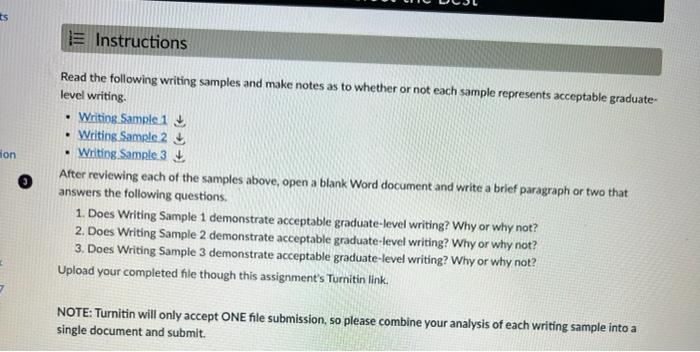
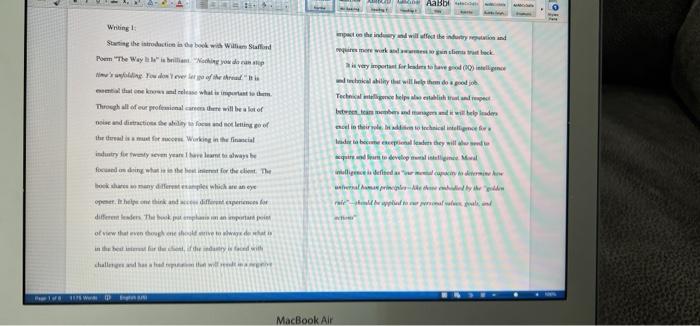
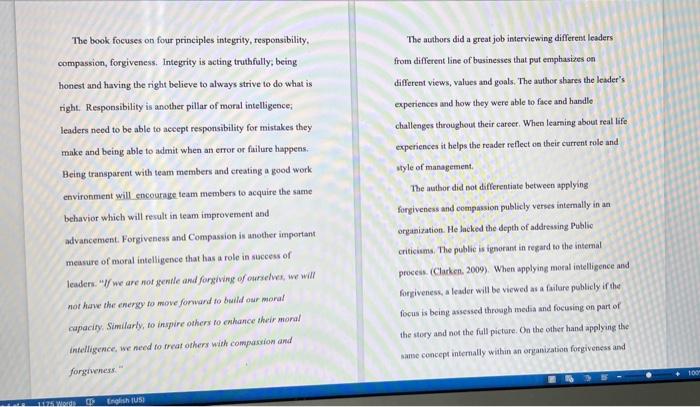
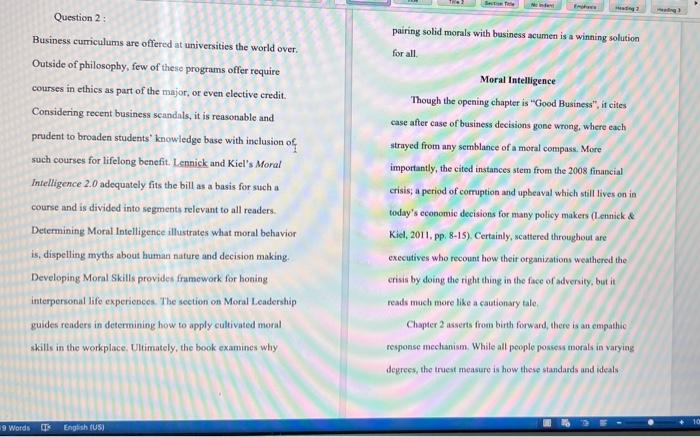
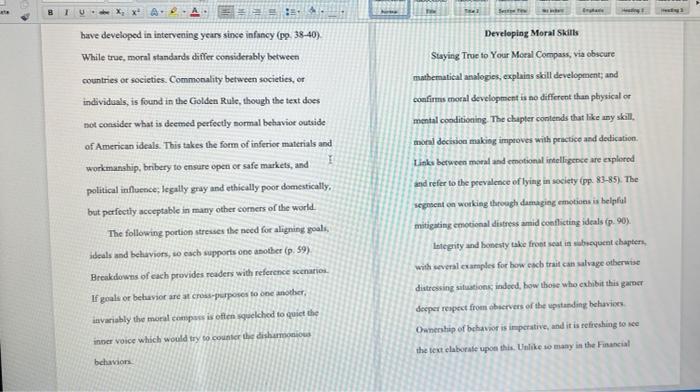
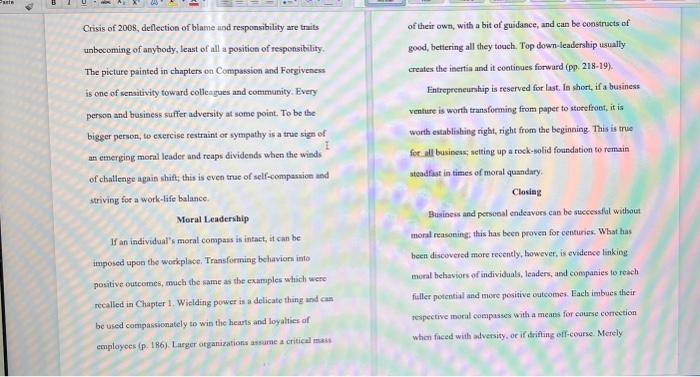
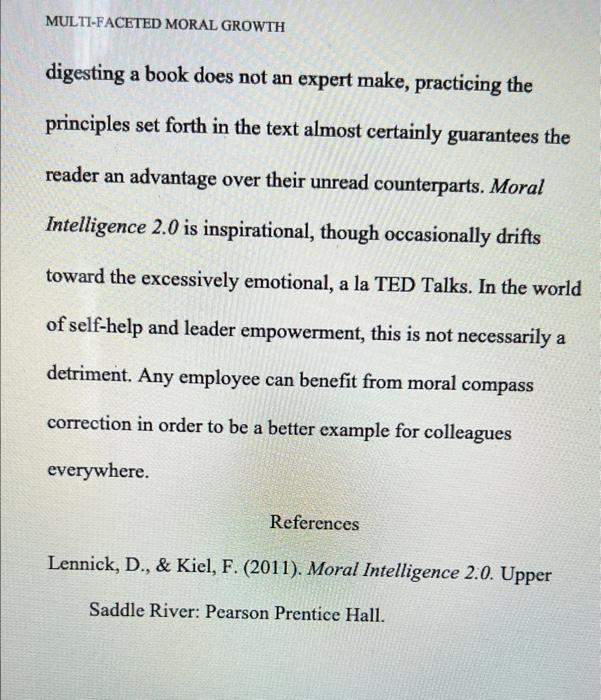
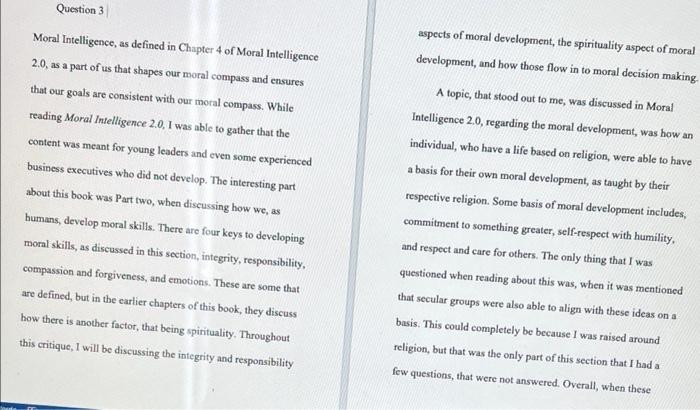
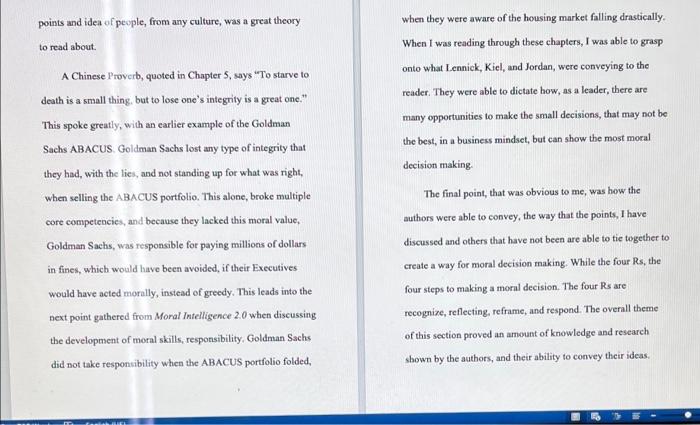
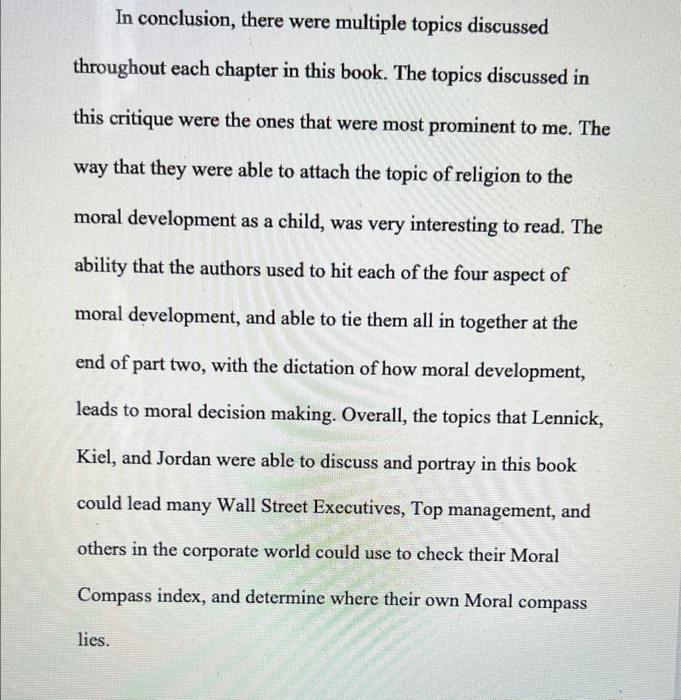
ts e Instructions ion Read the following writing samples and make notes as to whether or not each sample represents acceptable graduate- level writing. Writing Sample 1 Writing Sample 2 Writing Sample 3 After reviewing each of the samples above, open a blank Word document and write a brief paragraph or two that answers the following questions, 1. Does Writing Sample 1 demonstrate acceptable graduate-level writing? Why or why not? 2. Does Writing Sample 2 demonstrate acceptable graduate-level writing? Why or why not? 3. Does Writing Sample 3 demonstrate acceptable graduate-level writing? Why or why not? Upload your completed file though this assignment's Turnitin link. NOTE: Turnitin will only accept ONE file submission, so please combine your analysis of each writing sample into a single document and submit. . Aabble o pesten the indyw will ffect the industry and que mere og med lock is very important for lesions to have god) alice -ladily tamil laily that Technical to help with the band will de eller intellige de belewey will Writing Starting the introduction in the book with Willie Stafford Poem "The Way is biochin you down mwing your of the road tekee what them. Through all of our professional anthere will be a lot of Dose and distinction they found solution of there for Working in the facial industry way oyane Ireland focused on what is the best for them. The boekhandel which wenye oper. In that differences for diferentes man of view that even though ne odrive in the benefit you with challenge will equired to developing Mall lewe, MacBook Air The authors did a great job interviewing different leaders from different line of businesses that put emphasizes on different views, values and goals. The author shares the leader's experiences and how they were able to face and handle The book focuses on four principles integrity, responsibility. compassion, forgiveness. Integrity is acting truthfully, being honest and having the right believe to always strive to do what is right. Responsibility is another pillar of moral intelligence; leaders nood to be able to accept responsibility for mistakes they make and being able to admit when an error or failure happens Being transparent with team members and creating a good work environment will encourage team members to acquire the same behavior which will result in team improvement and challenges throughout their career. When learning about real life experiences it helps the reader reflect on their current role and style of management The author did not differentiate between applying advancement Forgiveness and Compassion is another important measure of moral intelligence that has a role in success of leaders" we are not gentle and forgiving of ourselves, we will not have the energy to move forward to build our moral capacity. Similarly, to inspire others to enhance their moral Intelligence, we need to treat others with compassion and forgness forgiveness and compassion publicly verses internally in an organization. He lacked the depth of addressing Public criticisms. The public is ignorant in regard to the internal process (Clarken, 2009). When applying moral intelligence and forgiveness, a leader will be viewed as a failure publicly if the focus is being assessed through media and focusing on part of the story and not the full picture. On the other hand applying the same concept intemally within an organization forgiveness and 100 1125 ML English USI Question 2 : pairing solid morals with business acumen is a winning solution Business curriculums are offered at universities the world over. for all Outside of philosophy, few of these programs offer require courses in ethics as part of the major, or even elective credit. Considering recent business scandals, it is reasonable and prudent to broaden students' knowledge base with inclusion of such courses for lifelong benefit. Lennick and Kiel's Moral Intelligence 2.0 adequately fits the bill as a basis for such a course and is divided into segments relevant to all readers. Determining Moral Intelligence illustrates what moral behavior is, dispelling myths about human nature and decision making. Developing Moral Skills provides framework for honing interpersonal life experiences. The section on Moral Leadership guides renders in determining how to apply cultivated moral skills in the workplace. Ultimately, the book examines why Moral Intelligence Though the opening chapter is "Good Business", it cites case after case of business decisions gone wrong, where each strayed from any semblance of a moral compass. More importantly, the cited instances stem from the 2008 financial crisis, a period of corruption and upheaval which still lives on in today's economic decisions for many policy makers (I.cnnick & a Kiel, 2011, pp. 8-15). Certainly, scattered throughout are executives who recount how their organizations weathered the crisis by doing the right thing in the face of adversity, but it rends much more like a cautionary tale, a Chapter 2 asserts from birth forward, there is an empathic response mechanism. While all people postess morals in varying degrees, the truest measure is how these standards and ideals 9 Words English (US) See Developing Moral Skills Staying True to Your Moral Compass, via obscure mathematical analogies, explains skill development; and confirms moral development is no different than physical or mental conditioning. The chapter contends that like any skill have developed in intervening years since infancy (pp 38-40) While true, moral standards differ considerably between countries or societies. Commonality between societies, or individuals, is found in the Golden Rule, though the text does not consider what is deemed perfectly normal behavior outside of American ideals. This takes the form of inferior materials and workmanship, bribery to ensure open or safe markets, and political influence; legally gray and ethically poor domestically, but perfectly acceptable in many other corners of the world. The following portion stresses the need for aligning goals, ideals and behaviors, to each supports one another is, 59) Breakdowns of each provides readers with reference scenario If goals or betuvio are at cross-purposes to one another, invariably the moral compees is often squelched to quict the inger voice which would try to counter the disharmonious monal decision making improves with practice and dedication. Links between moral and emotional intelligence are explored and refer to the prevalence of lying in society (pp. 83-85). The seprint on working through damaging emotions is helpful mitigating emotional distress amid conflicting ideals (p. 90). Integrity and honesty take front seat in subsequent chapters, with several examples for how eachtrait can salvage otherwise distressing stations indeed, how those who exhibit this gamer deeper respect from ouervers of the upstanding behaviors Ownership of behavior is imperative, and it is refreshing to see the text elaborate upon this. Unlike so many in the Financial behaviors Parte of their own, with a bit of guidance, and can be constructs of good, bettering all they touch. Top down-leadership usually creates the inertia and it continues forward (pp. 218-19). Entrepreneurship is reserved for last. In short, if a business Crisis of 2008, deflection of blame and responsibility are traits unbecoming of anybody, least of all a position of responsibility The picture painted in chapters on Compassion and Forgiveness is one of sensitivity toward colleagues and community. Every person and business suffer adversity at some point. To be the bigger person, to exercise restraint or sympathy is a true sien of an emerging moral leader and reaps dividends when the winds of challenge again shift; this is even true of self-compassion and striving for a work-life balance venture is worth transforming from paper to storefront, it is Moral Leadership If an individual's moral compass is intact, it can be imposed upon the workplace. Transforming behaviors into positive outcomes, much the same as the examples which were recalled in Chapter 1. Wielding power is a delicate thing and can worth establishing right, right from the beginning. This is true for all business setting up a rock-solid foundation to remain steadfast in times of moral quandary Closing Business and personal endeavors can be successful without moral reasoning: this has been proven for centuries. What has heen discovered more recently, however, is evidence linking moral behaviors of individuals, leaders, and companies to reach filler potential and more positive outcomes. Each imbues their respective moral compasses with a means for course correction when faced with adversity, or if drifting off-course Merely be used compassionately to win the hearts and loyalties of employees (p. 186). Larger organizations assume a critical mass MULTI-FACETED MORAL GROWTH digesting a book does not an expert make, practicing the principles set forth in the text almost certainly guarantees the reader an advantage over their unread counterparts. Moral Intelligence 2.0 is inspirational, though occasionally drifts toward the excessively emotional, a la TED Talks. In the world of self-help and leader empowerment, this is not necessarily a detriment. Any employee can benefit from moral compass correction in order to be a better example for colleagues everywhere. References Lennick, D., & Kiel, F. (2011). Moral Intelligence 2.0. Upper Saddle River: Pearson Prentice Hall. Question 3 Moral Intelligence, as defined in Chapter 4 of Moral Intelligence 2.0, as a part of us that shapes our moral compass and ensures that our goals are consistent with our moral compass. While reading Moral Intelligence 2.0, I was able to gather that the content was meant for young leaders and even some experienced business executives who did not develop. The interesting part about this book was Part two, when discussing how we, as humans, develop moral skills. There are four keys to developing moral skills, as discussed in this section, integrity, responsibility, compassion and forgiveness, and emotions. These are some that are defined, but in the earlier chapters of this book, they discuss how there is another factor, that being spirituality. Throughout this critique, I will be discussing the integrity and responsibility aspects of moral development, the spirituality aspect of moral development, and how those flow in to moral decision making A topic, that stood out to me, was discussed in Moral Intelligence 2.0, regarding the moral development, was how an individual, who have a life based on religion, were able to have a basis for their own moral development, as taught by their respective religion. Some basis of moral development includes, commitment to something greater, self-respect with humility, and respect and care for others. The only thing that I was questioned when reading about this was, when it was mentioned that secular groups were also able to align with these ideas on a basis. This could completely be because I was raised around religion, but that was the only part of this section that I had a few questions, that were not answered. Overall, when these a points and idea of people, from any culture, was a great theory to read about when they were aware of the housing market falling drastically. When I was reading through these chapters, I was able to grasp onto what Lennick, Kiel, and Jordan, were conveying to the reader. They were able to dictate how, as a leader, there are many opportunities to make the small decisions, that may not be the best, in a business mindset, but can show the most moral decision making a A Chinese Proverb, quoted in Chapter 5, says "To starve to death is a small thing, but to lose one's integrity is a great one." This spoke greatly, with an earlier example of the Goldman Sachs ABACUS Goldman Sachs lost any type of integrity that they had, with the lies, and not standing up for what was right, when selling the ABACUS portfolio. This alone, broke multiple core competencies, and because they lacked this moral value, Goldman Sachs, was responsible for paying millions of dollars in fines, which would have been avoided, if their Executives would have acted morally, instead of greedy. This leads into the next point gathered from Moral Intelligence 2.0 when discussing the development of moral skills, responsibility, Goldman Sachs did not take responsibility when the ABACUS portfolio folded, a The final point, that was obvious to me, was how the authors were able to convey, the way that the points, I have discussed and others that have not been are able to tie together to create a way for moral decision making. While the four Rs, the four steps to making a moral decision. The four Rs are recognize, reflecting, reframe, and respond. The overall theme of this section proved an amount of knowledge and research shown by the authors, and their ability to convey their ideas, a In conclusion, there were multiple topics discussed throughout each chapter in this book. The topics discussed in this critique were the ones that were most prominent to me. The way that they were able to attach the topic of religion to the moral development as a child, was very interesting to read. The ability that the authors used to hit each of the four aspect of moral development, and able to tie them all in together at the end of part two, with the dictation of how moral development, leads to moral decision making. Overall, the topics that Lennick, Kiel, and Jordan were able to discuss and portray in this book could lead many Wall Street Executives, Top management, and others in the corporate world could use to check their Moral Compass index, and determine where their own Moral compass lies. ts e Instructions ion Read the following writing samples and make notes as to whether or not each sample represents acceptable graduate- level writing. Writing Sample 1 Writing Sample 2 Writing Sample 3 After reviewing each of the samples above, open a blank Word document and write a brief paragraph or two that answers the following questions, 1. Does Writing Sample 1 demonstrate acceptable graduate-level writing? Why or why not? 2. Does Writing Sample 2 demonstrate acceptable graduate-level writing? Why or why not? 3. Does Writing Sample 3 demonstrate acceptable graduate-level writing? Why or why not? Upload your completed file though this assignment's Turnitin link. NOTE: Turnitin will only accept ONE file submission, so please combine your analysis of each writing sample into a single document and submit. . Aabble o pesten the indyw will ffect the industry and que mere og med lock is very important for lesions to have god) alice -ladily tamil laily that Technical to help with the band will de eller intellige de belewey will Writing Starting the introduction in the book with Willie Stafford Poem "The Way is biochin you down mwing your of the road tekee what them. Through all of our professional anthere will be a lot of Dose and distinction they found solution of there for Working in the facial industry way oyane Ireland focused on what is the best for them. The boekhandel which wenye oper. In that differences for diferentes man of view that even though ne odrive in the benefit you with challenge will equired to developing Mall lewe, MacBook Air The authors did a great job interviewing different leaders from different line of businesses that put emphasizes on different views, values and goals. The author shares the leader's experiences and how they were able to face and handle The book focuses on four principles integrity, responsibility. compassion, forgiveness. Integrity is acting truthfully, being honest and having the right believe to always strive to do what is right. Responsibility is another pillar of moral intelligence; leaders nood to be able to accept responsibility for mistakes they make and being able to admit when an error or failure happens Being transparent with team members and creating a good work environment will encourage team members to acquire the same behavior which will result in team improvement and challenges throughout their career. When learning about real life experiences it helps the reader reflect on their current role and style of management The author did not differentiate between applying advancement Forgiveness and Compassion is another important measure of moral intelligence that has a role in success of leaders" we are not gentle and forgiving of ourselves, we will not have the energy to move forward to build our moral capacity. Similarly, to inspire others to enhance their moral Intelligence, we need to treat others with compassion and forgness forgiveness and compassion publicly verses internally in an organization. He lacked the depth of addressing Public criticisms. The public is ignorant in regard to the internal process (Clarken, 2009). When applying moral intelligence and forgiveness, a leader will be viewed as a failure publicly if the focus is being assessed through media and focusing on part of the story and not the full picture. On the other hand applying the same concept intemally within an organization forgiveness and 100 1125 ML English USI Question 2 : pairing solid morals with business acumen is a winning solution Business curriculums are offered at universities the world over. for all Outside of philosophy, few of these programs offer require courses in ethics as part of the major, or even elective credit. Considering recent business scandals, it is reasonable and prudent to broaden students' knowledge base with inclusion of such courses for lifelong benefit. Lennick and Kiel's Moral Intelligence 2.0 adequately fits the bill as a basis for such a course and is divided into segments relevant to all readers. Determining Moral Intelligence illustrates what moral behavior is, dispelling myths about human nature and decision making. Developing Moral Skills provides framework for honing interpersonal life experiences. The section on Moral Leadership guides renders in determining how to apply cultivated moral skills in the workplace. Ultimately, the book examines why Moral Intelligence Though the opening chapter is "Good Business", it cites case after case of business decisions gone wrong, where each strayed from any semblance of a moral compass. More importantly, the cited instances stem from the 2008 financial crisis, a period of corruption and upheaval which still lives on in today's economic decisions for many policy makers (I.cnnick & a Kiel, 2011, pp. 8-15). Certainly, scattered throughout are executives who recount how their organizations weathered the crisis by doing the right thing in the face of adversity, but it rends much more like a cautionary tale, a Chapter 2 asserts from birth forward, there is an empathic response mechanism. While all people postess morals in varying degrees, the truest measure is how these standards and ideals 9 Words English (US) See Developing Moral Skills Staying True to Your Moral Compass, via obscure mathematical analogies, explains skill development; and confirms moral development is no different than physical or mental conditioning. The chapter contends that like any skill have developed in intervening years since infancy (pp 38-40) While true, moral standards differ considerably between countries or societies. Commonality between societies, or individuals, is found in the Golden Rule, though the text does not consider what is deemed perfectly normal behavior outside of American ideals. This takes the form of inferior materials and workmanship, bribery to ensure open or safe markets, and political influence; legally gray and ethically poor domestically, but perfectly acceptable in many other corners of the world. The following portion stresses the need for aligning goals, ideals and behaviors, to each supports one another is, 59) Breakdowns of each provides readers with reference scenario If goals or betuvio are at cross-purposes to one another, invariably the moral compees is often squelched to quict the inger voice which would try to counter the disharmonious monal decision making improves with practice and dedication. Links between moral and emotional intelligence are explored and refer to the prevalence of lying in society (pp. 83-85). The seprint on working through damaging emotions is helpful mitigating emotional distress amid conflicting ideals (p. 90). Integrity and honesty take front seat in subsequent chapters, with several examples for how eachtrait can salvage otherwise distressing stations indeed, how those who exhibit this gamer deeper respect from ouervers of the upstanding behaviors Ownership of behavior is imperative, and it is refreshing to see the text elaborate upon this. Unlike so many in the Financial behaviors Parte of their own, with a bit of guidance, and can be constructs of good, bettering all they touch. Top down-leadership usually creates the inertia and it continues forward (pp. 218-19). Entrepreneurship is reserved for last. In short, if a business Crisis of 2008, deflection of blame and responsibility are traits unbecoming of anybody, least of all a position of responsibility The picture painted in chapters on Compassion and Forgiveness is one of sensitivity toward colleagues and community. Every person and business suffer adversity at some point. To be the bigger person, to exercise restraint or sympathy is a true sien of an emerging moral leader and reaps dividends when the winds of challenge again shift; this is even true of self-compassion and striving for a work-life balance venture is worth transforming from paper to storefront, it is Moral Leadership If an individual's moral compass is intact, it can be imposed upon the workplace. Transforming behaviors into positive outcomes, much the same as the examples which were recalled in Chapter 1. Wielding power is a delicate thing and can worth establishing right, right from the beginning. This is true for all business setting up a rock-solid foundation to remain steadfast in times of moral quandary Closing Business and personal endeavors can be successful without moral reasoning: this has been proven for centuries. What has heen discovered more recently, however, is evidence linking moral behaviors of individuals, leaders, and companies to reach filler potential and more positive outcomes. Each imbues their respective moral compasses with a means for course correction when faced with adversity, or if drifting off-course Merely be used compassionately to win the hearts and loyalties of employees (p. 186). Larger organizations assume a critical mass MULTI-FACETED MORAL GROWTH digesting a book does not an expert make, practicing the principles set forth in the text almost certainly guarantees the reader an advantage over their unread counterparts. Moral Intelligence 2.0 is inspirational, though occasionally drifts toward the excessively emotional, a la TED Talks. In the world of self-help and leader empowerment, this is not necessarily a detriment. Any employee can benefit from moral compass correction in order to be a better example for colleagues everywhere. References Lennick, D., & Kiel, F. (2011). Moral Intelligence 2.0. Upper Saddle River: Pearson Prentice Hall. Question 3 Moral Intelligence, as defined in Chapter 4 of Moral Intelligence 2.0, as a part of us that shapes our moral compass and ensures that our goals are consistent with our moral compass. While reading Moral Intelligence 2.0, I was able to gather that the content was meant for young leaders and even some experienced business executives who did not develop. The interesting part about this book was Part two, when discussing how we, as humans, develop moral skills. There are four keys to developing moral skills, as discussed in this section, integrity, responsibility, compassion and forgiveness, and emotions. These are some that are defined, but in the earlier chapters of this book, they discuss how there is another factor, that being spirituality. Throughout this critique, I will be discussing the integrity and responsibility aspects of moral development, the spirituality aspect of moral development, and how those flow in to moral decision making A topic, that stood out to me, was discussed in Moral Intelligence 2.0, regarding the moral development, was how an individual, who have a life based on religion, were able to have a basis for their own moral development, as taught by their respective religion. Some basis of moral development includes, commitment to something greater, self-respect with humility, and respect and care for others. The only thing that I was questioned when reading about this was, when it was mentioned that secular groups were also able to align with these ideas on a basis. This could completely be because I was raised around religion, but that was the only part of this section that I had a few questions, that were not answered. Overall, when these a points and idea of people, from any culture, was a great theory to read about when they were aware of the housing market falling drastically. When I was reading through these chapters, I was able to grasp onto what Lennick, Kiel, and Jordan, were conveying to the reader. They were able to dictate how, as a leader, there are many opportunities to make the small decisions, that may not be the best, in a business mindset, but can show the most moral decision making a A Chinese Proverb, quoted in Chapter 5, says "To starve to death is a small thing, but to lose one's integrity is a great one." This spoke greatly, with an earlier example of the Goldman Sachs ABACUS Goldman Sachs lost any type of integrity that they had, with the lies, and not standing up for what was right, when selling the ABACUS portfolio. This alone, broke multiple core competencies, and because they lacked this moral value, Goldman Sachs, was responsible for paying millions of dollars in fines, which would have been avoided, if their Executives would have acted morally, instead of greedy. This leads into the next point gathered from Moral Intelligence 2.0 when discussing the development of moral skills, responsibility, Goldman Sachs did not take responsibility when the ABACUS portfolio folded, a The final point, that was obvious to me, was how the authors were able to convey, the way that the points, I have discussed and others that have not been are able to tie together to create a way for moral decision making. While the four Rs, the four steps to making a moral decision. The four Rs are recognize, reflecting, reframe, and respond. The overall theme of this section proved an amount of knowledge and research shown by the authors, and their ability to convey their ideas, a In conclusion, there were multiple topics discussed throughout each chapter in this book. The topics discussed in this critique were the ones that were most prominent to me. The way that they were able to attach the topic of religion to the moral development as a child, was very interesting to read. The ability that the authors used to hit each of the four aspect of moral development, and able to tie them all in together at the end of part two, with the dictation of how moral development, leads to moral decision making. Overall, the topics that Lennick, Kiel, and Jordan were able to discuss and portray in this book could lead many Wall Street Executives, Top management, and others in the corporate world could use to check their Moral Compass index, and determine where their own Moral compass lies









 Study Help