







Question: Fault surfaces sometimes contain overprinted slip lineations (fault striae). Such slip lineations can be used to determine the orientation of slip on a fault, and,
Fault surfaces sometimes contain overprinted slip lineations (fault striae). Such slip lineations can be used to determine the orientation of slip on a fault, and, therefore, whether the motion on the fault was strike-slip, dipslip, or oblique-slip. A geology student who was just learning to use a Brunton compass recorded the orientations of five slip lineations on one fault surface. The strike and dip of the fault surface is 320°, 47°NE. The student’s five recorded lineation orientations are recorded in the table below.
Determine which lineation orientations are feasible and which ones must represent a mistake on the part of the student because the given orientation does not lie within the fault plane. Give a brief explanation for each of your five answers. For the valid lineation orientations, indicate which type of fault motion is indicated.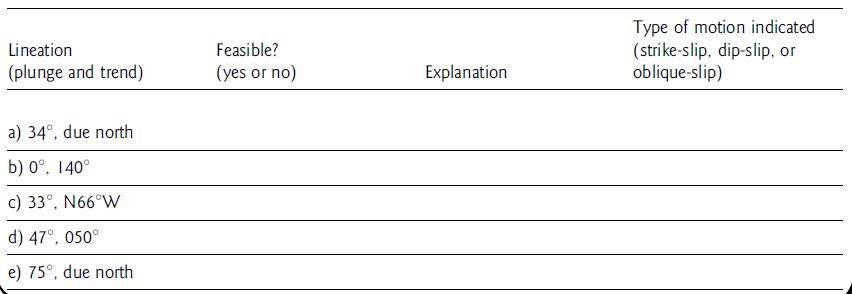
Lineation (plunge and trend) a) 34, due north b) 0, 140 c) 33, N66W d) 47, 050 e) 75, due north Feasible? (yes or no) Explanation Type of motion indicated (strike-slip, dip-slip, or oblique-slip)
Step by Step Solution
3.45 Rating (165 Votes )
There are 3 Steps involved in it
Lineation plunge and trend Feasible Explanation Type of motion indicated 34 due north Yes The appare... View full answer

Get step-by-step solutions from verified subject matter experts
 Study Help