



Question: Figure G-21 (Appendix G) contains an oblique view of a small map area showing several outcrops, some with parasitic folds. Each outcrop on the oblique
Figure G-21 (Appendix G) contains an oblique view of a small map area showing several outcrops, some with parasitic folds. Each outcrop on the oblique view is represented on the map view (Fig. G-21b) by either a strike-and-dip symbol or a trend-andplunge symbol. The black layers represent thin limestone beds that are interbedded with shale and sandstone. The limestone bed at one outcrop is not necessarily the same bed as at another outcrop.
1. Using small, curved arrows, as in Fig. 8.3, indicate on the map view (Fig. G-21b) the sense of rotation of each parasitic fold.
2. Draw the axial traces of the major folds on the map.
3. Sketch the structure section A–A’ in Fig. G-21c, schematically showing parasitic folds.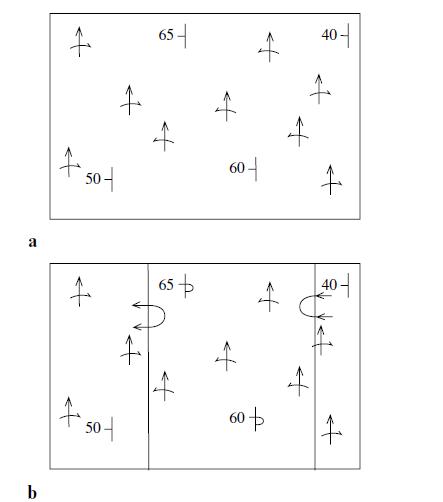
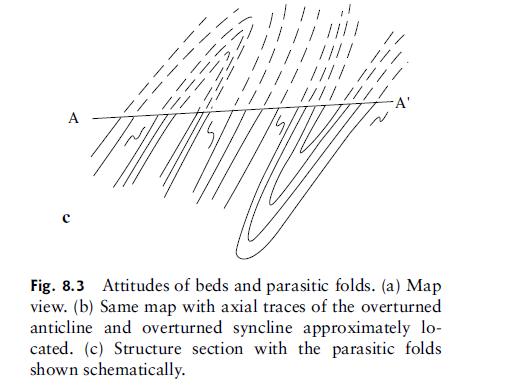
Figure G-21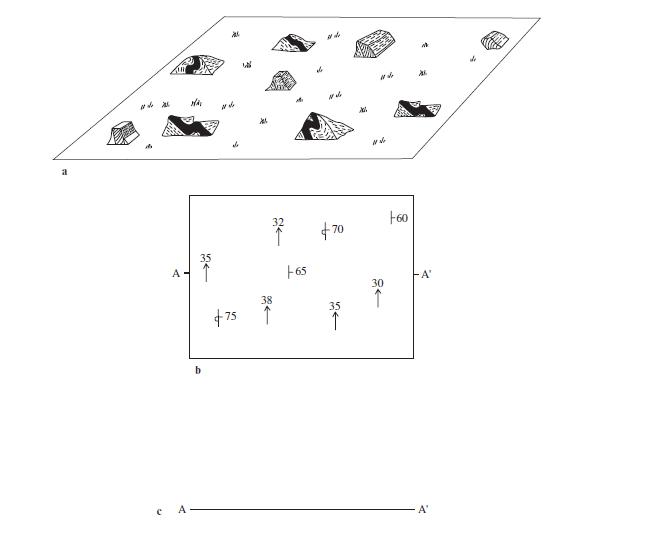
95 + + A 4 4 4 f --09 Fos
Step by Step Solution
3.45 Rating (165 Votes )
There are 3 Steps involved in it
For answer a and b refer to the photo attached with drawings in the map and also ref... View full answer

Get step-by-step solutions from verified subject matter experts