



Question: Figure G-58 contains three focal-mechanism solutions. Beneath each diagram write a description of the two possible interpretations for fault orientation and sense of motion (normal,
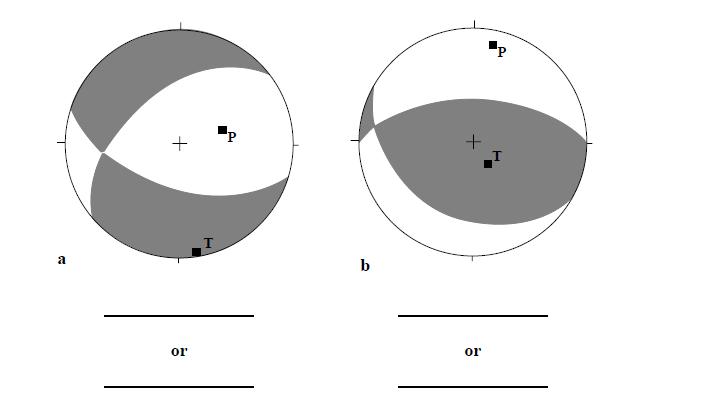
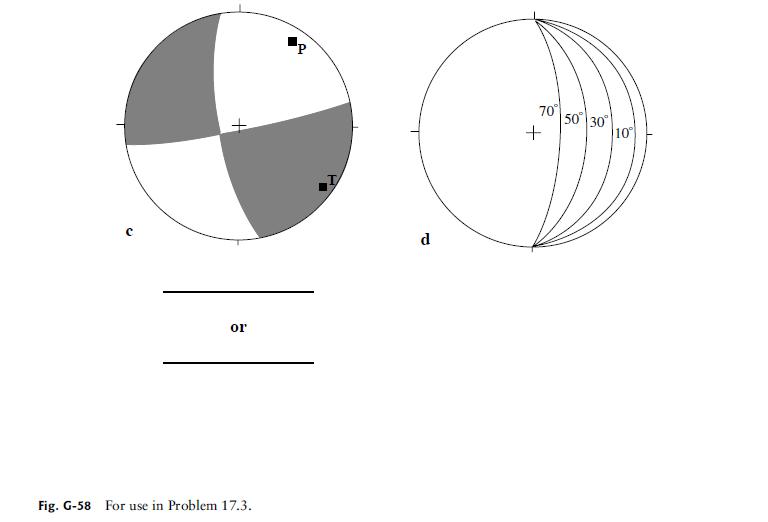
Figure G-58 contains three focal-mechanism solutions. Beneath each diagram write a description of the two possible interpretations for fault orientation and sense of motion (normal, reverse, oblique, etc.), as in the example of Fig. 17.10. Measure the fault strikes precisely with a protractor, but use the template to determine the approximate dip. In the case of oblique movement specify both components of motion, e.g., ‘‘left-reverse movement’’ or ‘‘dominantly normal with a component of right slip.’’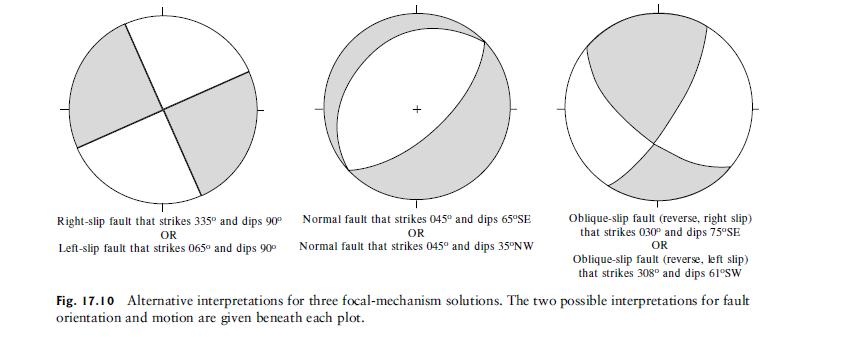
Right-slip fault that strikes 335 and dips 90 OR Left-slip fault that strikes 065 and dips 90 Normal fault that strikes 045 and dips 65SE OR Normal fault that strikes 045 and dips 35NW O Oblique-slip fault (reverse, right slip) that strikes 030 and dips 75SE OR Oblique-slip fault (reverse, left slip) that strikes 308 and dips 61SW Fig. 17.10 Alternative interpretations for three focal-mechanism solutions. The two possible interpretations for fault orientation and motion are given beneath each plot.
Step by Step Solution
3.46 Rating (162 Votes )
There are 3 Steps involved in it

Get step-by-step solutions from verified subject matter experts