







Question: 1- based on the below information kindly provide us the the mcq questions and the true a d false questions that ate telated to the
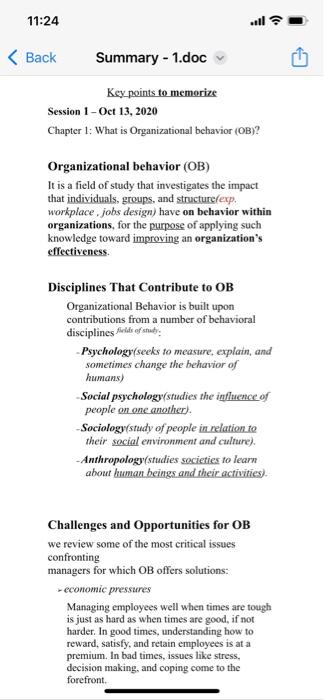
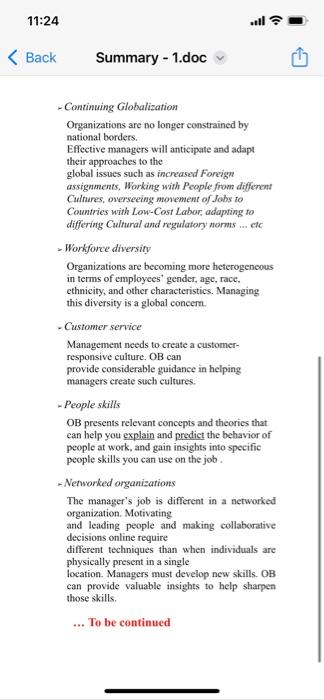
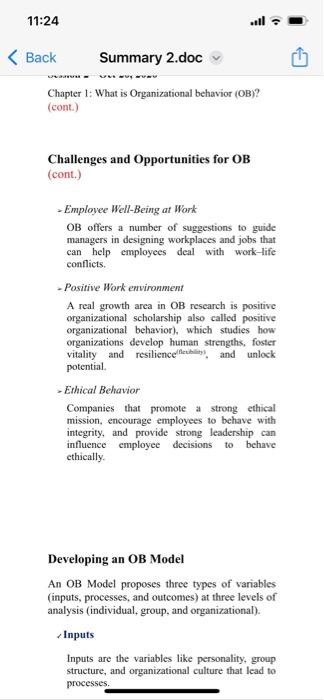
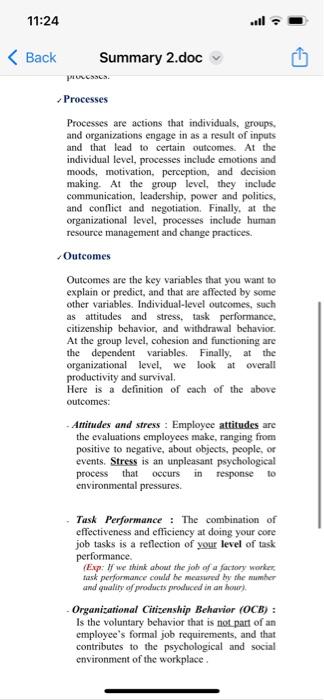
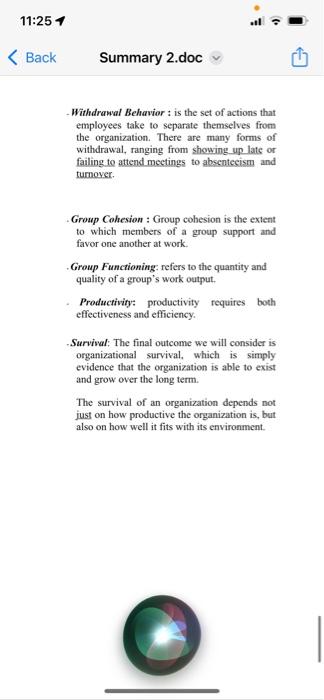
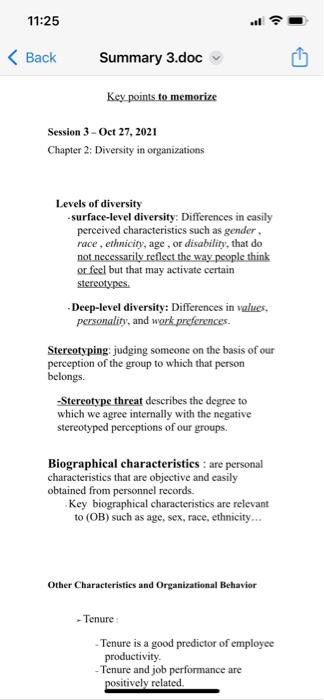
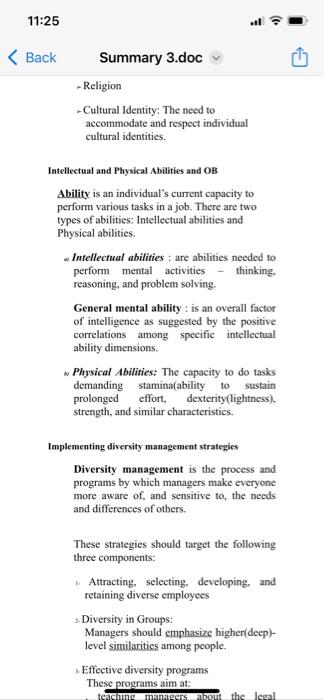
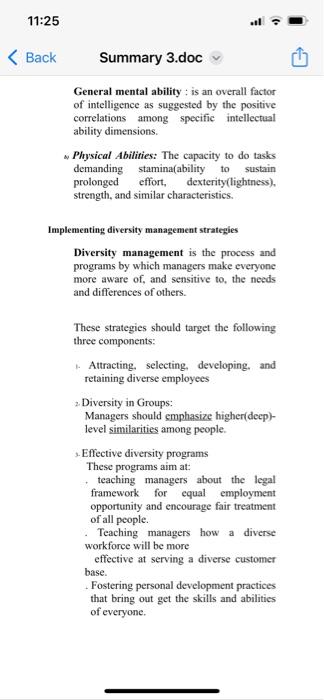
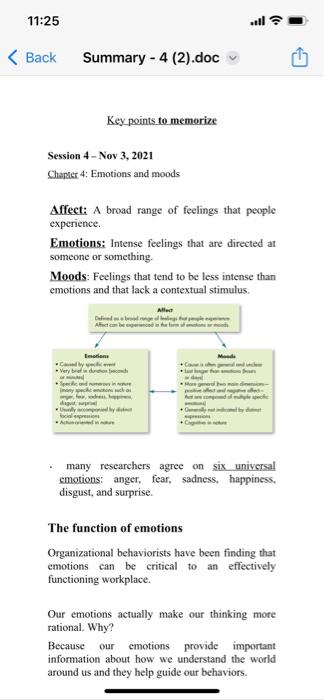
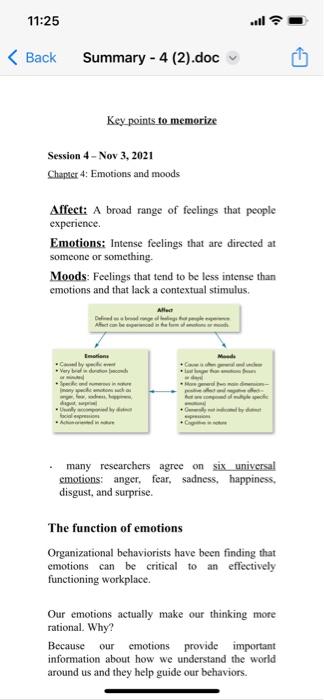
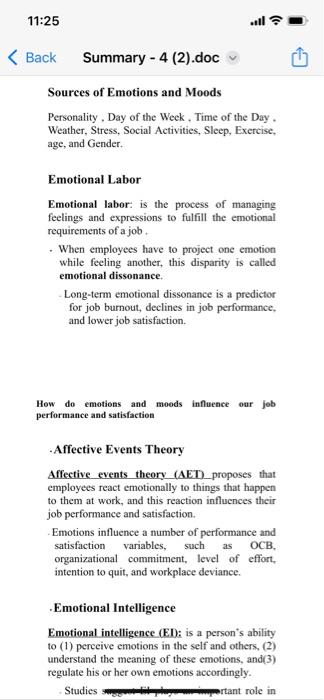
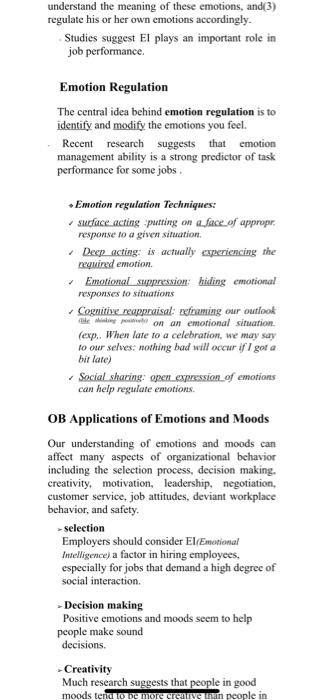
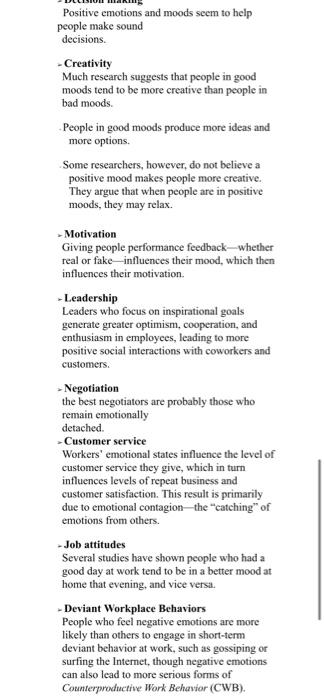
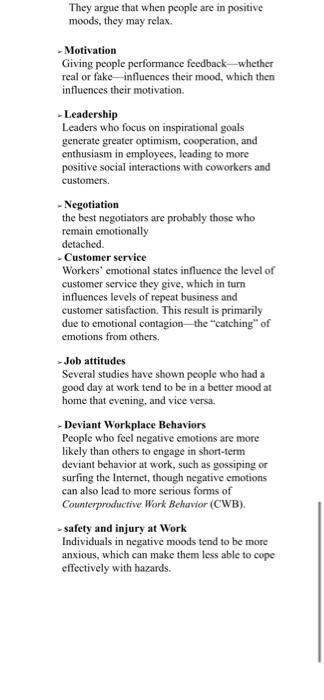
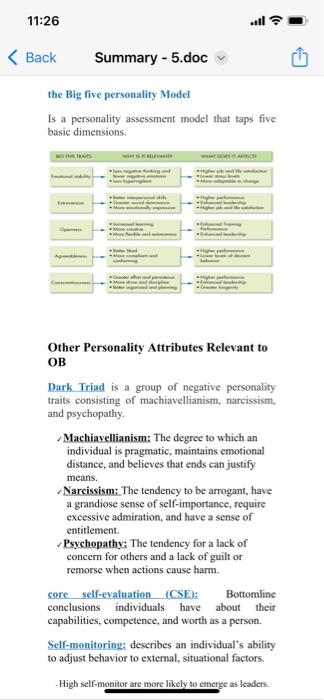
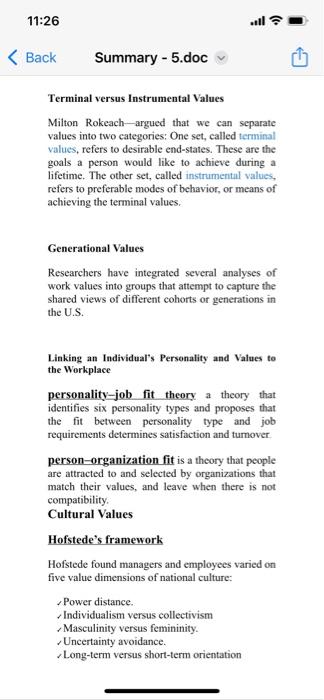
Organizational behavior (OB) It is a field of study that investigates the impact that individuals, groups, and structure(exp. workplace, jobs design) have on behavior within organizations, for the purpose of applying such knowledge toward improving an organization's effectiveness. Disciplines That Contribute to OB Organizational Behavior is built upon contributions from a number of behavioral disciplines firdbers ofut: - Psychology(seeks to measure, explain, and sometimes change the behavior of humans) -Social psychology/studies the influence of people on one another. -Sociology(study of people in relation to their social environment and culture). - Anthropology(studies sacieties to learn about human beings and their activities). Challenges and Opportunities for OB we review some of the most critical issues confronting managers for which OB offers solutions: - economic pressures Managing employees well when times are tough is just as hard as when times are good, if not harder. In good times, understanding how to reward, satisfy, and retain employees is at a premium. In bad times, issues like stress, decision making, and coping come to the forefront. - Continuing Globalization Organizations are no longer constrained by national borders. Effective managers will anticipate and adapt their approaches to the global issues such as increased Forejgn assignments, Working with People from different Cultures, overseeing movement of Jobs to Countries with Low-Cost Labar, adapting to differing Cultural and regulatory norms ... ekc - Workforce diversity Organizations are becoming more heterogencous in terms of employees +gender, age, race, ethnicity, and other characteristics. Managing this diversity is a global concerm. - Customer service Management needs to create a customerresponsive culture. OB can provide considerable guidance in helping managers create such cultures. - People skills OB presents relevant concepts and theories that can help you explain and predict the behavior of people at work, and gain insights into specific people skills you can use on the job. - Nenworked organizations The manager's job is different in a networked organization. Motivating and leading people and making collaborative decisions online require different techniques than when individuals are physically present in a single location. Managers must develop new skills. OB can provide valuable insights to help sharpen those skills. To be continued Chapter 1: What is Organizational behavior (OB) ? (cont.) Challenges and Opportunities for OB (cont.) - Employee Well-Being at Work OB offers a number of suggestions to guide managers in designing workplaces and jobs that can help employees deal with work-life conflicts. - Positive Work environment A real growth area in OB research is positive organizational scholarship also called positive organizational behavior), which studies how organizations develop human strengths, foster vitality and resilience flecthltw,, and unlock potential. - Ethical Behavior Companies that promote a strong ethical mission, encourage employees to behave with integrity, and provide strong leadership can influence employee decisions to behave ethically. Developing an OB Model An OB Model proposes three types of variables (inputs, processes, and outcomes) at three levels of analysis (individual, group, and organizational). Inputs Inputs are the variables like personality, group structure, and organizational culture that lead to processes. poucsscs. Processes Processes are actions that individuals, groups. and organizations engage in as a result of inputs and that lead to certain outcomes. At the individual level, processes include emotions and moods, motivation, perception, and decision making. At the group level, they include communication. leadership. power and politics. and conflict and negotiation. Finally, at the organizational level, processes include human resource management and change practices. Outcomes Outcomes are the key variables that you want to explain or predict, and that are affected by some other variables. Individual-level oulcomes, such as attitudes and stress, lask performance. citizenship behavior, and withdrawal behavior. At the group level, cohesion and functioning are the dependent variables. Finally, at the organizational level, we look at overall productivity and survival. Here is a definition of each of the above outcomes: - Attitudes and stress : Employee attitudes are the evaluations employces make, ranging from positive to negative, about objects, people, or events. Stress is an tipleasant psychological process that occurs in response to environmental pressures. Task Performance : The combination of effectiveness and efficiency at doing your cone job tasks is a reflection of your level of task performance. (E.xp: If we think about the job of a factory workes, fask performance could be measurnd by the mumber and quality of products producend in an hour). - Organizational Citizenship Behavior (OCB) : Is the voluntary behavior that is not patt of an employee's. formal job requirements, and that contributes to the psychological and social environment of the workplace - Withdrawal Behavior : is the set of actions that employees take to separate themselves from the organization. There are many forms of withdrawal, ranging from showing up late or failing to attend mectings to absentecism and tumoyer. Group Cohesion : Group cohesion is the exient to which members of a group support and favor one another at work. Group Funcrioning. refers to the quantity and quality of a group's work output. - Productivity: productivity requires both effectiveness and efficiency. -Survival: The final outcome we will consider is organizational survival, which is simply evidence that the organization is able to exist and grow over the long term. The survival of an organization depends not just on how productive the organization is, but also on how well it fits with its environment. Session 3-Oet 27, 2021 Chapter 2: Diversity in organizations Levels of diversity -surface-level diversity: Differences in casily perceived characteristics such as gender . race, ethnicity, age, or disability, that do not necessarily reflect the way people think or feel but that may activate certain stereotypes. -Deep-level diversity: Differences in vylues. personality, and work preferences. Stereotyping: judging someone on the basis of our perception of the group to which that person belongs. -Stereotype threat describes the degree to which we agree internally with the negative stereotyped perceptions of our groups. Biographical characteristics : are personal characteristics that are objective and casily obtained from personnel records. Key biographical characteristics are relevant to (OB) such as age, sex, race, ethnicity ... Other Characteristics and Organizational Behavior - Tenure: - Tenure is a good predictor of employee productivity. - Tenure and job performance are positively related. Summary 3.doc - Religion - Cultural Identity: The need to accommodate and respect individual cultural identities. Intellectual and Physical Abilities and OB Ability is an individual's current capacity to perform various tasks in a job. There are two types of abilities: Intellectual abilities and Physical abilities. - Intellectual abilities : are abilities needed to perform mental activities - thinking. reasoning, and problem solving. General mental ability : is an overall factor of intelligence as suggested by the positive correlations among specific intellectual ability dimensions. w Physical Abilities: The capacity to do tasks demanding stamina(ability to sustain prolonged effort, dexterity(lightness). strength, and similar characteristics. Implementing diversity management strategies Diversity management is the process and programs by which managers make everyone more aware of, and sensitive to, the needs and differences of others. These strategies should target the following three components: 1. Attracting, selecting, developing, and retaining diverse employees 2. Diversity in Groups: Managers should emphasize higher(deep)level similarities among people. 2. Effective diversity programs These programs aim at: General mental ability : is an overall factor of intelligence as suggested by the positive correlations among specific intellectual ability dimensions. A Physical Abilities: The capacity to do tasks demanding stamina(ability to sustain prolonged effort, dexterity(lightness). strength, and similar characteristics. Implementing diversity management strategies Diversity management is the process and programs by which managers make everyone more aware of, and sensitive to, the needs and differences of others. These strategies should target the following three components: 1. Attracting, selecting, developing, and retaining diverse employees 2. Diversity in Groups: Managers should emphasize higher(deep)level similarities among people. 3. Effective diversity programs These programs aim at: teaching managers about the legal framework for equal employment opportunity and encourage fair treatment of all people. - Teaching managers how a diverse workforce will be more effective at serving a diverse customer base. Fostering personal development practices that bring out get the skills and abilities of everyone. Chaper 4: Emotions and moods Affect: A broad range of feelings that people experience. Emotions: Intense feelings that are directed at someone or something. Moods: Feelings that tend to be less intense than emotions and that lack a contextual stimulus. many researchers agree on six universal emotions: anger, fear, sadness, happiness, disgust, and surprise. The function of emotions Organizational behaviorists have been finding that emotions can be critical to an effectively functioning workplace. Our emotions actually make our thinking more rational. Why? Because our emotions provide important information about how we understand the world around us and they help guide our behaviors. Sources of Emotions and Moods Personality, Day of the Week. Time of the Day . Weather, Stress, Social Activities, Sleep, Exercise, age, and Gender. Emotional Labor Emotional labor: is the process of managing feelings and expressions to fulfill the emotional requirements of a job . - When employees have to project one emotion while feeling another, this disparity is called emotional dissonance. Long-term emotional dissonance is a predictor for job burnout, declines in job performance. and lower job satisfaction. How do emotions and moods influence our job performance and satisfaction -Affective Events Theory Affective events theory (AET) proposes that employees react emotionally to things that happen to them at work, and this reaction influences their job performance and satisfaction. Emotions influence a number of performance and satisfaction variables, such as OCB, organizational commitment, level of effort, intention to quit, and workplace deviance. .Emotional Intelligence Emotional intelligence (ED: is a person's ability to (1) pereeive emotions in the self and others, (2) understand the meaning of these emotions, and(3) regulate his or her own emotions accordingly. Studies ovompertant role in understand the meaning of these emotions, and(3) regulate his or her own emotions accordingly. Studies suggest EI plays an important role in job performance. Emotion Regulation The central idea behind emotion regulation is to identify and modify the emotions you feel. Recent research suggests that emotion management ability is a strong predictor of task perfomance for some jobs . - Emotion regulation Techniques: - sutace acting purting on a face of appropr. response to a given situation. - Deep acting: is actually erperiencing the required emotion. - Emotional sumpenession hiding emotional responses to simations - Comvitive regumeraisal zeframing our outlook (exp.. When late to a celebration, we may say to ouer sehes: nothing bad will occur if I got a bit late) - Social sharimg: onen expression of emotions can help regulate emotions. OB Applications of Emotions and Moods Our understanding of emotions and moods can affect many aspects of organizational behavior including the selection process, decision making. creativity, motivation, leadership, negotiation, customer service, job attitudes, deviant workplace behavior, and safety. - selection Employers should consider El(Emotional Intelligence) a factor in hiring employees. especially for jobs that demand a high degree of social interaction. - Decision making Positive emotions and moods seem to help people make sound decisions. - Creativity Much research suggests that people in good Chaper 4: Emotions and moods Affect: A broad range of feelings that people experience. Emotions: Intense feelings that are directed at someone or something. Moods: Feelings that tend to be less intense than emotions and that lack a contextual stimulus. many researchers agree on six universal emotions: anger, fear, sadness, happiness, disgust, and surprise. The function of emotions Organizational behaviorists have been finding that emotions can be critical to an effectively functioning workplace. Our emotions actually make our thinking more rational. Why? Because our emotions provide important information about how we understand the world around us and they help guide our behaviors. Sources of Emotions and Moods Personality, Day of the Week. Time of the Day . Weather, Stress, Social Activities, Sleep, Exercise, age, and Gender. Emotional Labor Emotional labor: is the process of managing feelings and expressions to fulfill the emotional requirements of a job . - When employees have to project one emotion while feeling another, this disparity is called emotional dissonance. Long-term emotional dissonance is a predictor for job burnout, declines in job performance. and lower job satisfaction. How do emotions and moods influence our job performance and satisfaction -Affective Events Theory Affective events theory (AET) proposes that employees react emotionally to things that happen to them at work, and this reaction influences their job performance and satisfaction. Emotions influence a number of performance and satisfaction variables, such as OCB, organizational commitment, level of effort, intention to quit, and workplace deviance. .Emotional Intelligence Emotional intelligence (ED: is a person's ability to (1) pereeive emotions in the self and others, (2) understand the meaning of these emotions, and(3) regulate his or her own emotions accordingly. Studies ovompertant role in understand the meaning of these emotions, and(3) regulate his or her own emotions accordingly. Studies suggest EI plays an important role in job performance. Emotion Regulation The central idea behind emotion regulation is to identify and modify the emotions you feel. Recent research suggests that emotion management ability is a strong predictor of task perfomance for some jobs . - Emotion regulation Techniques: - sutace acting purting on a face of appropr. response to a given situation. - Deep acting: is actually erperiencing the required emotion. - Emotional sumpenession hiding emotional responses to simations - Comvitive regumeraisal zeframing our outlook (exp.. When late to a celebration, we may say to ouer sehes: nothing bad will occur if I got a bit late) - Social sharimg: onen expression of emotions can help regulate emotions. OB Applications of Emotions and Moods Our understanding of emotions and moods can affect many aspects of organizational behavior including the selection process, decision making. creativity, motivation, leadership, negotiation, customer service, job attitudes, deviant workplace behavior, and safety. - selection Employers should consider El(Emotional Intelligence) a factor in hiring employees. especially for jobs that demand a high degree of social interaction. - Decision making Positive emotions and moods seem to help people make sound decisions. - Creativity Much research suggests that people in good Positive emotions and moods seem to help people make sound decisions. - Creativity Much research suggests that people in good moods tend to be more creative than people in bad moods. People in good moods produce more ideas and more options. Some researchers, however, do not believe a positive mood makes people more creative. They argue that when people are in positive moods, they may relax. - Motivation Giving people performance feedback-whether real or fake-influences their mood, which then influences their motivation. - Leadership Leaders who focus on inspirational goals generate greater optimism, cooperation, and enthusiasm in employees, leading to more positive social interactions with coworkers and customers. - Negotiation the best negotiators are probably those who remain emotionally detached. - Customer service Workers' emotional states influence the level of customer service they give, which in turn influences levels of repeat business and customer satisfaction. This result is primarily due to emotional contagion-the "catching" of emotions from others. - Job attitudes Several studies have shown people who had a good day at work tend to be in a better mood at home that evening, and vice versa. - Deviant Workplace Behaviors People who feel negative emotions are more likely than others to engage in short-term deviant behavior at work, such as gossiping or surfing the Intemet, though negative emotions can also lead to more serious forms of Counterproductive Work Behavior (CWB). They argue that when people are in positive moods, they may relax. - Motivation Giving people performance feedback - whether real or fake-influences their mood, which then influences their motivation. - Leadership Leaders who focus on inspirational goals generate greater optimism, cooperation, and enthusiasm in employees, leading to more positive social interactions with coworkers and customers. - Negotiation the best negotiators are probably those who remain emotionally detached. - Customer service Workers' emotional states influence the level of customer service they give, which in turn influences levels of repeat business and customer satisfaction. This result is primarily due to emotional contagion- the "catching" of emotions from others. - Job attitudes Several studies have shown people who had a good day at work tend to be in a better mood at home that evening, and vice versa. - Deviant Workplace Behaviors People who feel negative emotions are more likely than others to engage in short-term deviant behavior at work, such as gossiping or surfing the Internet, though negative emotions can also lead to more serious forms of Counterproductive Work Behavior (CWB). - safety and injury at Work Individuals in negative moods tend to be more anxious, which can make them less able to cope effectively with hazards. Personality: The sum total of ways in which an individual reacts to and interacts with others. The most common means of measuring personality is through: A) self-report surveys. But these surveys are likely to have 2 cons: - the respondent might lie - lack of accuracy, as the respondent could've been in a bad mood when the survey was taken. B) Observer-ratings surveys provide an independent assessment of personality. Here, a coworker or another observer does the rating. - Research suggests observer-ratings surveys predict job success more than self-ratings alone. personality Determinants An individual's personality is the result of heredity or environment. personality traits enduring characteristics that describe an individual's behavior. the Myers-Briggs type Indicator The Myers-Briggs Type Indicator (MBTI) is the most widely used personality assessment instrument in the world. It is a 100-question personality test that asks people how they usually feel or act in situations. Respondents are classified as extraverted or introverted ( E or I), sensing or intuitive (S or N ), thinking or feeling ( T or F ), and judging or perceiving ( J or P ): - Extraverted (E) versus Introverted (I). Extraverted individuals are outgoing, sociable, and assertive. Introverts are quiet and shy. - Sensing (S) versus Intuitive (N). Sensing types are practical and prefer routine and order, and they focus on details. Intuitives rely on unconscious processes and look at the "big picture." - Thinking (T) versus Feeling (F). Thinking types use reason and logic to handle problems. Feeling types rely on their personal values and emotions. - Judging (J) versus Perceiving (P). Judging types want control and prefer order and structure. Perceiving types are flexible and spontaneous. the Big five personality Model Is a personality assessment model that taps five basic dimensions. Other Personality Attributes Relevant to OB Dark Triad is a group of negative personality traits consisting of machiavellianism, narcissism. and psychopathy. Machiavellianism: The degree to which an individual is pragmatic, maintains emotional distance, and believes that ends can justify means. Narcissism: The tendency to be arrogant, have a grandiose sense of self-importance, require excessive admiration, and have a sense of entitlement. Psychopathy: The tendency for a lack of concern for others and a lack of guilt or remorse when actions cause harm. High self-monitor are more likely to emerge as leaders. proactive personalify: People who identify opportunities, show initiative, take action, and persevere until meaningful change occurs. Personality and Situations Situation Strength theory: By situation strength, we mean the degree to which norms, cues, or standards dictate appropriate behavior. Strong situations show us what the right behavior is, pressure us to exhibit it, and discourage the wrong behavior. - a person who is usually self-directed may view step-by step instructions (high clanty) for a simple task as a lack of faith in his ability. Another person who is a rule-follower might appreciate the detailed instructions. trait activation theory (TAT). TAT predicts that some situations, events, or interventions "activate" a trait more than others. Using TAT, we can foresee which jobs suit certain personalities. VALUES Values represent individual's ideas about what is right, good, or desirable. They have both content and intensity attributes: The content attribute says a mode of conduct or end-state of existence is important. The intensity attribute specifies how important it is. - Values tend to be relatively stable and enduring. - Values lay the foundation for understanding attitudes and motivation, and they influence our perceptions. Terminal versus Instrumental Values Terminal versus Instrumental Values Milton Rokeach-argued that we can separate values into two categories: One set, called terminal values, refers to desirable end-states. These are the goals a person would like to achieve during a lifetime. The other set, called instrumentul values, refers to preferable modes of behavior, or means of achieving the terminal values. Generational Values Researchers have integrated several analyses of work values into groups that attempt to capture the shared views of different cohorts or generations in the U.S. Linking an Individual's Personality and Values to the Workplace personality-job fit theory a theory that identifies six personality types and proposes that the fit between personality type and job requirements determines satisfaction and tumover. person-organization fit is a theory that people are attracted to and selected by organizations that match their values, and leave when there is not compatibility. Cultural Values Hofstede's framework Hofstede found managers and employees varied on five value dimensions of national culture: Power distance. Individualism versus collectivism Masculinity versus femininity. , Uncertainty avoidance. Long-term versus short-term orientation Organizational behavior (OB) It is a field of study that investigates the impact that individuals, groups, and structure(exp. workplace, jobs design) have on behavior within organizations, for the purpose of applying such knowledge toward improving an organization's effectiveness. Disciplines That Contribute to OB Organizational Behavior is built upon contributions from a number of behavioral disciplines firdbers ofut: - Psychology(seeks to measure, explain, and sometimes change the behavior of humans) -Social psychology/studies the influence of people on one another. -Sociology(study of people in relation to their social environment and culture). - Anthropology(studies sacieties to learn about human beings and their activities). Challenges and Opportunities for OB we review some of the most critical issues confronting managers for which OB offers solutions: - economic pressures Managing employees well when times are tough is just as hard as when times are good, if not harder. In good times, understanding how to reward, satisfy, and retain employees is at a premium. In bad times, issues like stress, decision making, and coping come to the forefront. - Continuing Globalization Organizations are no longer constrained by national borders. Effective managers will anticipate and adapt their approaches to the global issues such as increased Forejgn assignments, Working with People from different Cultures, overseeing movement of Jobs to Countries with Low-Cost Labar, adapting to differing Cultural and regulatory norms ... ekc - Workforce diversity Organizations are becoming more heterogencous in terms of employees +gender, age, race, ethnicity, and other characteristics. Managing this diversity is a global concerm. - Customer service Management needs to create a customerresponsive culture. OB can provide considerable guidance in helping managers create such cultures. - People skills OB presents relevant concepts and theories that can help you explain and predict the behavior of people at work, and gain insights into specific people skills you can use on the job. - Nenworked organizations The manager's job is different in a networked organization. Motivating and leading people and making collaborative decisions online require different techniques than when individuals are physically present in a single location. Managers must develop new skills. OB can provide valuable insights to help sharpen those skills. To be continued Chapter 1: What is Organizational behavior (OB) ? (cont.) Challenges and Opportunities for OB (cont.) - Employee Well-Being at Work OB offers a number of suggestions to guide managers in designing workplaces and jobs that can help employees deal with work-life conflicts. - Positive Work environment A real growth area in OB research is positive organizational scholarship also called positive organizational behavior), which studies how organizations develop human strengths, foster vitality and resilience flecthltw,, and unlock potential. - Ethical Behavior Companies that promote a strong ethical mission, encourage employees to behave with integrity, and provide strong leadership can influence employee decisions to behave ethically. Developing an OB Model An OB Model proposes three types of variables (inputs, processes, and outcomes) at three levels of analysis (individual, group, and organizational). Inputs Inputs are the variables like personality, group structure, and organizational culture that lead to processes. poucsscs. Processes Processes are actions that individuals, groups. and organizations engage in as a result of inputs and that lead to certain outcomes. At the individual level, processes include emotions and moods, motivation, perception, and decision making. At the group level, they include communication. leadership. power and politics. and conflict and negotiation. Finally, at the organizational level, processes include human resource management and change practices. Outcomes Outcomes are the key variables that you want to explain or predict, and that are affected by some other variables. Individual-level oulcomes, such as attitudes and stress, lask performance. citizenship behavior, and withdrawal behavior. At the group level, cohesion and functioning are the dependent variables. Finally, at the organizational level, we look at overall productivity and survival. Here is a definition of each of the above outcomes: - Attitudes and stress : Employee attitudes are the evaluations employces make, ranging from positive to negative, about objects, people, or events. Stress is an tipleasant psychological process that occurs in response to environmental pressures. Task Performance : The combination of effectiveness and efficiency at doing your cone job tasks is a reflection of your level of task performance. (E.xp: If we think about the job of a factory workes, fask performance could be measurnd by the mumber and quality of products producend in an hour). - Organizational Citizenship Behavior (OCB) : Is the voluntary behavior that is not patt of an employee's. formal job requirements, and that contributes to the psychological and social environment of the workplace - Withdrawal Behavior : is the set of actions that employees take to separate themselves from the organization. There are many forms of withdrawal, ranging from showing up late or failing to attend mectings to absentecism and tumoyer. Group Cohesion : Group cohesion is the exient to which members of a group support and favor one another at work. Group Funcrioning. refers to the quantity and quality of a group's work output. - Productivity: productivity requires both effectiveness and efficiency. -Survival: The final outcome we will consider is organizational survival, which is simply evidence that the organization is able to exist and grow over the long term. The survival of an organization depends not just on how productive the organization is, but also on how well it fits with its environment. Session 3-Oet 27, 2021 Chapter 2: Diversity in organizations Levels of diversity -surface-level diversity: Differences in casily perceived characteristics such as gender . race, ethnicity, age, or disability, that do not necessarily reflect the way people think or feel but that may activate certain stereotypes. -Deep-level diversity: Differences in vylues. personality, and work preferences. Stereotyping: judging someone on the basis of our perception of the group to which that person belongs. -Stereotype threat describes the degree to which we agree internally with the negative stereotyped perceptions of our groups. Biographical characteristics : are personal characteristics that are objective and casily obtained from personnel records. Key biographical characteristics are relevant to (OB) such as age, sex, race, ethnicity ... Other Characteristics and Organizational Behavior - Tenure: - Tenure is a good predictor of employee productivity. - Tenure and job performance are positively related. Summary 3.doc - Religion - Cultural Identity: The need to accommodate and respect individual cultural identities. Intellectual and Physical Abilities and OB Ability is an individual's current capacity to perform various tasks in a job. There are two types of abilities: Intellectual abilities and Physical abilities. - Intellectual abilities : are abilities needed to perform mental activities - thinking. reasoning, and problem solving. General mental ability : is an overall factor of intelligence as suggested by the positive correlations among specific intellectual ability dimensions. w Physical Abilities: The capacity to do tasks demanding stamina(ability to sustain prolonged effort, dexterity(lightness). strength, and similar characteristics. Implementing diversity management strategies Diversity management is the process and programs by which managers make everyone more aware of, and sensitive to, the needs and differences of others. These strategies should target the following three components: 1. Attracting, selecting, developing, and retaining diverse employees 2. Diversity in Groups: Managers should emphasize higher(deep)level similarities among people. 2. Effective diversity programs These programs aim at: General mental ability : is an overall factor of intelligence as suggested by the positive correlations among specific intellectual ability dimensions. A Physical Abilities: The capacity to do tasks demanding stamina(ability to sustain prolonged effort, dexterity(lightness). strength, and similar characteristics. Implementing diversity management strategies Diversity management is the process and programs by which managers make everyone more aware of, and sensitive to, the needs and differences of others. These strategies should target the following three components: 1. Attracting, selecting, developing, and retaining diverse employees 2. Diversity in Groups: Managers should emphasize higher(deep)level similarities among people. 3. Effective diversity programs These programs aim at: teaching managers about the legal framework for equal employment opportunity and encourage fair treatment of all people. - Teaching managers how a diverse workforce will be more effective at serving a diverse customer base. Fostering personal development practices that bring out get the skills and abilities of everyone. Chaper 4: Emotions and moods Affect: A broad range of feelings that people experience. Emotions: Intense feelings that are directed at someone or something. Moods: Feelings that tend to be less intense than emotions and that lack a contextual stimulus. many researchers agree on six universal emotions: anger, fear, sadness, happiness, disgust, and surprise. The function of emotions Organizational behaviorists have been finding that emotions can be critical to an effectively functioning workplace. Our emotions actually make our thinking more rational. Why? Because our emotions provide important information about how we understand the world around us and they help guide our behaviors. Sources of Emotions and Moods Personality, Day of the Week. Time of the Day . Weather, Stress, Social Activities, Sleep, Exercise, age, and Gender. Emotional Labor Emotional labor: is the process of managing feelings and expressions to fulfill the emotional requirements of a job . - When employees have to project one emotion while feeling another, this disparity is called emotional dissonance. Long-term emotional dissonance is a predictor for job burnout, declines in job performance. and lower job satisfaction. How do emotions and moods influence our job performance and satisfaction -Affective Events Theory Affective events theory (AET) proposes that employees react emotionally to things that happen to them at work, and this reaction influences their job performance and satisfaction. Emotions influence a number of performance and satisfaction variables, such as OCB, organizational commitment, level of effort, intention to quit, and workplace deviance. .Emotional Intelligence Emotional intelligence (ED: is a person's ability to (1) pereeive emotions in the self and others, (2) understand the meaning of these emotions, and(3) regulate his or her own emotions accordingly. Studies ovompertant role in understand the meaning of these emotions, and(3) regulate his or her own emotions accordingly. Studies suggest EI plays an important role in job performance. Emotion Regulation The central idea behind emotion regulation is to identify and modify the emotions you feel. Recent research suggests that emotion management ability is a strong predictor of task perfomance for some jobs . - Emotion regulation Techniques: - sutace acting purting on a face of appropr. response to a given situation. - Deep acting: is actually erperiencing the required emotion. - Emotional sumpenession hiding emotional responses to simations - Comvitive regumeraisal zeframing our outlook (exp.. When late to a celebration, we may say to ouer sehes: nothing bad will occur if I got a bit late) - Social sharimg: onen expression of emotions can help regulate emotions. OB Applications of Emotions and Moods Our understanding of emotions and moods can affect many aspects of organizational behavior including the selection process, decision making. creativity, motivation, leadership, negotiation, customer service, job attitudes, deviant workplace behavior, and safety. - selection Employers should consider El(Emotional Intelligence) a factor in hiring employees. especially for jobs that demand a high degree of social interaction. - Decision making Positive emotions and moods seem to help people make sound decisions. - Creativity Much research suggests that people in good Chaper 4: Emotions and moods Affect: A broad range of feelings that people experience. Emotions: Intense feelings that are directed at someone or something. Moods: Feelings that tend to be less intense than emotions and that lack a contextual stimulus. many researchers agree on six universal emotions: anger, fear, sadness, happiness, disgust, and surprise. The function of emotions Organizational behaviorists have been finding that emotions can be critical to an effectively functioning workplace. Our emotions actually make our thinking more rational. Why? Because our emotions provide important information about how we understand the world around us and they help guide our behaviors. Sources of Emotions and Moods Personality, Day of the Week. Time of the Day . Weather, Stress, Social Activities, Sleep, Exercise, age, and Gender. Emotional Labor Emotional labor: is the process of managing feelings and expressions to fulfill the emotional requirements of a job . - When employees have to project one emotion while feeling another, this disparity is called emotional dissonance. Long-term emotional dissonance is a predictor for job burnout, declines in job performance. and lower job satisfaction. How do emotions and moods influence our job performance and satisfaction -Affective Events Theory Affective events theory (AET) proposes that employees react emotionally to things that happen to them at work, and this reaction influences their job performance and satisfaction. Emotions influence a number of performance and satisfaction variables, such as OCB, organizational commitment, level of effort, intention to quit, and workplace deviance. .Emotional Intelligence Emotional intelligence (ED: is a person's ability to (1) pereeive emotions in the self and others, (2) understand the meaning of these emotions, and(3) regulate his or her own emotions accordingly. Studies ovompertant role in understand the meaning of these emotions, and(3) regulate his or her own emotions accordingly. Studies suggest EI plays an important role in job performance. Emotion Regulation The central idea behind emotion regulation is to identify and modify the emotions you feel. Recent research suggests that emotion management ability is a strong predictor of task perfomance for some jobs . - Emotion regulation Techniques: - sutace acting purting on a face of appropr. response to a given situation. - Deep acting: is actually erperiencing the required emotion. - Emotional sumpenession hiding emotional responses to simations - Comvitive regumeraisal zeframing our outlook (exp.. When late to a celebration, we may say to ouer sehes: nothing bad will occur if I got a bit late) - Social sharimg: onen expression of emotions can help regulate emotions. OB Applications of Emotions and Moods Our understanding of emotions and moods can affect many aspects of organizational behavior including the selection process, decision making. creativity, motivation, leadership, negotiation, customer service, job attitudes, deviant workplace behavior, and safety. - selection Employers should consider El(Emotional Intelligence) a factor in hiring employees. especially for jobs that demand a high degree of social interaction. - Decision making Positive emotions and moods seem to help people make sound decisions. - Creativity Much research suggests that people in good Positive emotions and moods seem to help people make sound decisions. - Creativity Much research suggests that people in good moods tend to be more creative than people in bad moods. People in good moods produce more ideas and more options. Some researchers, however, do not believe a positive mood makes people more creative. They argue that when people are in positive moods, they may relax. - Motivation Giving people performance feedback-whether real or fake-influences their mood, which then influences their motivation. - Leadership Leaders who focus on inspirational goals generate greater optimism, cooperation, and enthusiasm in employees, leading to more positive social interactions with coworkers and customers. - Negotiation the best negotiators are probably those who remain emotionally detached. - Customer service Workers' emotional states influence the level of customer service they give, which in turn influences levels of repeat business and customer satisfaction. This result is primarily due to emotional contagion-the "catching" of emotions from others. - Job attitudes Several studies have shown people who had a good day at work tend to be in a better mood at home that evening, and vice versa. - Deviant Workplace Behaviors People who feel negative emotions are more likely than others to engage in short-term deviant behavior at work, such as gossiping or surfing the Intemet, though negative emotions can also lead to more serious forms of Counterproductive Work Behavior (CWB). They argue that when people are in positive moods, they may relax. - Motivation Giving people performance feedback - whether real or fake-influences their mood, which then influences their motivation. - Leadership Leaders who focus on inspirational goals generate greater optimism, cooperation, and enthusiasm in employees, leading to more positive social interactions with coworkers and customers. - Negotiation the best negotiators are probably those who remain emotionally detached. - Customer service Workers' emotional states influence the level of customer service they give, which in turn influences levels of repeat business and customer satisfaction. This result is primarily due to emotional contagion- the "catching" of emotions from others. - Job attitudes Several studies have shown people who had a good day at work tend to be in a better mood at home that evening, and vice versa. - Deviant Workplace Behaviors People who feel negative emotions are more likely than others to engage in short-term deviant behavior at work, such as gossiping or surfing the Internet, though negative emotions can also lead to more serious forms of Counterproductive Work Behavior (CWB). - safety and injury at Work Individuals in negative moods tend to be more anxious, which can make them less able to cope effectively with hazards. Personality: The sum total of ways in which an individual reacts to and interacts with others. The most common means of measuring personality is through: A) self-report surveys. But these surveys are likely to have 2 cons: - the respondent might lie - lack of accuracy, as the respondent could've been in a bad mood when the survey was taken. B) Observer-ratings surveys provide an independent assessment of personality. Here, a coworker or another observer does the rating. - Research suggests observer-ratings surveys predict job success more than self-ratings alone. personality Determinants An individual's personality is the result of heredity or environment. personality traits enduring characteristics that describe an individual's behavior. the Myers-Briggs type Indicator The Myers-Briggs Type Indicator (MBTI) is the most widely used personality assessment instrument in the world. It is a 100-question personality test that asks people how they usually feel or act in situations. Respondents are classified as extraverted or introverted ( E or I), sensing or intuitive (S or N ), thinking or feeling ( T or F ), and judging or perceiving ( J or P ): - Extraverted (E) versus Introverted (I). Extraverted individuals are outgoing, sociable, and assertive. Introverts are quiet and shy. - Sensing (S) versus Intuitive (N). Sensing types are practical and prefer routine and order, and they focus on details. Intuitives rely on unconscious processes and look at the "big picture." - Thinking (T) versus Feeling (F). Thinking types use reason and logic to handle problems. Feeling types rely on their personal values and emotions. - Judging (J) versus Perceiving (P). Judging types want control and prefer order and structure. Perceiving types are flexible and spontaneous. the Big five personality Model Is a personality assessment model that taps five basic dimensions. Other Personality Attributes Relevant to OB Dark Triad is a group of negative personality traits consisting of machiavellianism, narcissism. and psychopathy. Machiavellianism: The degree to which an individual is pragmatic, maintains emotional distance, and believes that ends can justify means. Narcissism: The tendency to be arrogant, have a grandiose sense of self-importance, require excessive admiration, and have a sense of entitlement. Psychopathy: The tendency for a lack of concern for others and a lack of guilt or remorse when actions cause harm. High self-monitor are more likely to emerge as leaders. proactive personalify: People who identify opportunities, show initiative, take action, and persevere until meaningful change occurs. Personality and Situations Situation Strength theory: By situation strength, we mean the degree to which norms, cues, or standards dictate appropriate behavior. Strong situations show us what the right behavior is, pressure us to exhibit it, and discourage the wrong behavior. - a person who is usually self-directed may view step-by step instructions (high clanty) for a simple task as a lack of faith in his ability. Another person who is a rule-follower might appreciate the detailed instructions. trait activation theory (TAT). TAT predicts that some situations, events, or interventions "activate" a trait more than others. Using TAT, we can foresee which jobs suit certain personalities. VALUES Values represent individual's ideas about what is right, good, or desirable. They have both content and intensity attributes: The content attribute says a mode of conduct or end-state of existence is important. The intensity attribute specifies how important it is. - Values tend to be relatively stable and enduring. - Values lay the foundation for understanding attitudes and motivation, and they influence our perceptions. Terminal versus Instrumental Values Terminal versus Instrumental Values Milton Rokeach-argued that we can separate values into two categories: One set, called terminal values, refers to desirable end-states. These are the goals a person would like to achieve during a lifetime. The other set, called instrumentul values, refers to preferable modes of behavior, or means of achieving the terminal values. Generational Values Researchers have integrated several analyses of work values into groups that attempt to capture the shared views of different cohorts or generations in the U.S. Linking an Individual's Personality and Values to the Workplace personality-job fit theory a theory that identifies six personality types and proposes that the fit between personality type and job requirements determines satisfaction and tumover. person-organization fit is a theory that people are attracted to and selected by organizations that match their values, and leave when there is not compatibility. Cultural Values Hofstede's framework Hofstede found managers and employees varied on five value dimensions of national culture: Power distance. Individualism versus collectivism Masculinity versus femininity. , Uncertainty avoidance. Long-term versus short-term orientation
Step by Step Solution
There are 3 Steps involved in it

Get step-by-step solutions from verified subject matter experts
 Study Help