Question: Part B of Project Task You are asked by your employer to write a report in memo form (see page 413 and 414). You report
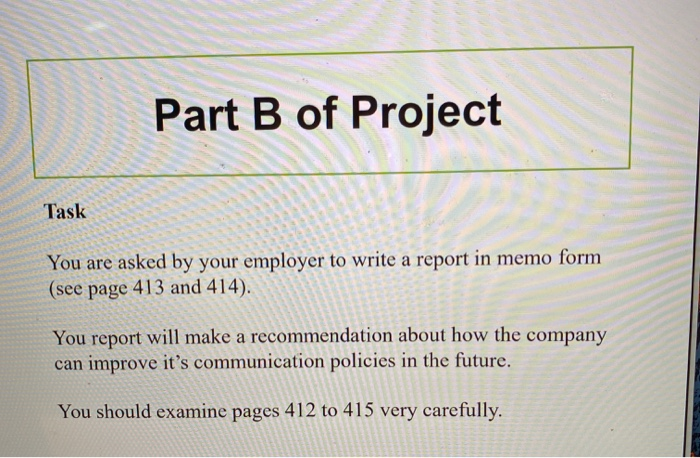
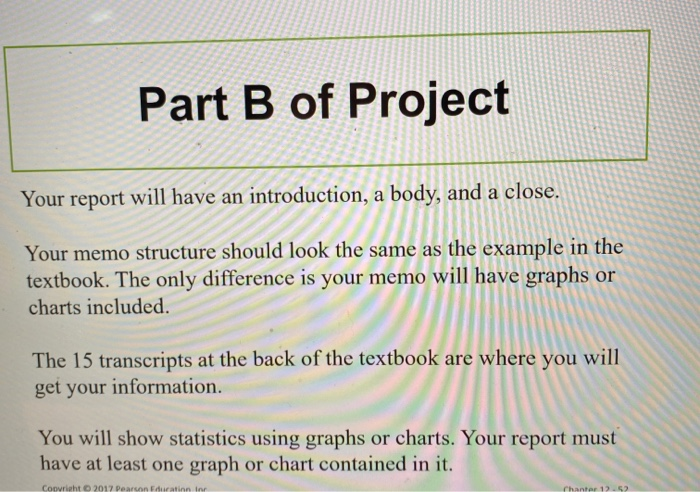
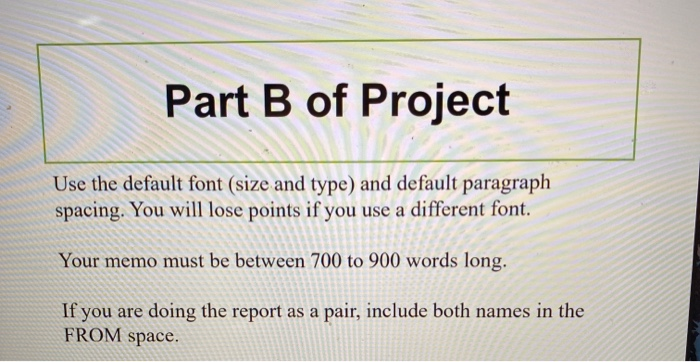
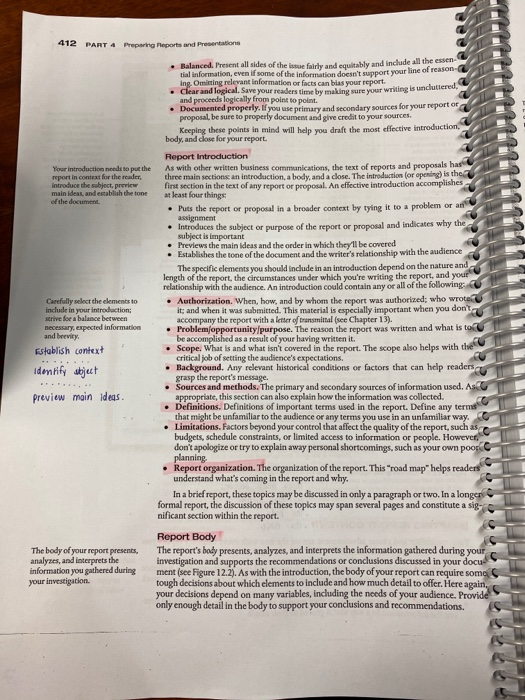
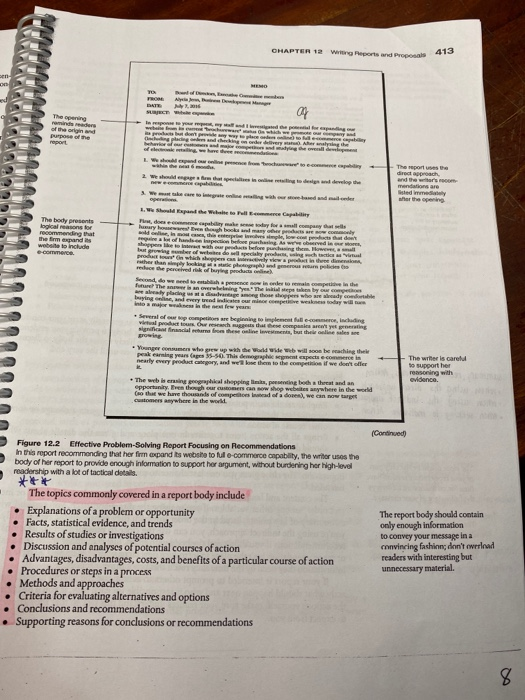
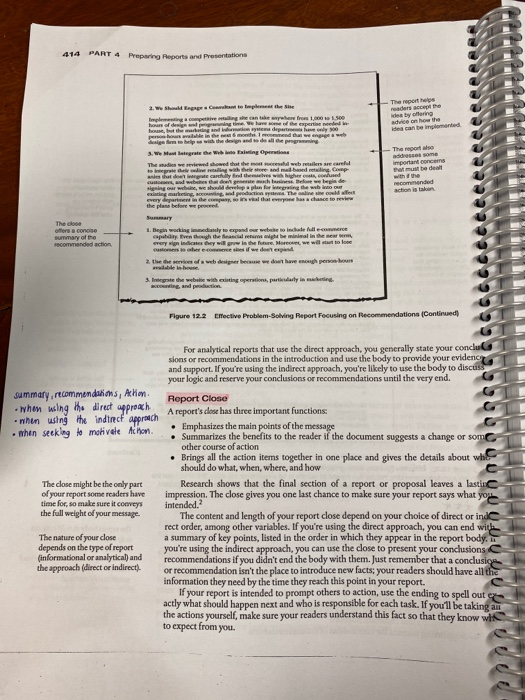
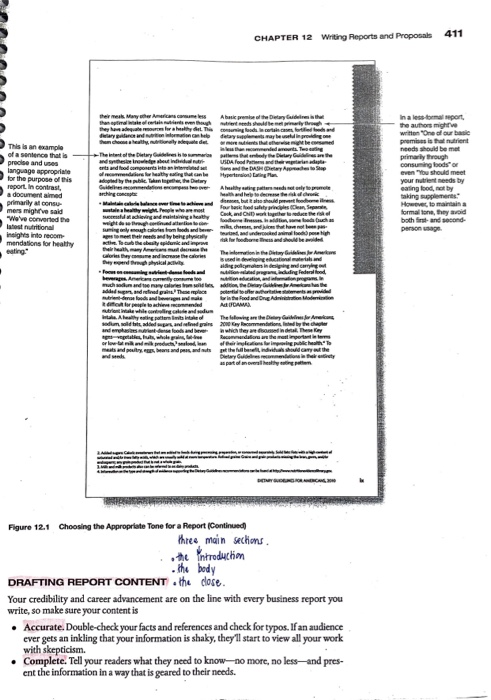
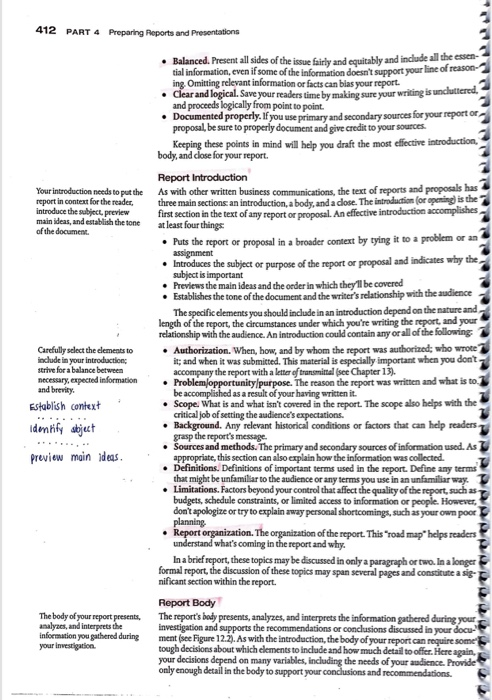
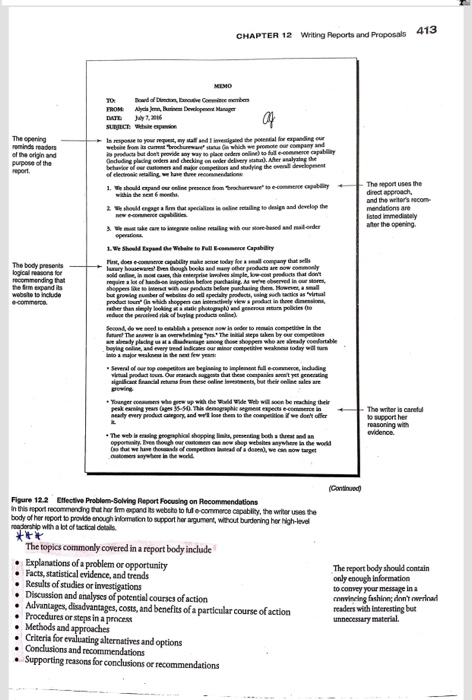
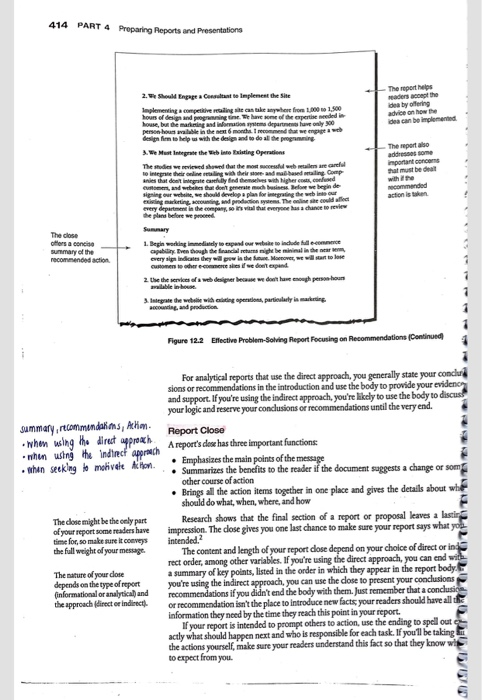
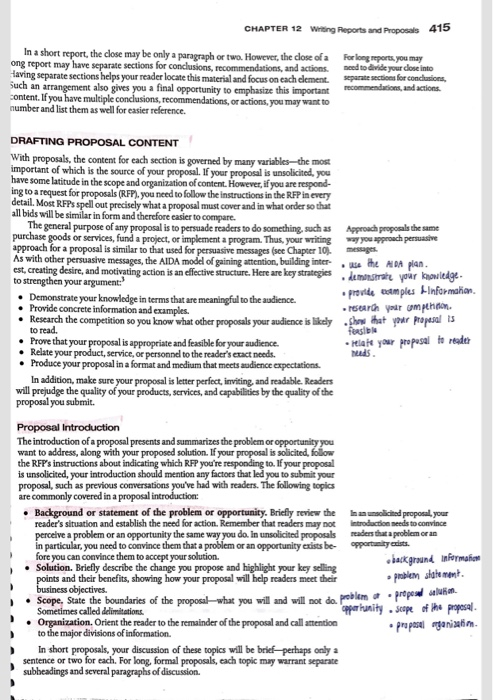
Part B of Project Task You are asked by your employer to write a report in memo form (see page 413 and 414). You report will make a recommendation about how the company can improve it's communication policies in the future. You should examine pages 412 to 415 very carefully. Part B of Project Your report will have an introduction, a body, and a close. Your memo structure should look the same as the example in the textbook. The only difference is your memo will have graphs or charts included. The 15 transcripts at the back of the textbook are where you will get your information. You will show statistics using graphs or charts. Your report must have at least one graph or chart contained in it. Cont2012 Part B of Project Use the default font (size and type) and default paragraph spacing. You will lose points if you use a different font. Your memo must be between 700 to 900 words long. If you are doing the report as a pair, include both names in the FROM space. 412 PART 4 Preparing Reports and Presentations Balanced. Present all sides of the folder and tably and include all the essen tial information, even if some of the information doesn't support your line of caso Ing. Omitting relevant information or facts can bias your report Clear and logical. Save your readers time by making sure your writing is uncluttered, and proceeds logically from point to point. Documented properly. If you use primary and secondary sources for your report of proposal, be sure to properly document and give credit to your sources. Keeping these points in mind will help you draft the most effective introduction, body, and close for your report. Your introduction needs to put the report in context for the reader, Introduce the best premier main ideas, and establish the tone of the document Carefully select the elements to include in your introduction: strive for a balance between necessary, expected information and brevity Establish context Report Introduction As with other written business communications, the text of reports and proposals has three main sections an introduction, a body, and a close. The introduction for opening) is the first section in the text of any report or proposal. An effective introduction accomplishes at least four things Puts the report or proposal in a broader context by tying it to a problem or an assignment Introduces the subject or purpose of the report or proposal and indicates why the subject is important Previews the main ideas and the order in which they'll be covered Establishes the tone of the document and the writer's relationship with the audience The specific elements you should include in an introduction depend on the nature and length of the report, the circumstances under which you're writing the report, and your relationship with the audience. An introduction could contain any or all of the following: Authorization. When how, and by whom the report was authorized; who wrote it, and when it was submitted. This material is especially important when you dont accompany the report with a letter of transmittel (see Chapter 13). Problemopportunity/purpose. The reason the report was written and what is to be accomplished as a result of your having written it. Scope. What is and what isn't covered in the report. The scope also helps with the critical job of setting the audience's expectations. Background. Any relevant historical conditions or factors that can help readers grasp the report's message. Sources and methods. The primary and secondary sources of information used. As G appropriate, this section can also explain how the information was collected Definitions. Definitions of important terms used in the report. Define any terms that might be unfamiliar to the audience or any terms you use in an unfamiliar way. Limitations. Factors beyond your control that affect the quality of the report, such as budgets, schedule constraints, or limited access to information or people. However, don't apologize or try to explain away personal shortcomings, such as your own poor planning Report organization. The organization of the report. This "road map helps readers understand what's coming in the report and why. In a brief report, these topics may be discussed in only a paragraph or two. In a longer formal report, the discussion of these topics may span several pages and constitute a sig nificant section within the report. Identify sbject T Preview main ideas. The body of your report presents, analyzes, and interprets the information you gathered during your investigation Report Body The report's body presents, analyzes, and interprets the information gathered during your investigation and supports the recommendations or conclusions discussed in your docu- ment (see Figure 12.2). As with the introduction, the body of your report can require soma tough decisions about which elements to include and how much detail to offer. Here again your decisions depend on many variables, including the needs of your audience. Provide only enough detail in the body to support your conclusions and recommendations. 2 CHAPTER 12 W 413 and w at MAGANIMLAR a. book m ortem m ong the who a e n Sermofo r virtual productoreshes beginning to impleme that com financiare in ting the Y e n we grew up with the W e b will soon be reaching the peaking years age 55-50. This dep enent expects commerce nearly every productory, and we lose them to the comme if we don't see to support her reasoning with The web sering geographical shopping , posting bech threat sportunity french corners can now shop websites anywhere in the Goth we have theme of competes do dol, we want Card Figure 12.2 Effective Problem Solving Report Focusing on Recommendations In this report recommending that her fem expand is website to e-commerce pobity, the writer uses the body of her report to provide enough information to support her argument, without burdering her high-level readership with a lot of tactical details The topics commonly covered in a report body include Explanations of a problem or opportunity Facts, statistical evidence, and trends Results of studies or investigations Discussion and analyses of potential courses of action Advantages, disadvantages, costs, and benefits of a particular course of action Procedures or steps in a process Methods and approaches Criteria for evaluating alternatives and options Conclusions and recommendations Supporting reasons for conclusions or recommendations The report body should contain only enough information to convey your message in a viving fashion don't welnad readers with interesting but unnecessary material. 414 PART 4 Preparing Reports and Presentations WE da pre el s with the design and deale per The dis werd het he l e tiders are careful her .Com signing car what, we should b e olant a plan for wing the web no our 1. Ben de apowo what we padary Even though the financial res ight be minimal in the car , y ine by i ww in the futureMore , we will start to lose 2. Use the s ofa web designer here we have per babe with singer , particularly in m eine Figure 12.2 Effective Problem Solving Report Focusing on Recommendations (Continued Summary, recommendations, Achim When wing the direct approach nhin using the indirect approach when seeking to motivele Acron. The close might be the only part of your report some readers have time for so make sure it conveys the full weight of your message For analytical reports that use the direct approach, you generally state your conclu sions or recommendations in the introduction and use the body to provide your evidence and support. If you're using the indirect approach, you're likely to use the body to discuss your logic and reserve your conclusions or recommendations until the very end. GI Report Close A report's close has three important functions: . Emphasizes the main points of the message . Summarizes the benefits to the reader if the document suggests a change or som other course of action Brings all the action items together in one place and gives the details about whe should do what, when, where, and how Research shows that the final section of a report or proposal leaves a lastia impression. The close gives you one last chance to make sure your report says what you intended.2 The content and length of your report close depend on your choice of direct or inde rect order, among other variables. If you're using the direct approach, you can end wide a summary of key points, listed in the order in which they appear in the report body. It you're using the indirect approach, you can use the close to present your conclusions recommendations if you didn't end the body with them. Just remember that a conclusion or recommendation isn't the place to introduce new facts: your readers should have all the information they need by the time they reach this point in your report. If your report is intended to prompt others to action, use the ending to spell out actly what should happen next and who is responsible for each task. If you'll be taking an the actions yourself, make sure your readers understand this fact so that they know whic to expect from you. The nature of your close depends on the type of report (informational or analytical) and the approach (direct or indirect). CHAPTER 12 Writing Reports and Pre 4 15 In a short report the close may be only a paragraph . However, the dose of a long report may have separate sections for conclusions, recommendations, and actions Having separate sections helps your reader locate this material focus on each element Such an arrangement also gives you a final opportunity to emphasize this important content. If you have mule conclusions, recommendations or actions, you may want to number and them as well for ease reference Forlog ports wide your des were forced Gusto DRAFTING PROPOSAL CONTENT With proposals, the content for each section is governed by many variables the most important of which is the source of your proposal. If your proposal is unsolicited, you have some acide in the scope and organization of content. However, if you are respond Ing to a request for proposals in you need to follow the instructions in the RFP in every detail. Most RFP spell out precisely what a proposals cover and in what onder so that all bids will be similar inform and therefore easier to compare The general purpose of any proposal is to persuade readers to do something, such as purchase goods or services, fund a project, or implement a program. Thus, your writing approach for a proposal is similar to that used for persuasive messages (see Chapter 10) As with other persuasive messages, the AIDA model of gaining attention, building Inter est, creating desire, and motivating action is an effective structure. Here are key strategies to strengthen your argument: Demonstrate your knowledge in terms that are meaningful to the audience. Provide concrete information and Examples Research the competition so you know what other proposals your audience is likely to read. Prove that your proposal is appropriate and feasible for your audience. Relate your product, service, or personnel to the reader's exact needs. Produce your proposal in a format and medium that meets audience expectations. In addition, make sure your proposal is letter perfect, inviting, and readable. Readers will prejudge the quality of your products, services, and capabilities by the quality of the proposal you submit Approach proposals the same way you approach perse messages the AIDA A your mouth provide examples information research your compthilon show that your propolis feasible - Hal your proposal to reader Meds UUUUUUUU5555 Proposal Introduction The introduction of a proposal presents and summarizes the problem or opportunity you want to address, along with your proposed solution. If your proposal is solicited, follow the RFP's instructions about indicating which RFP you're responding to. If your proposal is unsolicited, your introduction should mention any factors that led you to submit your proposal, such as previous conversations you've had with readers. The following topics are commonly covered in a proposal introduction: Background or statement of the problem or opportunity. Briefly review the in an unsolicited proposal, your reader's situation and establish the need for action. Remember that readers may not Introduction needs to convince perceive a problem or an opportunity the same way you do. In unsolicited proposals readers that a problem or an in particular, you need to convince them that a problem or an opportunity exists be opportunity costs. fore you can convince them to accept your solution. Solution. Briefly describe the change you propose and highlight your key selling .background information points and their benefits, showing how your proposal will help readers meet their problem statement business objectives. Scope, State the boundaries of the proposal what you will and will not do problem propew wlkon sal-what you will and will not a problem of Sometimes called delimitations. opportunity. Scope of the proposel. Organization. Orient the reader to the remainder of the proposal and call attention . propose organi to the major divisions of information. In short proposals, your discussion of these topics will be brief perhaps only a sentence or two for each. For long, formal proposals, each topic may warrant separate subheadings and several paragraphs of discussion. 416 PART 4 Preparing parts and Presentations Readers understand that proposalsa persuasive me so they're willing to com a degree of promotional empha s long as it is focused on their needs Proposed soluton and anticipated result . facts and evidmie. Proposed approach work plache dele Ruqlim statement propored costs Proposal Body The proposal's body gives complete details on the proposed solution and specifies what anticipated results will be. Because a proposal is by definition a persuasive message. You audience expects you to promote your offering in a confident but professional manner. In addition to providing facts and evidence to support your conclusions, an elect body covers this information Proposed solution. Describe what you have to offer your concept product. service (see Figure 12.3). Stress the benefits of your product, service, or investment opportunity that are relevant to your readers' needs and point out any advantages you have over your competitors. THE HORNY Oktober 28, 2015 Me Dunked up 15 Money Lane Tewone Gey, Michigan Dear M. Yurger Subject Proper ties remodeling would be happy to cont i ng living room inn heffie ending to the w ondered wing cordober 14 w ww h q We provide for the trade people and whole are so that when wees, the trade leto de this p roche de la The opening the son of the project grabs there attention with an er23 fondato ako second para explains how company con be performed w Remodeling Solution w i th lowing work Robbando c u cing and rock to prepare for con struction of war wi th ended lingo living room with sess through two and door units. Beplace il disturbed Hang and indoor units and replace all disturbed baseboards and door Installer delech door wat in locion of and opening the w ne obving room w il to forget. Trim appropriately in single ple de an d lighting in the ring and - Move cold s on from wil wall of living room. . Paister finish al surfaces/rim to match specs used throughout house. The work does not include custom office cabinetra ting or phone or cable wiring. We would be happy to bid on the projects in the future. The detaillier the body how the com will expedite the ch provide a worth plan and on no papel qualifications also careful to avoid confusion by ident (Continued Figure 12.3 Effective Solicited Proposal in Letter Format This informal solated proposal in letter format provides the information the customer needs in order to make a purchase. Note that by signing the proposal and returning it, the customer will enter into a legal contract to pay for the services described. UUUUUUUUUU Part B of Project Task You are asked by your employer to write a report in memo form (see page 413 and 414). You report will make a recommendation about how the company can improve it's communication policies in the future. You report w ili rakenne You should examine pages 412 to 415 very carefully. Part B of Project Your report will have an introduction, a body, and a close. Your memo structure should look the same as the example in the textbook. The only difference is your memo will have graphs or charts included. The 15 transcripts at the back of the textbook are where you will get your information. You will show statistics using graphs or charts. Your report must have at least one graph or chart contained in it. Part B of Project Use the default font (size and type) and default paragraph spacing. You will lose points if you use a different font. Your memo must be between 700 to 900 words long. If you are doing the report as a pair, include both names in the FROM space. CHAPTER 12 Writing Reports and Proposal 411 the mec be your caring food ng eeds by by ngoc ce and language prope for the purpose of is Fortino a domenimed primarily to mersmighe said Weve converted the utional Ingi mendations for healthy ling ormale, tyd eing wh om the page wered by Second och den anderers ey Guine There overs ren and Bornhdan rug Admiration de Rut g andum domain reaction by the ander e onder which they are used in or low profi t meats and sends and use the best Indis Dewy Guern cary the sey as part of an overaly Figure 12.1 Choosing the Appropriate Tone for a Report Continued three main sections the iroduchim the body DRAFTING REPORT CONTENT .the dose. Your credibility and career advancement are on the line with every business report you write, so make sure your content is Accurate. Double-check your facts and references and check for typos. If an audience ever gets an inkling that your information is shaky, they start to view all your work with skepticism Complete. Tell your readers what they need to know more, no less and pres- ent the information in a way that is geared to their needs. 412 PART 4 Preparing Reports and Presentations Your introduction needs to put the report in context for the reader or the reader introduce the subject, preview main ideas, and establish the tone of the document Carefully select the elements to include in your introduction strive for a balance between necessary, expected information and brevity. Establish context identify sbject Balanced. Present all sides of the issue fairly and couitably and include all the essen- tial information, even if some of the information doesn't support your line of reason ing. Omitting relevant information or facts can bias your report. Clear and logical. Save your readers time by making sure your writing is uncluttered. and proceeds logically from point to point. . Documented properly. If you use primary and secondary sources for your report of proposal, be sure to properly document and give credit to your sources. Keeping these points in mind will help you draft the most effective introduction, body, and close for your report. Report Introduction As with other written business communications, the text of reports and proposals has three main sections, an introduction, a body and a dose. The introduction for opening is the 7 first section in the text of any report or proposal. An effective introduction accomplishes at least four things: Puts the report or proposal in a broader context by tying it to a problem or an 7 assignment Introduces the subject or purpose of the report or proposal and indicates why the subject is important Previews the main ideas and the order in which they'll be covered Establishes the tone of the document and the writer's relationship with the audience The specific elements you should include in an introduction depend on the nature and length of the report, the circumstances under which you're writing the report, and your relationship with the audience. An introduction could contain any or all of the following Authorization. When, how, and by whom the report was authorized; who wrote 7 it; and when it was submitted. This material is especially important when you don't accompany the report with a letter of transmittel (see Chapter 13). Problemlopportunity/purpose. The reason the report was written and what is to be accomplished as a result of your having written it. Scope. What is and what isn't covered in the report. The scope also helps with the critical job of setting the audience's expectations. Background. Any relevant historical conditions or factors that can help readers grasp the report's message . Sources and methods. The primary and secondary sources of information used. As appropriate, this section can also explain how the information was collected Definitions. Definitions of important terms used in the report. Define any terms that might be unfamiliar to the audience or any terms you use in an unfamiliar way. Limitations. Factors beyond your control that affect the quality of the report, such as budgets, schedule constraints, or limited access to information or people. However, don't apologize or try to explain away personal shortcomings, such as your own poor planning Report organization. The organization of the report. This road map helps readers understand what's coming in the report and why. In a brief report, these topics may be discussed in only a paragraph or two. In a longer formal report, the discussion of these topics may span several pages and constitute asig nificant section within the report. Report Body The report's body presents, analyzes, and interprets the information gathered during your investigation and supports the recommendations or conclusions discussed in your docu- ment (see Figure 12,2). As with the introduction, the body of your report can require some tough decisions about which elements to include and how much detail to offer. Here again, your decisions depend on many variables, including the needs of your audience. Provide only enough detail in the body to support your conclusions and recommendations preview main ideas. The body of your report presents. analyses, and interprets the information you gathered during your investigation CHAPTER 12 Writing Reports and Proposals 413 The opening reminds readers of the origin and purpose of the report Board membe Albped i a Del Manager DATE 2016 SUC Wepa In response to you , wystaff and investigated the po o r expanding our la formarea which were products but don't provide any way to place orden ontsul Gncoding placing onder and checking onder delivery . Aher analysing the Bel of our users and peers and w ing the development of electronic metalling when the recomendations 1. Ve should expand online presence from brochure te-conec within the 6 th 2 por tata in linealing to design and develop the The port uses the direct approach, and the writer's com mendations are listed immediately after the opening 3. W e are o ne online railing with wood and order The body presents logical record for recommending that the firm expand its website to include e-commerce kondencie wcase MS Word in our 1. We Show and Wholetou com Capability inst, dos contre pability make some today for all company that sells luxury home ! Even though books and many other products are now commonly sold online, in most cas, this enterprise involvemple, low-cost products that don't Whoppers with our products before purchasing them. Moweet, all but growing number of dollspeciality product, whatsas Virtual rather than yoking at the photographs and r eturn policies to hepard bling pool Secondo i l presence in ander to remain competitive in the future! The a i m overwhelming "yesThe stepaken by our compres and her we are all baying online, and every trend indicates orier competitive was today w ar into a major was the next few year Several of our top competitors are be ing to implementelle.com , Indlading Woul production. Our and such that the companies t yet generating siplicant financial run from these line m ents, but their online sales are Wie we will soon be reaching their peaking years ago -50 This emp r e espect e-commerce in may every product category and low them to the compe e don't offer The writer is careful reasoning with C The web sering groghi shopping preg both a threat dan opportunity. Even though our customers whep websites anywhere in the word hat we have thousands of competentado do , we wtarget customers anywhere in the world Continue Figure 12.2 Effective Problem-solving Report Focusing on Recommendations In this report recommending that her firm pand its webshoto ulo-commerce capability, the writer uses the body of her report to provide enough information to supporthorgument, without burdering her high-level madership with a lot of tactical details The topics commonly covered in a report body include Explanations of a problem or opportunity . Facts, statistical evidence, and trends Results of studies or investigations Discussion and analyses of potential courses of action Advantages, disadvantages, costs, and benefits of a particular course of action Procedures or steps in a process Methods and approaches Criteria for evaluating alternatives and options . Conclusions and recommendations Supporting reasons for conclusions or recommendations The report body should contain only enough information to convey your message in a convincing fashion, don't overnard readers with interesting but unnecessary material 414 PART 4 Prepara Recorts and Presentations Implementing compet ing i n t here from 1000 1.500 hours of design w a ning in het teeded in house, but a Won derwony 300 persoon was the more that we page design in to the deado de alte pro des by offering advice on how de can be implemented The report Thea importance nies that dong e cum , and w e signing our wi ng kan every department the te d om ly find themes with her cond don Brewe begin de v eplanning the window d u seconda n the everyone has a chance to action is Theo mary of the Recommended action Deng h every sindicate with Me , wew e Gewhere wewe 2 the the reader meg persoon . the wingsparty Figure 13.2 Effective Problem Solving Report Focusing on Recommendations Continued summary, commandations, Alim. When wing the direct proach housing the Indtrcfprach shin steking to movele klon. The dose might be the only part of your reporteradeshow time for som e one the full weight of your message For analytical reports that use the direct approach, you generally state your conclus sions or recommendations in the introduction and use the body to provide your evidence and support. If you're using the indirect approach, you're likely to use the body to discus your logic and reserve your conclusions of recommendations until the very end. Report Close A report's dese has three important functions . Emphasizes the main points of the message Summarizes the benefits to the reader if the document suggests a change or som ocher course of action . Brings all the action items together in one place and gives the details about what should do what, when, where, and how Research shows that the final section of a report or proposal leaves a lastin impression. The dose gives you one last chance to make sure your report says what you intended? The content and length of your report dose depend on your choice of director ind rect order, among other variables. If you're using the direct approach, you can end with a summary of key points, listed in the order in which they appear in the report body you're using the indirect approach, you can use the dose to present your conclusions recommendations if you didn't end the body with them. Just remember that a conclusie or recommendation is the place to introduce new facts your readers should have all information they need by the time they reach this point in your report If your report is intended to prompt others to action, use the ending to spell out actly what should happen next and who is responsible for each task. If you'll be taking the actions yourself, make sure your readers understand this fact so that they know wis to expect from you. The nature of your close depends on the type of report informational or analytical and the approach irector indirect / CHAPTER 12 Writing Reports and Proposals 415 In a short report the close may be only a paragraph or two. However, the dose of a ong report may have separate sections for conclusions, recommendations, and actions Saving separate sections helps your reader locate this material and focus on each dement Such an arrangement also gives you a final opportunity to emphasize this important content. If you have multiple conclusions, recommendations, or actions, you may want to number and list them as well for easier reference. Forlong reports, you may to divide your dose into for cochon recommendations, and actions DRAFTING PROPOSAL CONTENT With proposals, the content for each section is governed by many variables the most important of which is the source of your proposal. If your proposal is unsolicited, you have some latitude in the scope and organization of content. However, if you are respond ing to a request for proposals (RFP), you need to follow the instructions in the RFP in every detail. Most RFPs spell out precisely what a proposal must cover and in what order so that all bids will be similar inform and therefore easier to compare The general purpose of any proposal is to persuade readers to do something, such as purchase goods or services, fund a project, or implement a program. Thus, your writing approach for a proposal is similar to that used for persuasive messages (see Chapter 10 As with other persuasive messages, the AIDA model of gaining attention, building Inter est, creating desire, and motivating action is an effective structure. Here are key strategies to strengthen your argument: Demonstrate your knowledge in terms that are meaningful to the audience. Provide concrete information and Examples Research the competition so you know what other proposals your audience is likely to read. Prove that your proposal is appropriate and feasible for your audience. Relate your product, service, or personnel to the reader's exact needs. Produce your proposal in a format and medium that meets audience expectations In addition, make sure your proposal is letter perfect, inviting and readable. Readers will prejudge the quality of your products, services, and capabilities by the quality of the proposal you submit. Approach proposals the same way you approach persuasive messages the NBA Lumin your a ge .provide comples information . Arch your comption show that your proposal feasibi it your proposal to reader Nads Proposal Introduction The introduction of a proposal presents and summarizes the problem or opportunity you want to address, along with your proposed solution. If your proposal is solicited, follow the RFP's instructions about indicating which RFP you're responding to. If your proposal Is unsolicited, your introduction should mention any factors that led you to submit your proposal, such as previous conversations you've had with readers. The following topics are commonly covered in a proposal introduction Background or statement of the problem or opportunity. Briefly review the launched proposal your reader's situation and establish the need for action. Remember that readers may not rodation to convince perceive a problem or an opportunity the same way you do. In unsolicited proposals problem in particular, you need to convince them that a problem or an opportunity exists be opportunity fore you can convince them to accept your solution background f or Solution. Briefly describe the change you propose and highlight your key selling points and their benefits, showing how your proposal will help readers meet their pien sement business objectives Scope. State the boundaries of the proposal what you will and will not do problem . .prepare Sometimes called delimitations apperhurity stope of the proposal Organization. Orient the reader to the remainder of the proposal and call attention propean to the major divisions of information In short proposals, your discussion of these topics will be brief-perhaps only a sentence or two for each. For long formal proposals, each topic may warrant separate subheadings and several paragraphs of discussion Part B of Project Task You are asked by your employer to write a report in memo form (see page 413 and 414). You report will make a recommendation about how the company can improve it's communication policies in the future. You should examine pages 412 to 415 very carefully. Part B of Project Your report will have an introduction, a body, and a close. Your memo structure should look the same as the example in the textbook. The only difference is your memo will have graphs or charts included. The 15 transcripts at the back of the textbook are where you will get your information. You will show statistics using graphs or charts. Your report must have at least one graph or chart contained in it. Cont2012 Part B of Project Use the default font (size and type) and default paragraph spacing. You will lose points if you use a different font. Your memo must be between 700 to 900 words long. If you are doing the report as a pair, include both names in the FROM space. 412 PART 4 Preparing Reports and Presentations Balanced. Present all sides of the folder and tably and include all the essen tial information, even if some of the information doesn't support your line of caso Ing. Omitting relevant information or facts can bias your report Clear and logical. Save your readers time by making sure your writing is uncluttered, and proceeds logically from point to point. Documented properly. If you use primary and secondary sources for your report of proposal, be sure to properly document and give credit to your sources. Keeping these points in mind will help you draft the most effective introduction, body, and close for your report. Your introduction needs to put the report in context for the reader, Introduce the best premier main ideas, and establish the tone of the document Carefully select the elements to include in your introduction: strive for a balance between necessary, expected information and brevity Establish context Report Introduction As with other written business communications, the text of reports and proposals has three main sections an introduction, a body, and a close. The introduction for opening) is the first section in the text of any report or proposal. An effective introduction accomplishes at least four things Puts the report or proposal in a broader context by tying it to a problem or an assignment Introduces the subject or purpose of the report or proposal and indicates why the subject is important Previews the main ideas and the order in which they'll be covered Establishes the tone of the document and the writer's relationship with the audience The specific elements you should include in an introduction depend on the nature and length of the report, the circumstances under which you're writing the report, and your relationship with the audience. An introduction could contain any or all of the following: Authorization. When how, and by whom the report was authorized; who wrote it, and when it was submitted. This material is especially important when you dont accompany the report with a letter of transmittel (see Chapter 13). Problemopportunity/purpose. The reason the report was written and what is to be accomplished as a result of your having written it. Scope. What is and what isn't covered in the report. The scope also helps with the critical job of setting the audience's expectations. Background. Any relevant historical conditions or factors that can help readers grasp the report's message. Sources and methods. The primary and secondary sources of information used. As G appropriate, this section can also explain how the information was collected Definitions. Definitions of important terms used in the report. Define any terms that might be unfamiliar to the audience or any terms you use in an unfamiliar way. Limitations. Factors beyond your control that affect the quality of the report, such as budgets, schedule constraints, or limited access to information or people. However, don't apologize or try to explain away personal shortcomings, such as your own poor planning Report organization. The organization of the report. This "road map helps readers understand what's coming in the report and why. In a brief report, these topics may be discussed in only a paragraph or two. In a longer formal report, the discussion of these topics may span several pages and constitute a sig nificant section within the report. Identify sbject T Preview main ideas. The body of your report presents, analyzes, and interprets the information you gathered during your investigation Report Body The report's body presents, analyzes, and interprets the information gathered during your investigation and supports the recommendations or conclusions discussed in your docu- ment (see Figure 12.2). As with the introduction, the body of your report can require soma tough decisions about which elements to include and how much detail to offer. Here again your decisions depend on many variables, including the needs of your audience. Provide only enough detail in the body to support your conclusions and recommendations. 2 CHAPTER 12 W 413 and w at MAGANIMLAR a. book m ortem m ong the who a e n Sermofo r virtual productoreshes beginning to impleme that com financiare in ting the Y e n we grew up with the W e b will soon be reaching the peaking years age 55-50. This dep enent expects commerce nearly every productory, and we lose them to the comme if we don't see to support her reasoning with The web sering geographical shopping , posting bech threat sportunity french corners can now shop websites anywhere in the Goth we have theme of competes do dol, we want Card Figure 12.2 Effective Problem Solving Report Focusing on Recommendations In this report recommending that her fem expand is website to e-commerce pobity, the writer uses the body of her report to provide enough information to support her argument, without burdering her high-level readership with a lot of tactical details The topics commonly covered in a report body include Explanations of a problem or opportunity Facts, statistical evidence, and trends Results of studies or investigations Discussion and analyses of potential courses of action Advantages, disadvantages, costs, and benefits of a particular course of action Procedures or steps in a process Methods and approaches Criteria for evaluating alternatives and options Conclusions and recommendations Supporting reasons for conclusions or recommendations The report body should contain only enough information to convey your message in a viving fashion don't welnad readers with interesting but unnecessary material. 414 PART 4 Preparing Reports and Presentations WE da pre el s with the design and deale per The dis werd het he l e tiders are careful her .Com signing car what, we should b e olant a plan for wing the web no our 1. Ben de apowo what we padary Even though the financial res ight be minimal in the car , y ine by i ww in the futureMore , we will start to lose 2. Use the s ofa web designer here we have per babe with singer , particularly in m eine Figure 12.2 Effective Problem Solving Report Focusing on Recommendations (Continued Summary, recommendations, Achim When wing the direct approach nhin using the indirect approach when seeking to motivele Acron. The close might be the only part of your report some readers have time for so make sure it conveys the full weight of your message For analytical reports that use the direct approach, you generally state your conclu sions or recommendations in the introduction and use the body to provide your evidence and support. If you're using the indirect approach, you're likely to use the body to discuss your logic and reserve your conclusions or recommendations until the very end. GI Report Close A report's close has three important functions: . Emphasizes the main points of the message . Summarizes the benefits to the reader if the document suggests a change or som other course of action Brings all the action items together in one place and gives the details about whe should do what, when, where, and how Research shows that the final section of a report or proposal leaves a lastia impression. The close gives you one last chance to make sure your report says what you intended.2 The content and length of your report close depend on your choice of direct or inde rect order, among other variables. If you're using the direct approach, you can end wide a summary of key points, listed in the order in which they appear in the report body. It you're using the indirect approach, you can use the close to present your conclusions recommendations if you didn't end the body with them. Just remember that a conclusion or recommendation isn't the place to introduce new facts: your readers should have all the information they need by the time they reach this point in your report. If your report is intended to prompt others to action, use the ending to spell out actly what should happen next and who is responsible for each task. If you'll be taking an the actions yourself, make sure your readers understand this fact so that they know whic to expect from you. The nature of your close depends on the type of report (informational or analytical) and the approach (direct or indirect). CHAPTER 12 Writing Reports and Pre 4 15 In a short report the close may be only a paragraph . However, the dose of a long report may have separate sections for conclusions, recommendations, and actions Having separate sections helps your reader locate this material focus on each element Such an arrangement also gives you a final opportunity to emphasize this important content. If you have mule conclusions, recommendations or actions, you may want to number and them as well for ease reference Forlog ports wide your des were forced Gusto DRAFTING PROPOSAL CONTENT With proposals, the content for each section is governed by many variables the most important of which is the source of your proposal. If your proposal is unsolicited, you have some acide in the scope and organization of content. However, if you are respond Ing to a request for proposals in you need to follow the instructions in the RFP in every detail. Most RFP spell out precisely what a proposals cover and in what onder so that all bids will be similar inform and therefore easier to compare The general purpose of any proposal is to persuade readers to do something, such as purchase goods or services, fund a project, or implement a program. Thus, your writing approach for a proposal is similar to that used for persuasive messages (see Chapter 10) As with other persuasive messages, the AIDA model of gaining attention, building Inter est, creating desire, and motivating action is an effective structure. Here are key strategies to strengthen your argument: Demonstrate your knowledge in terms that are meaningful to the audience. Provide concrete information and Examples Research the competition so you know what other proposals your audience is likely to read. Prove that your proposal is appropriate and feasible for your audience. Relate your product, service, or personnel to the reader's exact needs. Produce your proposal in a format and medium that meets audience expectations. In addition, make sure your proposal is letter perfect, inviting, and readable. Readers will prejudge the quality of your products, services, and capabilities by the quality of the proposal you submit Approach proposals the same way you approach perse messages the AIDA A your mouth provide examples information research your compthilon show that your propolis feasible - Hal your proposal to reader Meds UUUUUUUU5555 Proposal Introduction The introduction of a proposal presents and summarizes the problem or opportunity you want to address, along with your proposed solution. If your proposal is solicited, follow the RFP's instructions about indicating which RFP you're responding to. If your proposal is unsolicited, your introduction should mention any factors that led you to submit your proposal, such as previous conversations you've had with readers. The following topics are commonly covered in a proposal introduction: Background or statement of the problem or opportunity. Briefly review the in an unsolicited proposal, your reader's situation and establish the need for action. Remember that readers may not Introduction needs to convince perceive a problem or an opportunity the same way you do. In unsolicited proposals readers that a problem or an in particular, you need to convince them that a problem or an opportunity exists be opportunity costs. fore you can convince them to accept your solution. Solution. Briefly describe the change you propose and highlight your key selling .background information points and their benefits, showing how your proposal will help readers meet their problem statement business objectives. Scope, State the boundaries of the proposal what you will and will not do problem propew wlkon sal-what you will and will not a problem of Sometimes called delimitations. opportunity. Scope of the proposel. Organization. Orient the reader to the remainder of the proposal and call attention . propose organi to the major divisions of information. In short proposals, your discussion of these topics will be brief perhaps only a sentence or two for each. For long, formal proposals, each topic may warrant separate subheadings and several paragraphs of discussion. 416 PART 4 Preparing parts and Presentations Readers understand that proposalsa persuasive me so they're willing to com a degree of promotional empha s long as it is focused on their needs Proposed soluton and anticipated result . facts and evidmie. Proposed approach work plache dele Ruqlim statement propored costs Proposal Body The proposal's body gives complete details on the proposed solution and specifies what anticipated results will be. Because a proposal is by definition a persuasive message. You audience expects you to promote your offering in a confident but professional manner. In addition to providing facts and evidence to support your conclusions, an elect body covers this information Proposed solution. Describe what you have to offer your concept product. service (see Figure 12.3). Stress the benefits of your product, service, or investment opportunity that are relevant to your readers' needs and point out any advantages you have over your competitors. THE HORNY Oktober 28, 2015 Me Dunked up 15 Money Lane Tewone Gey, Michigan Dear M. Yurger Subject Proper ties remodeling would be happy to cont i ng living room inn heffie ending to the w ondered wing cordober 14 w ww h q We provide for the trade people and whole are so that when wees, the trade leto de this p roche de la The opening the son of the project grabs there attention with an er23 fondato ako second para explains how company con be performed w Remodeling Solution w i th lowing work Robbando c u cing and rock to prepare for con struction of war wi th ended lingo living room with sess through two and door units. Beplace il disturbed Hang and indoor units and replace all disturbed baseboards and door Installer delech door wat in locion of and opening the w ne obving room w il to forget. Trim appropriately in single ple de an d lighting in the ring and - Move cold s on from wil wall of living room. . Paister finish al surfaces/rim to match specs used throughout house. The work does not include custom office cabinetra ting or phone or cable wiring. We would be happy to bid on the projects in the future. The detaillier the body how the com will expedite the ch provide a worth plan and on no papel qualifications also careful to avoid confusion by ident (Continued Figure 12.3 Effective Solicited Proposal in Letter Format This informal solated proposal in letter format provides the information the customer needs in order to make a purchase. Note that by signing the proposal and returning it, the customer will enter into a legal contract to pay for the services described. UUUUUUUUUU Part B of Project Task You are asked by your employer to write a report in memo form (see page 413 and 414). You report will make a recommendation about how the company can improve it's communication policies in the future. You report w ili rakenne You should examine pages 412 to 415 very carefully. Part B of Project Your report will have an introduction, a body, and a close. Your memo structure should look the same as the example in the textbook. The only difference is your memo will have graphs or charts included. The 15 transcripts at the back of the textbook are where you will get your information. You will show statistics using graphs or charts. Your report must have at least one graph or chart contained in it. Part B of Project Use the default font (size and type) and default paragraph spacing. You will lose points if you use a different font. Your memo must be between 700 to 900 words long. If you are doing the report as a pair, include both names in the FROM space. CHAPTER 12 Writing Reports and Proposal 411 the mec be your caring food ng eeds by by ngoc ce and language prope for the purpose of is Fortino a domenimed primarily to mersmighe said Weve converted the utional Ingi mendations for healthy ling ormale, tyd eing wh om the page wered by Second och den anderers ey Guine There overs ren and Bornhdan rug Admiration de Rut g andum domain reaction by the ander e onder which they are used in or low profi t meats and sends and use the best Indis Dewy Guern cary the sey as part of an overaly Figure 12.1 Choosing the Appropriate Tone for a Report Continued three main sections the iroduchim the body DRAFTING REPORT CONTENT .the dose. Your credibility and career advancement are on the line with every business report you write, so make sure your content is Accurate. Double-check your facts and references and check for typos. If an audience ever gets an inkling that your information is shaky, they start to view all your work with skepticism Complete. Tell your readers what they need to know more, no less and pres- ent the information in a way that is geared to their needs. 412 PART 4 Preparing Reports and Presentations Your introduction needs to put the report in context for the reader or the reader introduce the subject, preview main ideas, and establish the tone of the document Carefully select the elements to include in your introduction strive for a balance between necessary, expected information and brevity. Establish context identify sbject Balanced. Present all sides of the issue fairly and couitably and include all the essen- tial information, even if some of the information doesn't support your line of reason ing. Omitting relevant information or facts can bias your report. Clear and logical. Save your readers time by making sure your writing is uncluttered. and proceeds logically from point to point. . Documented properly. If you use primary and secondary sources for your report of proposal, be sure to properly document and give credit to your sources. Keeping these points in mind will help you draft the most effective introduction, body, and close for your report. Report Introduction As with other written business communications, the text of reports and proposals has three main sections, an introduction, a body and a dose. The introduction for opening is the 7 first section in the text of any report or proposal. An effective introduction accomplishes at least four things: Puts the report or proposal in a broader context by tying it to a problem or an 7 assignment Introduces the subject or purpose of the report or proposal and indicates why the subject is important Previews the main ideas and the order in which they'll be covered Establishes the tone of the document and the writer's relationship with the audience The specific elements you should include in an introduction depend on the nature and length of the report, the circumstances under which you're writing the report, and your relationship with the audience. An introduction could contain any or all of the following Authorization. When, how, and by whom the report was authorized; who wrote 7 it; and when it was submitted. This material is especially important when you don't accompany the report with a letter of transmittel (see Chapter 13). Problemlopportunity/purpose. The reason the report was written and what is to be accomplished as a result of your having written it. Scope. What is and what isn't covered in the report. The scope also helps with the critical job of setting the audience's expectations. Background. Any relevant historical conditions or factors that can help readers grasp the report's message . Sources and methods. The primary and secondary sources of information used. As appropriate, this section can also explain how the information was collected Definitions. Definitions of important terms used in the report. Define any terms that might be unfamiliar to the audience or any terms you use in an unfamiliar way. Limitations. Factors beyond your control that affect the quality of the report, such as budgets, schedule constraints, or limited access to information or people. However, don't apologize or try to explain away personal shortcomings, such as your own poor planning Report organization. The organization of the report. This road map helps readers understand what's coming in the report and why. In a brief report, these topics may be discussed in only a paragraph or two. In a longer formal report, the discussion of these topics may span several pages and constitute asig nificant section within the report. Report Body The report's body presents, analyzes, and interprets the information gathered during your investigation and supports the recommendations or conclusions discussed in your docu- ment (see Figure 12,2). As with the introduction, the body of your report can require some tough decisions about which elements to include and how much detail to offer. Here again, your decisions depend on many variables, including the needs of your audience. Provide only enough detail in the body to support your conclusions and recommendations preview main ideas. The body of your report presents. analyses, and interprets the information you gathered during your investigation CHAPTER 12 Writing Reports and Proposals 413 The opening reminds readers of the origin and purpose of the report Board membe Albped i a Del Manager DATE 2016 SUC Wepa In response to you , wystaff and investigated the po o r expanding our la formarea which were products but don't provide any way to place orden ontsul Gncoding placing onder and checking onder delivery . Aher analysing the Bel of our users and peers and w ing the development of electronic metalling when the recomendations 1. Ve should expand online presence from brochure te-conec within the 6 th 2 por tata in linealing to design and develop the The port uses the direct approach, and the writer's com mendations are listed immediately after the opening 3. W e are o ne online railing with wood and order The body presents logical record for recommending that the firm expand its website to include e-commerce kondencie wcase MS Word in our 1. We Show and Wholetou com Capability inst, dos contre pability make some today for all company that sells luxury home ! Even though books and many other products are now commonly sold online, in most cas, this enterprise involvemple, low-cost products that don't Whoppers with our products before purchasing them. Moweet, all but growing number of dollspeciality product, whatsas Virtual rather than yoking at the photographs and r eturn policies to hepard bling pool Secondo i l presence in ander to remain competitive in the future! The a i m overwhelming "yesThe stepaken by our compres and her we are all baying online, and every trend indicates orier competitive was today w ar into a major was the next few year Several of our top competitors are be ing to implementelle.com , Indlading Woul production. Our and such that the companies t yet generating siplicant financial run from these line m ents, but their online sales are Wie we will soon be reaching their peaking years ago -50 This emp r e espect e-commerce in may every product category and low them to the compe e don't offer The writer is careful reasoning with C The web sering groghi shopping preg both a threat dan opportunity. Even though our customers whep websites anywhere in the word hat we have thousands of competentado do , we wtarget customers anywhere in the world Continue Figure 12.2 Effective Problem-solving Report Focusing on Recommendations In this report recommending that her firm pand its webshoto ulo-commerce capability, the writer uses the body of her report to provide enough information to supporthorgument, without burdering her high-level madership with a lot of tactical details The topics commonly covered in a report body include Explanations of a problem or opportunity . Facts, statistical evidence, and trends Results of studies or investigations Discussion and analyses of potential courses of action Advantages, disadvantages, costs, and benefits of a particular course of action Procedures or steps in a process Methods and approaches Criteria for evaluating alternatives and options . Conclusions and recommendations Supporting reasons for conclusions or recommendations The report body should contain only enough information to convey your message in a convincing fashion, don't overnard readers with interesting but unnecessary material 414 PART 4 Prepara Recorts and Presentations Implementing compet ing i n t here from 1000 1.500 hours of design w a ning in het teeded in house, but a Won derwony 300 persoon was the more that we page design in to the deado de alte pro des by offering advice on how de can be implemented The report Thea importance nies that dong e cum , and w e signing our wi ng kan every department the te d om ly find themes with her cond don Brewe begin de v eplanning the window d u seconda n the everyone has a chance to action is Theo mary of the Recommended action Deng h every sindicate with Me , wew e Gewhere wewe 2 the the reader meg persoon . the wingsparty Figure 13.2 Effective Problem Solving Report Focusing on Recommendations Continued summary, commandations, Alim. When wing the direct proach housing the Indtrcfprach shin steking to movele klon. The dose might be the only part of your reporteradeshow time for som e one the full weight of your message For analytical reports that use the direct approach, you generally state your conclus sions or recommendations in the introduction and use the body to provide your evidence and support. If you're using the indirect approach, you're likely to use the body to discus your logic and reserve your conclusions of recommendations until the very end. Report Close A report's dese has three important functions . Emphasizes the main points of the message Summarizes the benefits to the reader if the document suggests a change or som ocher course of action . Brings all the action items together in one place and gives the details about what should do what, when, where, and how Research shows that the final section of a report or proposal leaves a lastin impression. The dose gives you one last chance to make sure your report says what you intended? The content and length of your report dose depend on your choice of director ind rect order, among other variables. If you're using the direct approach, you can end with a summary of key points, listed in the order in which they appear in the report body you're using the indirect approach, you can use the dose to present your conclusions recommendations if you didn't end the body with them. Just remember that a conclusie or recommendation is the place to introduce new facts your readers should have all information they need by the time they reach this point in your report If your report is intended to prompt others to action, use the ending to spell out actly what should happen next and who is responsible for each task. If you'll be taking the actions yourself, make sure your readers understand this fact so that they know wis to expect from you. The nature of your close depends on the type of report informational or analytical and the approach irector indirect / CHAPTER 12 Writing Reports and Proposals 415 In a short report the close may be only a paragraph or two. However, the dose of a ong report may have separate sections for conclusions, recommendations, and actions Saving separate sections helps your reader locate this material and focus on each dement Such an arrangement also gives you a final opportunity to emphasize this important content. If you have multiple conclusions, recommendations, or actions, you may want to number and list them as well for easier reference. Forlong reports, you may to divide your dose into for cochon recommendations, and actions DRAFTING PROPOSAL CONTENT With proposals, the content for each section is governed by many variables the most important of which is the source of your proposal. If your proposal is unsolicited, you have some latitude in the scope and organization of content. However, if you are respond ing to a request for proposals (RFP), you need to follow the instructions in the RFP in every detail. Most RFPs spell out precisely what a proposal must cover and in what order so that all bids will be similar inform and therefore easier to compare The general purpose of any proposal is to persuade readers to do something, such as purchase goods or services, fund a project, or implement a program. Thus, your writing approach for a proposal is similar to that used for persuasive messages (see Chapter 10 As with other persuasive messages, the AIDA model of gaining attention, building Inter est, creating desire, and motivating action is an effective structure. Here are key strategies to strengthen your argument: Demonstrate your knowledge in terms that are meaningful