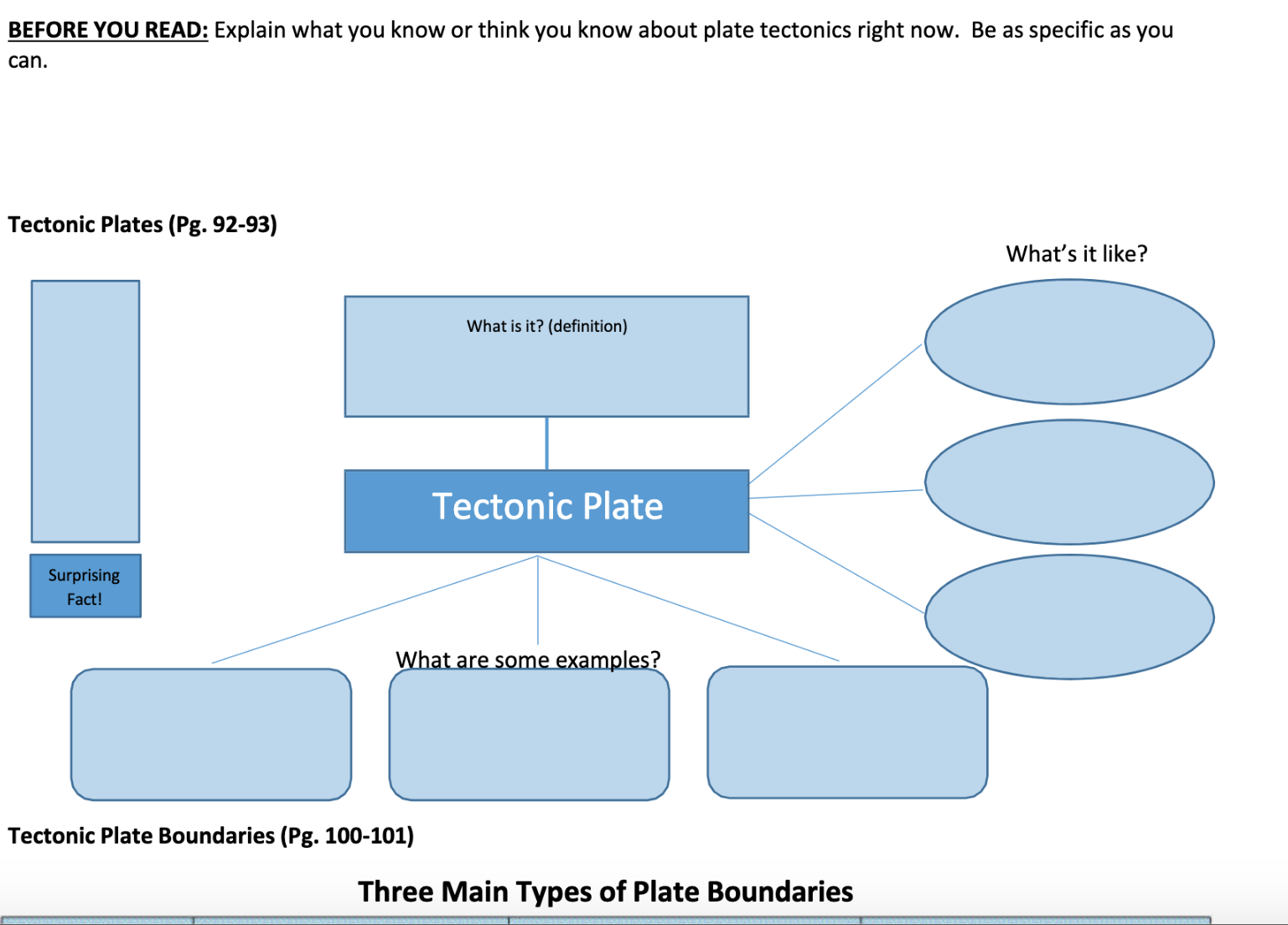
Question: Read the questions carefully and answer them fully relating what you are reading to the information. Surprising Fact! What are some examples? Tectonic Plate Boundaries
Read the questions carefully and answer them fully relating what you are reading to the information.
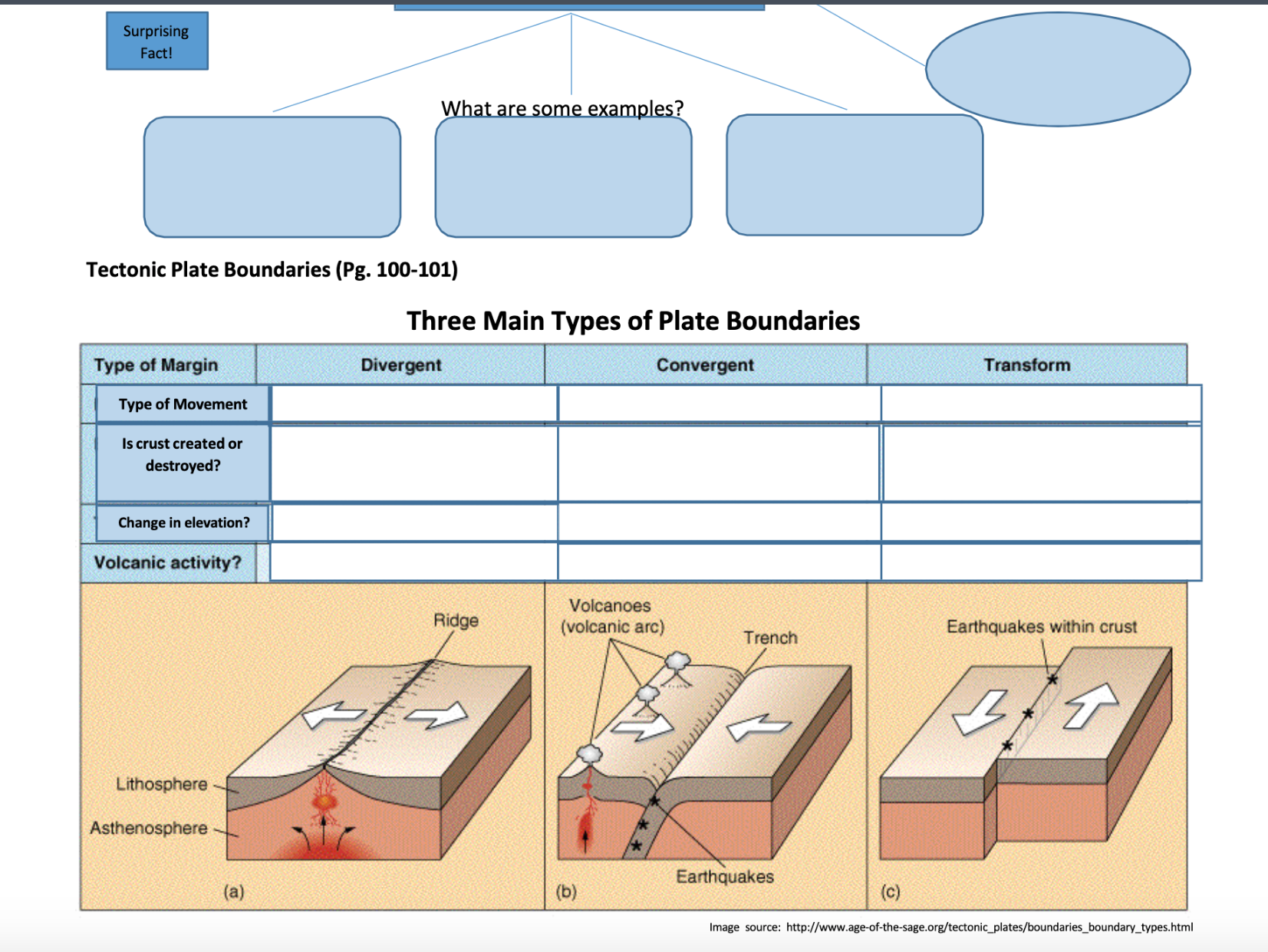
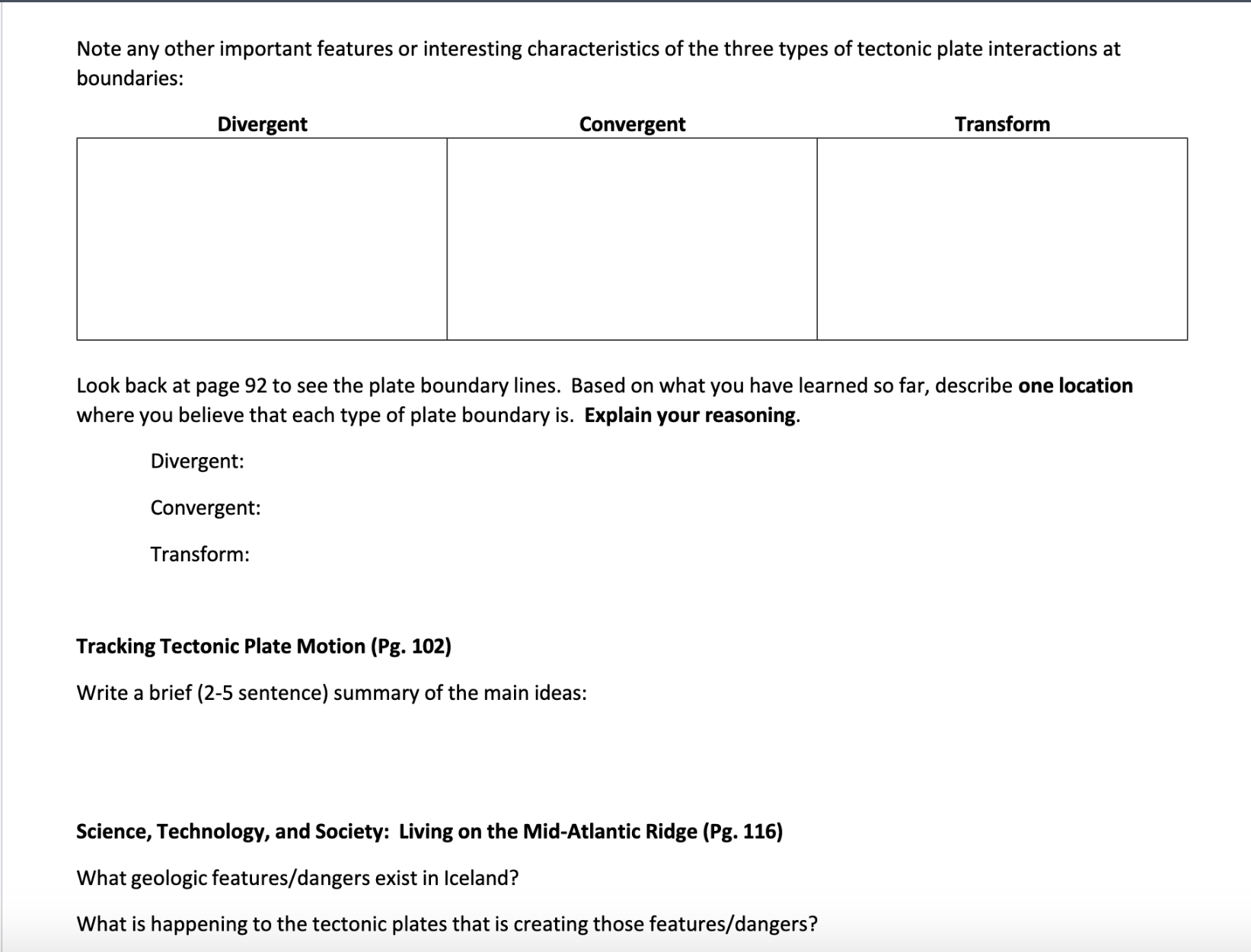
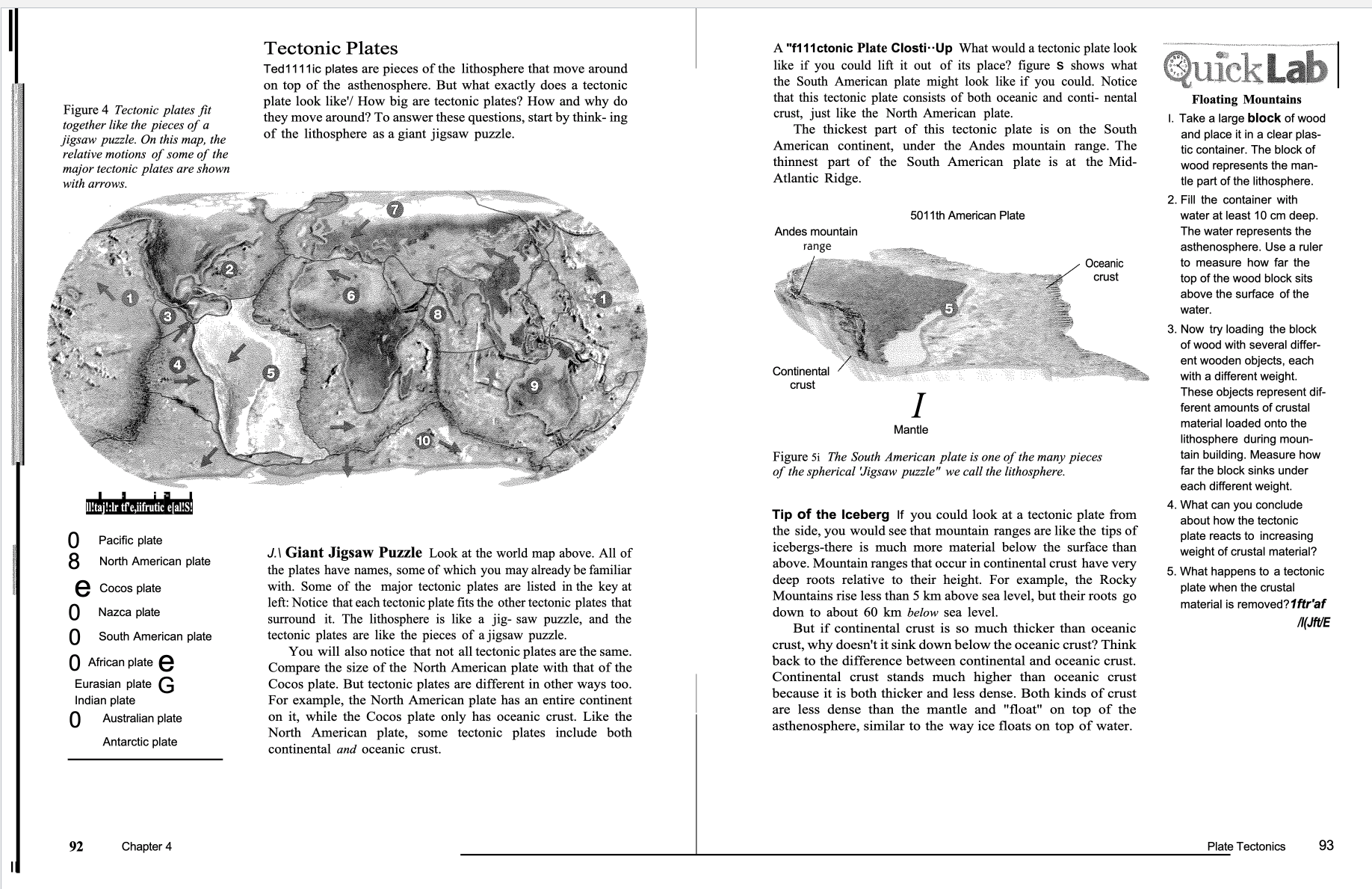
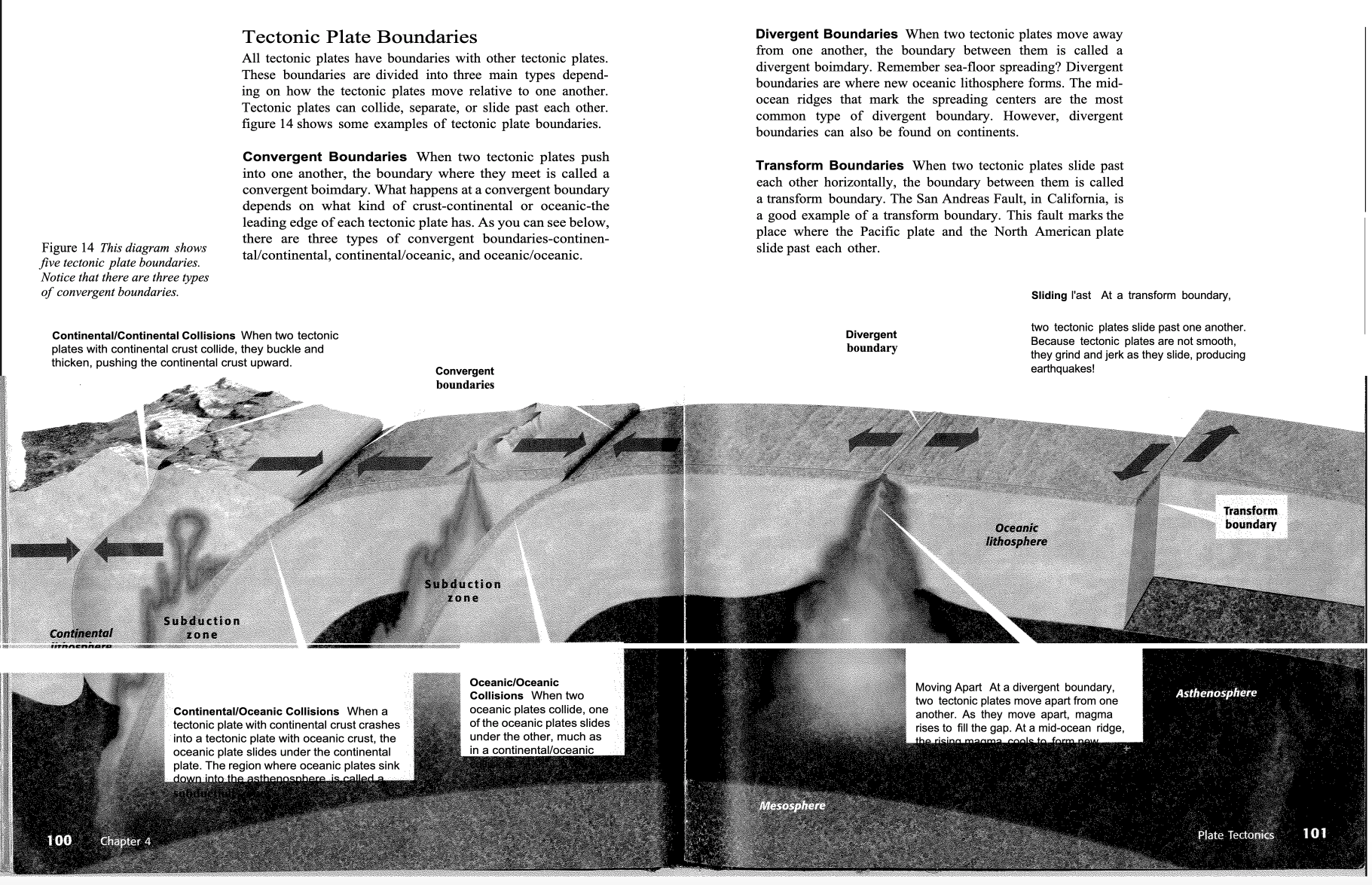
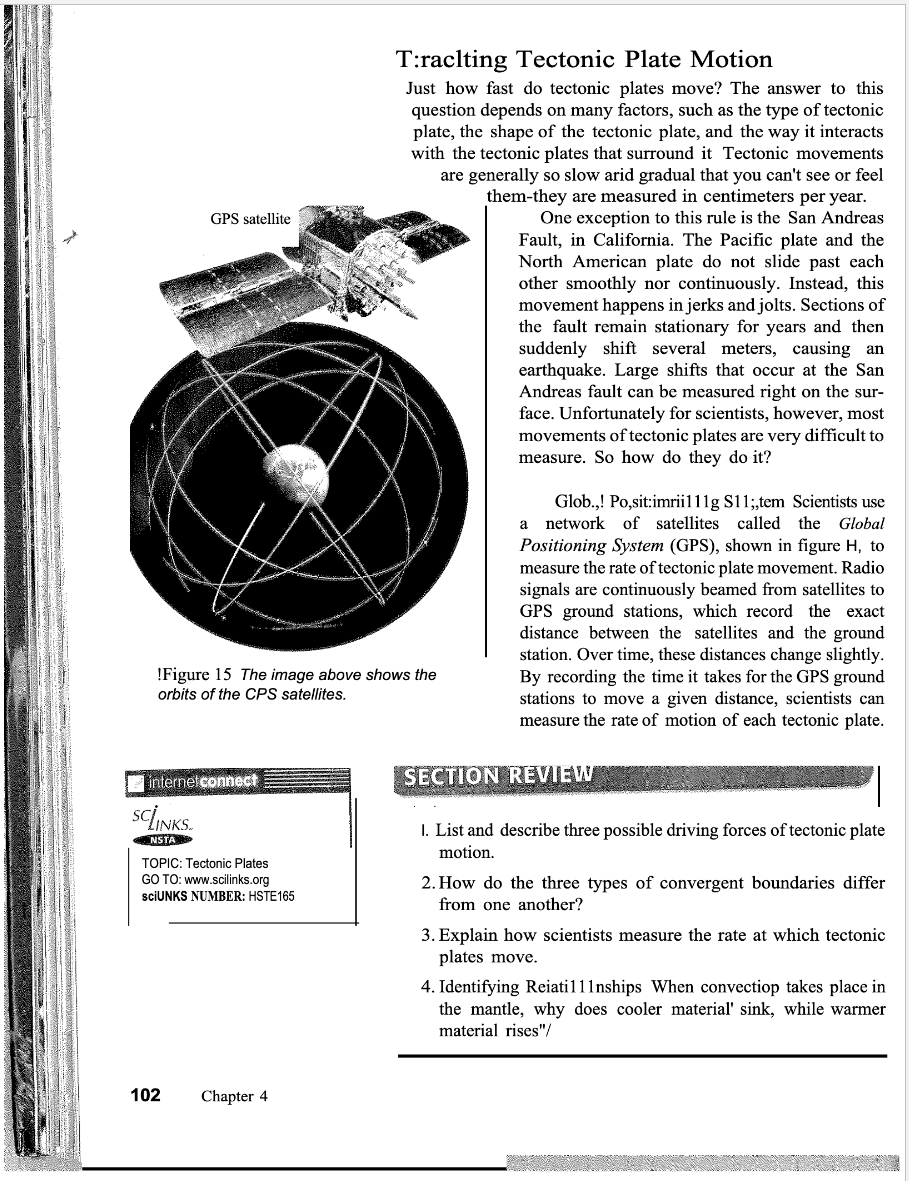
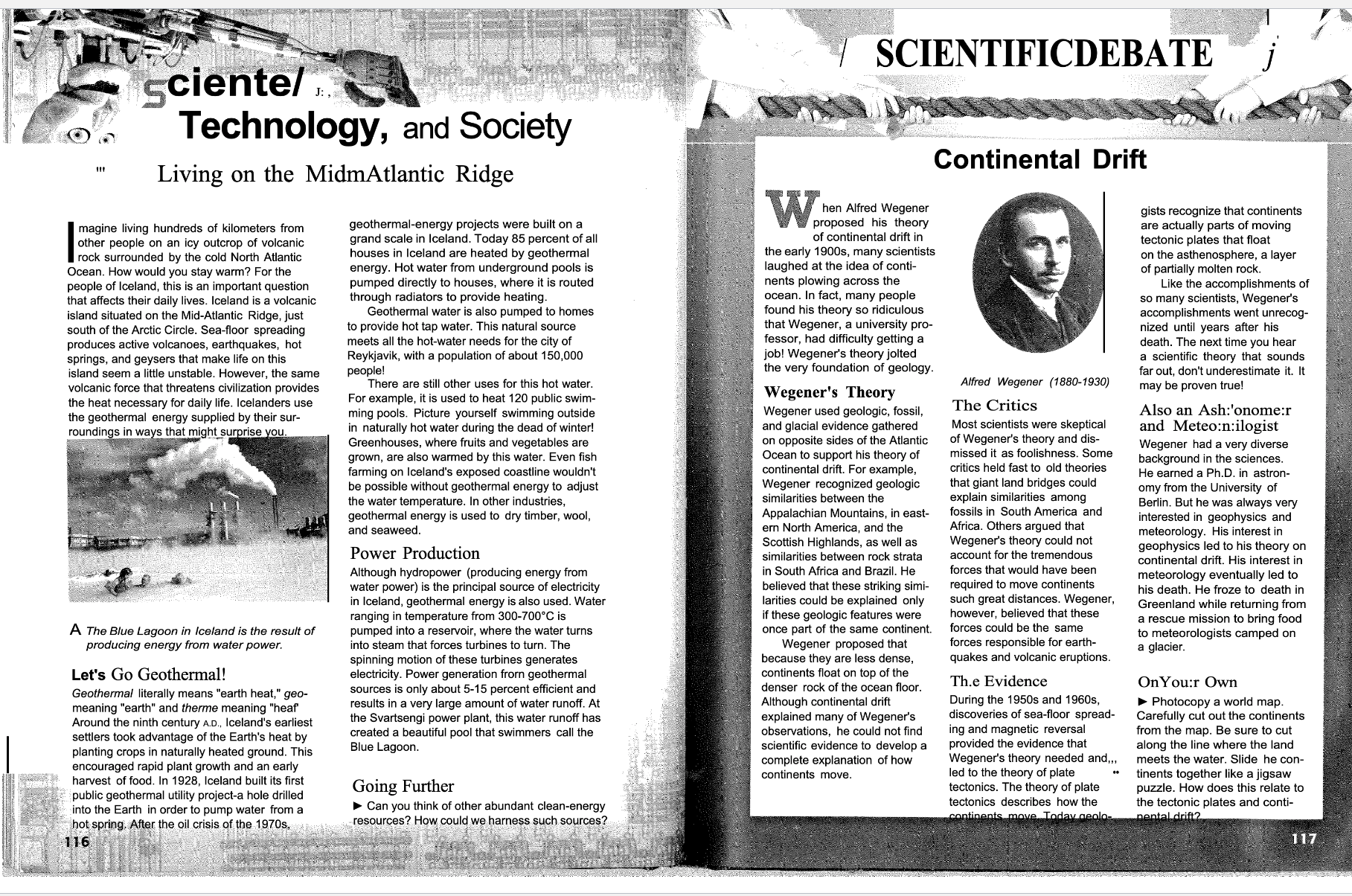
Surprising Fact! What are some examples? Tectonic Plate Boundaries (Pg. 100-101) Three Main Types of Plate Boundaries Type of Margin Divergent Convergent Transform Type of Movement Is crust created or destroyed? Change in elevation? Volcanic activity? Volcanoes Ridge (volcanic arc) Earthquakes within crust Trench Lithosphere Asthenosphere Earthquakes (a) (b) (c) Image source: http://www.age-of-the-sage.org/tectonic_plates/boundaries_boundary_types.htmlNote any other important features or interesting characteristics of the three types of tectonic plate interactions at boundaries: Divergent Convergent Transform Look back at page 92 to see the plate boundary lines. Based on what you have learned so far, describe one location where you believe that each type of plate boundary is. Explain your reasoning. Divergent: Convergent: Transform: Tracking Tectonic Plate Motion (Pg. 102) Write a brief (2-5 sentence) summary of the main ideas: Science, Technology, and Society: Living on the Mid-Atlantic Ridge (Pg. 116) What geologic features/dangers exist in Iceland? What is happening to the tectonic plates that is creating those features/dangers? Science, Technology, and Society: Living on the Mid-Atlantic Ridge (Pg. 116) What geologic features/dangers exist in Iceland? What is happening to the tectonic plates that is creating those features/dangers? How are the people of Iceland able to use those features to help them live well? Scientific Debate: Continental Drift (Pg. 117) Give at least two examples of evidence that suggested to Wegener that the continents were \"drifting.\" Why didn't other scientists of his day believe him? Why do scientists believe him now? What did you find most interesting or surprising in this section? What type of plate boundaries are responsible for some of the features we have looked at in the National Parks we have explored so far? What features in these parks are a result of plate tectonics? Figure 4 Tectonic plates fit together like the pieces of a Jigsaw puzzle. On this map, the relative motions of some of the major tectonic plates are shown with arrows. QO Pacific plate 8 North American plate e Cocos plate Q Nazca plate 0 South American plate 0 African plate e Eurasian plate G Indian plate 0 Australian plate Antarctic plate 92 'Chapter 4 Tectonic Plates Ted1111ic plates are pieces of the lithosphere that move around on top of the asthenosphere. But what exactly does a tectonic plate look like''/ How big are tectonic plates? How and why do they move around? To answer these questions, start by think- ing of the lithosphere as a giant jigsaw puzzle. J.\\ Giant Jigsaw Puzzle Look at the world map above. All of the plates have names, some of which you may already be familiar with. Some of the major tectonic plates are listed in the key at left: Notice that each tectonic plate fits the other tectonic plates that surround it. The lithosphere is like a jig- saw puzzle, and the tectonic plates are like the pieces of a jigsaw puzzle. 'You will also notice that not all tectonic plates are the same. 'Compare the size of the North American plate with that of the 'Cocos plate. But tectonic plates are different in other ways too. For example, the North American plate has an entire continent on it, while the Cocos plate only has oceanic crust. Like the North American plate, some tectonic plates include both continental and oceanic crust. A"f111ctonie Plate Closti--Up What would a tectonic plate look like if you could lift it out of its place? figure S shows what the South American plate might look like if you could. Notice that this tectonic plate consists of both oceanic and conti- nental crust, just like the North American plate. The thickest part of this tectonic plate is on the South American continent, under the Andes mountain range. The thinnest part of the South American plate is at the Mid- Atlantic Ridge. 5011th American Plate Andes mountain range sare Continental crust Mantle Figure 5i The South American plate is one of the many pieces of the spherical 'Jigsaw puzzle" we cail the lithasphere. Tip of the Iceberg If you could look at a tectonic plate from the side, you would see that mountain ranges are like the tips of icebergs-there is much more material below the surface than above. Mountain ranges that occur in continental crust have very deep roots relative to their height. For example, the Rocky Mountains rise less than 5 km above sea level, but their roots go down to about 60 km delow sea level. But if continental crust is so much thicker than oceanic crust, why doesn't it sink down below the oceanic crust? Think back to the difference between continental and oceanic crust. Continental crust stands much higher than oceanic crust because it is both thicker and less dense. Both kinds of crust are less dense than the mantle and "float" on top of the asthenosphere, similar to the way ice floats on top of water. N 2 Floating Mountains |. Take a large block of wood and place it in a clear plas- tic container. The block of wood represents the man- tle part of the lithosphere, Fill the container with water at least 10 cm deep. The water represents the asthenosphere, Use a ruler to measure how far the top of the wood block sits above the surface of the water. . Now try loading the block of wood with several differ- ent wooden objects, each with a different weight. These objects represent dif- ferent amounts of crustal material loaded onto the lithosphere during moun- tain building. Measure how far the block sinks under each different weight. . What can you conclude about how the tectonic plate reacts to increasing weight of crustal material? . What happens to a tectonic plate when the crustal material is removed? 7ftr'af ASE Plate Tectonics 93 Figure 14 This diagram shows five tectonic plate boundaries. Notice that there are three types of convergent boundaries. Tectonic Plate Boundaries All tectonic plates have boundaries with other tectonic plates. These boundaries are divided into three main types depend- ing on how the tectonic plates move relative to one another. Tectonic plates can collide, separate, or slide past each other. figure 14 shows some examples of tectonic plate boundaries. Convergent Boundaries When two tectonic plates push into one another, the boundary where they meet is called a convergent boimdary. What happens at a convergent boundary depends on what kind of crust-continental or oceanic-the leading edge of each tectonic plate has. As you can see below, there are three types of convergent boundaries-continen- tal/continental, continental/oceanic, and oceanic/oceanic. Continental/Continental Collisions When two tectonic plates with continental crust collide, they buckle and thicken, pushing the continental crust upward. Convergent i boundaries Oceanic/Oceanic Collisions When two Continental/Oceanic Collisions When a oceanic plates collide, one tectonic plate with continental crust crashes fie of the oceanic plates slides into a tectonic plate with oceanic crust, the under the other, much as | oceanic plate slides under the continental in a continental/oceanic plate. The feria region where oceanic plates sink Divergent Boundaries When two tectonic plates move away from one another, the boundary between them is called a divergent boimdary. Remember sea-floor spreading? Divergent boundaries are where new oceanic lithosphere forms. The mid- ocean ridges that mark the spreading centers are the most common type of divergent boundary. However, divergent boundaries can also be found on continents. Transform Boundaries When two tectonic plates slide past each other horizontally, the boundary between them is called a transform boundary. The San Andreas Fault, in California, is a good example of a transform boundary. This fault marks the place where the Pacific plate and the North American plate slide past each other. Sliding l'ast At a transform boundary, two tectonic plates slide past one another. Because tectonic plates are not smooth, 'they grind and jerk as they slide, producing earthquakes! Divergent boundary Transform boundary Moving Apart At a divergent boundary, two tectonic plates move apart from one another. As they move apart, magma Asthenosphere _ Mesosphere Plate Tectonics th T:raclting Tectonic Plate Motion Just how fast do tectonic plates move? The answer to this question depends on many factors, such as the type of tectonic plate, the shape of the tectonic plate, and the way it interacts with the tectonic plates that surround it Tectonic movements are generally so slow arid gradual that you can't see or feel them-they are measured in centimeters per year. GPS satellite ; One exception to this rule is the San Andreas Fault, in California. The Pacific plate and the North American plate do not slide past each other smoothly nor continuously. Instead, this movement happens in jerks and jolts. Sections of the fault remain stationary for years and then suddenly shift several meters, causing an earthquake. Large shifts that occur at the San Andreas fault can be measured right on the sur- face. Unfortunately for scientists, however, most movements of tectonic plates are very difficult to measure. So how do they do it? Glob.,! Po,sit:imriil11g $11;,tem Scientists use a network of satellites called the Global Positioning System (GPS), shown in figure H, to measure the rate of tectonic plate movement. Radio signals are continuously beamed from satellites to GPS ground stations, which record the exact distance between the satellites and the ground station. Over time, these distances change slightly. !Figure 15 The image above shows the By recording the time it takes for the GPS ground orbits of the CPS satellites. stations to move a given distance, scientists can measure the rate of motion of each tectonic plate. |. List and describe three possible driving forces of tectonic plate motion. TOPIC: Tectonic Plates GO TO: www.scilinks.org 2.How do the three types of convergent boundaries differ soiUNKS NUMBER: HSTE165 ica Gas 3. Explain how scientists measure the rate at which tectonic plates move. 4. Identifying Reiatil11nships When convectiop takes place in the mantle, why does cooler material' sink, while warmer material rises"/ 102 Chapter 4 Technology, and Society " Living on the MidmAtlantic Ridge other people on an icy outcrop of volcanic rock surrounded by the cold North Atlantic Ocean. How would you stay warm? For the people of Iceland, this is an important question that affects their daily lives. Iceland is a volcanic island situated on the Mid-Atlantic Ridge, just south of the Arctic Circle. Sea-floor spreading produces active volcanoes, earthquakes, hot springs, and geysers that make life on this island seem a little unstable. However, the same volcanic force that threatens civilization provides the heat necessary for daily life. Icelanders use the geothermal energy supplied by their sur- gs in ways that might surprise you. | magine living hundreds of kilometers from A The Blue Lagoon in Iceland is the result of producing energy from water power. Let's Go Geothermal! Geothermal literally means \"earth heat," geo- meaning "earth" and therme meaning "heaf Around the ninth century Ao., Iceland's earliest settlers took advantage of the Earth's heat by planting crops in naturally heated ground. This encouraged rapid plant growth and an early harvest of food. In 1928, Iceland built its first public geothermal utility project-a hole drilled into the Earth in order to pump water from a ing, After the isis of Os, geothermal-energy projects were built on a grand scale in Iceland. Today 85 percent of all houses in Iceland are heated by geothermal energy. Hot water from underground pools is pumped directly to houses, where it is routed through radiators to provide heating. Geothermal water is also pumped to homes to provide hot tap water. This natural source meets all the hot-water needs for the city of Reykjavik, with a population of about 150,000 people! There are still other uses for this hot water. For example, it is used to heat 120 public swim- ming pools. Picture yourself swimming outside in naturally hot water during the dead of winter! Greenhouses, where fruits and vegetables are grown, are also warmed by this water. Even fish farming on Iceland's exposed coastline wouldn't be possible without geothermal energy to adjust the water temperature. In other industries, geothermal energy is used to dry timber, wool, and seaweed. Power Production Although hydropower (producing energy from water power) is the principal source of electricity in Iceland, geothermal energy is also used. Water ranging in temperature from 300-700C is pumped into a reservoir, where the water turns into steam that forces turbines to turn. The spinning motion of these turbines generates electricity. Power generation frorn geothermal sources is only about 5-15 percent efficient and results in a very large amount of water runoff. At the Svartsengi power plant, this water runoff has created a beautiful pool that swimmers call the Blue Lagoon. Going Further & Can you think of other abundant clean-energy resources? How could we harness such sources? W. hen Alfred Wegener proposed his theory of continental drift in the early 1900s, many scientists laughed at the idea of conti- nents plowing across the ocean. In fact, many people found his theory so ridiculous that Wegener, a university pro- fessor, had difficulty getting a job! Wegener's theory jolted the very foundation of geology. Wegener's Theory Wegener used geologic, fossil, and glacial evidence gathered 'on opposite sides of the Atlantic = Ocean to support his theory of continental drift. For example, Wegener recognized geologic similarities between the Appalachian Mountains, in east- em North America, and the Scottish Highlands, as well as similarities between rock strata in South Africa and Brazil. He believed that these striking simi- larities could be explained only if these geologic features were once part of the same continent. Wegener proposed that because they are less dense, continents float on top of the denser rock of the ocean floor. Although continental drift explained many of Wegener's observations, he could not find scientific evidence to develop a complete explanation of how continents move. Alfred Wegener (1880-1930) The Critics Most scientists were skeptical of Wegener's theory and dis- missed it as foolishness. Some critics held fast to old theories that giant land bridges could explain similarities among fossils in South America and Africa. Others argued that 'Wegener's theory could not account for the tremendous forces that would have been required to move continents such great distances. Wegener, however, believed that these forces could be the same forces responsible for earth- quakes and volcanic eruptions: Th.e Evidence During the 1950s and 1960s, discoveries of sea-floor spread- ing and magnetic reversal provided the evidence that Wegener's theory needed and,,, led to the theory of plate - tectonics. The theory of plate tectonics describes how the gists recognize that continents are actually parts of moving tectonic plates that float on the asthenosphere, a layer of partially molten rock. Like the accomplishments of so many scientists, Wegener's accomplishments went unrecog- nized until years after his death. The next time you hear a scientific theory that sounds far out, don't underestimate it. It may be proven true! Also an Ash:'onome:r and Meteo:n:ilogist Wegener had a very diverse background in the sciences. He earned a Ph.D. in astron- amy from the University of Berlin. But he was always very interested in geophysics and meteorology. His interest in geophysics led to his theory on continental drift. His interest in meteorology eventually led to his death. He froze to death in Greenland while returning from a rescue mission to bring food to meteorologists camped on a glacier. OnYou:r Own Photocopy a world map. Carefully cut out the continents from the map. Be sure to cut along the line where the land meets the water. Slide he con- tinents together like a jigsaw puzzle. How does this relate to the tectonic plates and conti- BEFORE YOU READ: Explain what you know or think you know about plate tectonics right now. Be as specific as you can. Tectonic Plates (Pg. 92-93) What's it like? What is it? (definition) C > Tectonic Plate > Tectonic Plate Boundaries (Pg. 100-101) Three Main Types of Plate Boundaries
Step by Step Solution
There are 3 Steps involved in it
1 Expert Approved Answer
Step: 1 Unlock
Question Has Been Solved by an Expert!
Get step-by-step solutions from verified subject matter experts
Step: 2 Unlock
Step: 3 Unlock
Students Have Also Explored These Related Accounting Questions!









 Study Help