







Question: The parser actions arc informally defined as follows: The Shift process is simple: The next symbol of input is pushed onto the stark, along with
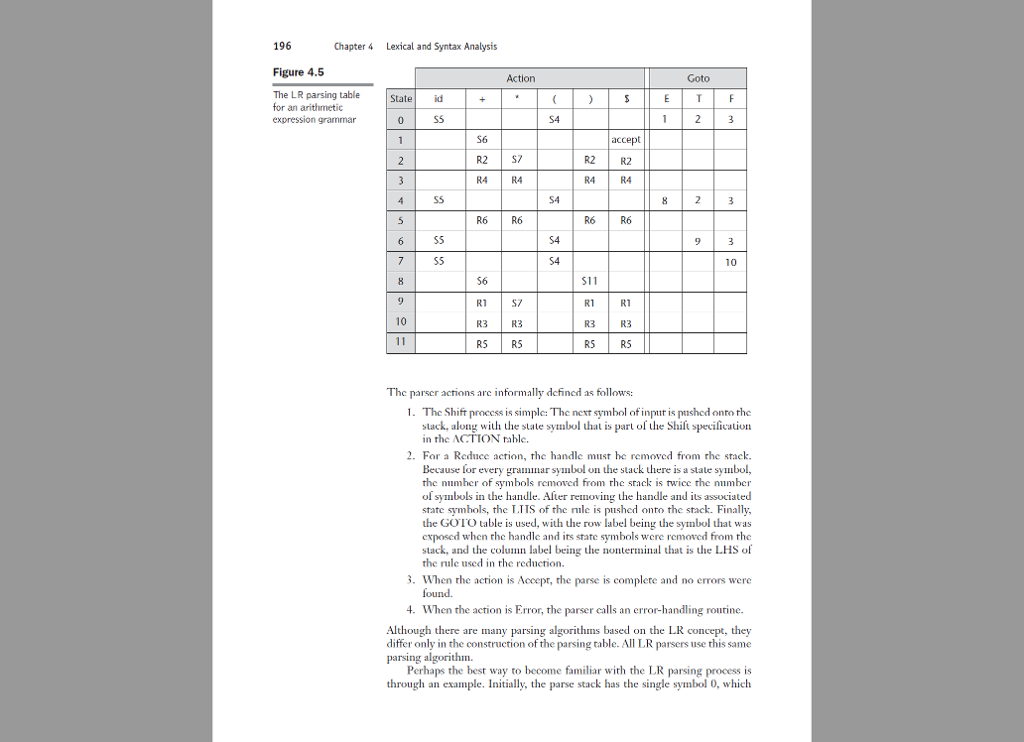
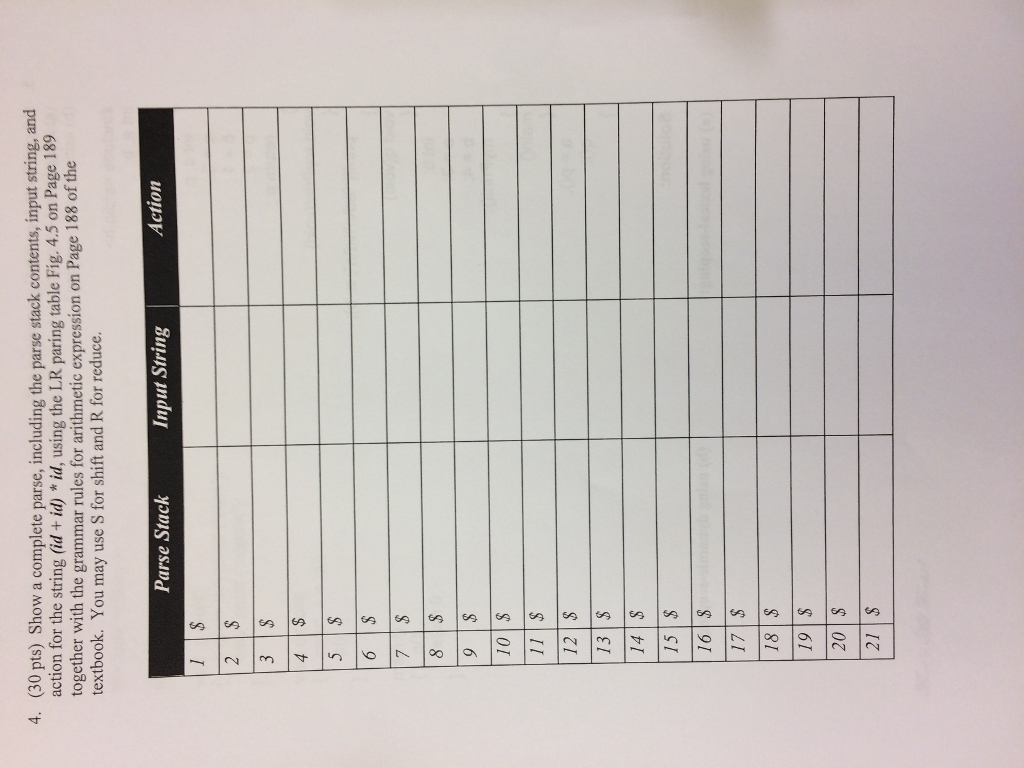
The parser actions arc informally defined as follows: The Shift process is simple: The next symbol of input is pushed onto the stark, along with the state symbol that is part of the shift specification in the ACTION table. For a Reduce action, the handle must be remove from the stack. Because for every grammar symbol on the stack symbol the number of symbol removed from the stack is twice the number of symbol in the handle. After removing the handle and its associated state symbol, the LHS the rule is pushed onto the stack. Finally, the GOTO table is used, with the row label being to the symbol that was expose when the handle and its state symbol removed from the stack, and the column label being the nonterminal that is the LHS of the rule used in the reduction. When the action is Accept, the parse is complete and no errors were found. when the action is Error, the parser calls an error -handing routine. Although there are many parsing algorithms based on the LR concept, they differ only in the construction of the passing table. All LR parsers use time same parsing algorithm. Perhaps the best way to become familiar with the LR parsing is through an example. Initially, the parse stake has the single symbol 0, which Show a complete parse, including the parse stack contents, input string, and action for the siring (id + id) *id, using the LR paring table Fig, 4.5 on Page 189 together with the grammar rules for arithmetic expression on Page 188 of the textbook. You may use S for shift and R for reduce
Step by Step Solution
There are 3 Steps involved in it

Get step-by-step solutions from verified subject matter experts
 Study Help