







Question: A random change in the sequence of a gene is more likely to result in a loss-of-function mutation rather than a gain-of-function mutation. Also, cancer
A random change in the sequence of a gene is more likely to result in a loss-of-function mutation rather than a gain-of-function mutation. Also, cancer usually results from multiple genetic changes, as illustrated in Figure 25.7. Based on these ideas, which kinds of cancer-causing mutation would you expect to happen first, the inactivation of tumor-suppressor genes or the activation of oncogenes? After such an early mutation has happened, explain why further mutations that promote uncontrolled cell division become more likely to occur.
Figure 25.7:
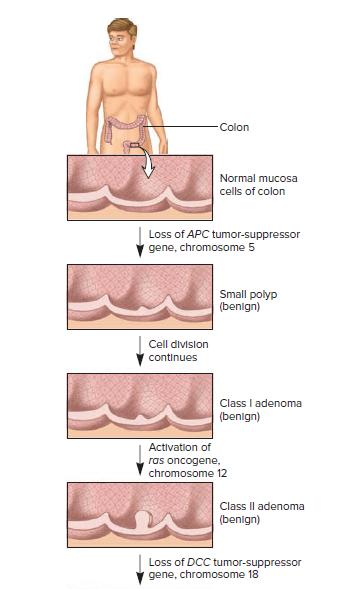
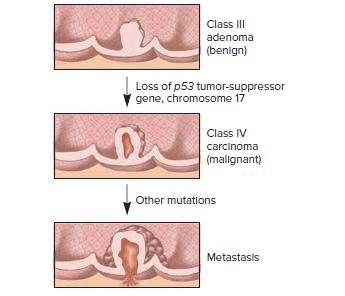
Colon Normal mucosa cells of colon Loss of APC tumor-suppressor gene, chromosome 5 Cell division continues Small polyp (benign) Activation of ras oncogene, Class I adenoma (benign) chromosome 12 Class II adenoma (benign) Loss of DCC tumor-suppressor gene, chromosome 18
Step by Step Solution
3.36 Rating (149 Votes )
There are 3 Steps involved in it
Based on the principles mentioned we can infer that the inactivation of tumorsuppressor genes would ... View full answer

Get step-by-step solutions from verified subject matter experts
 Study Help