







Question: a) Use the dso ve command in MATLAB to tind an explicit solution to dy (y-1)2, y(0)= 1 b) Using MATLAB, plot your solution from
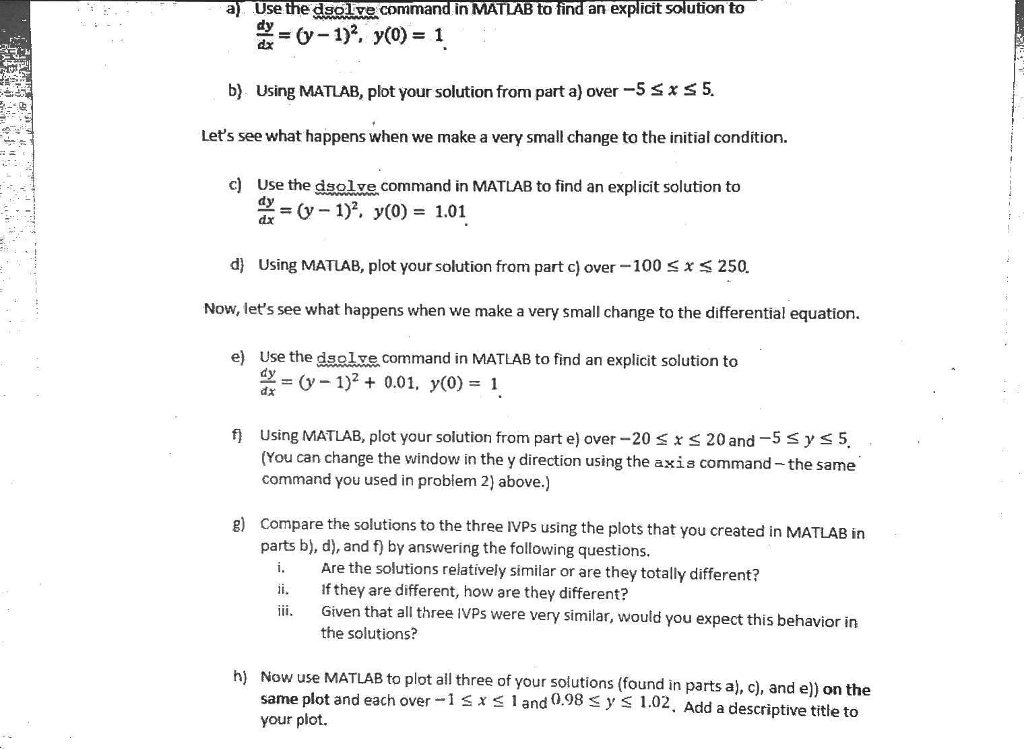
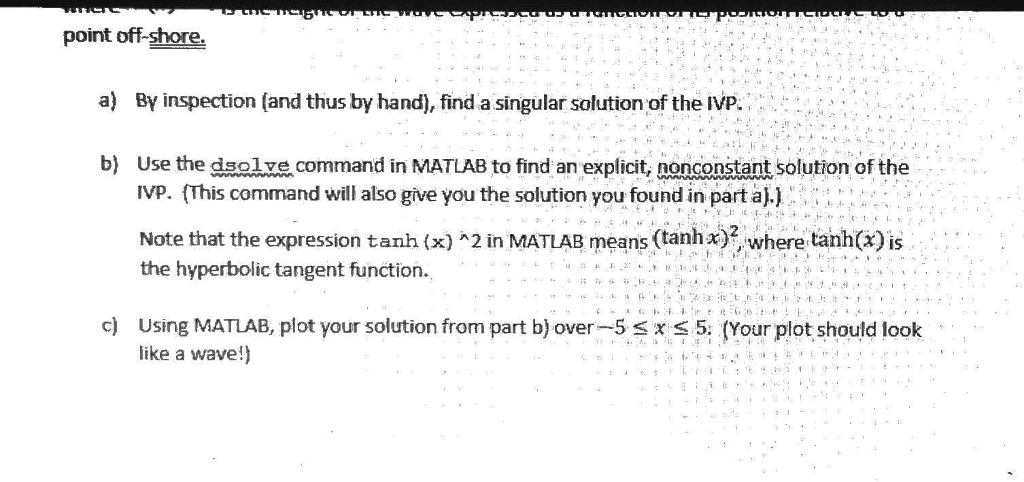
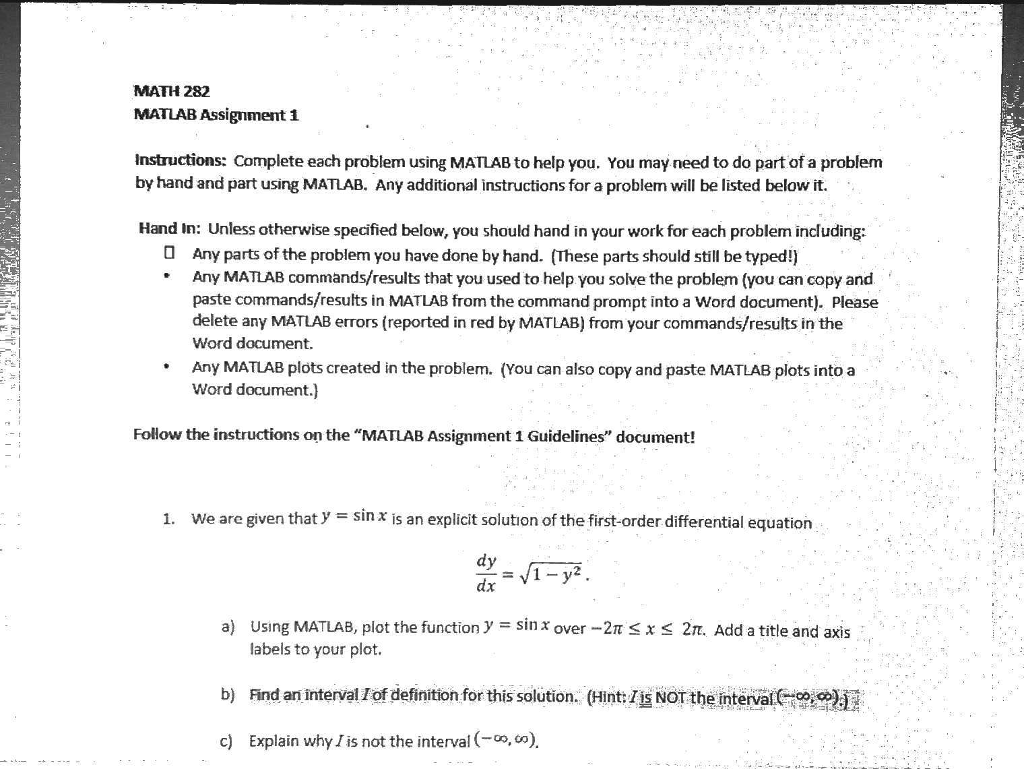
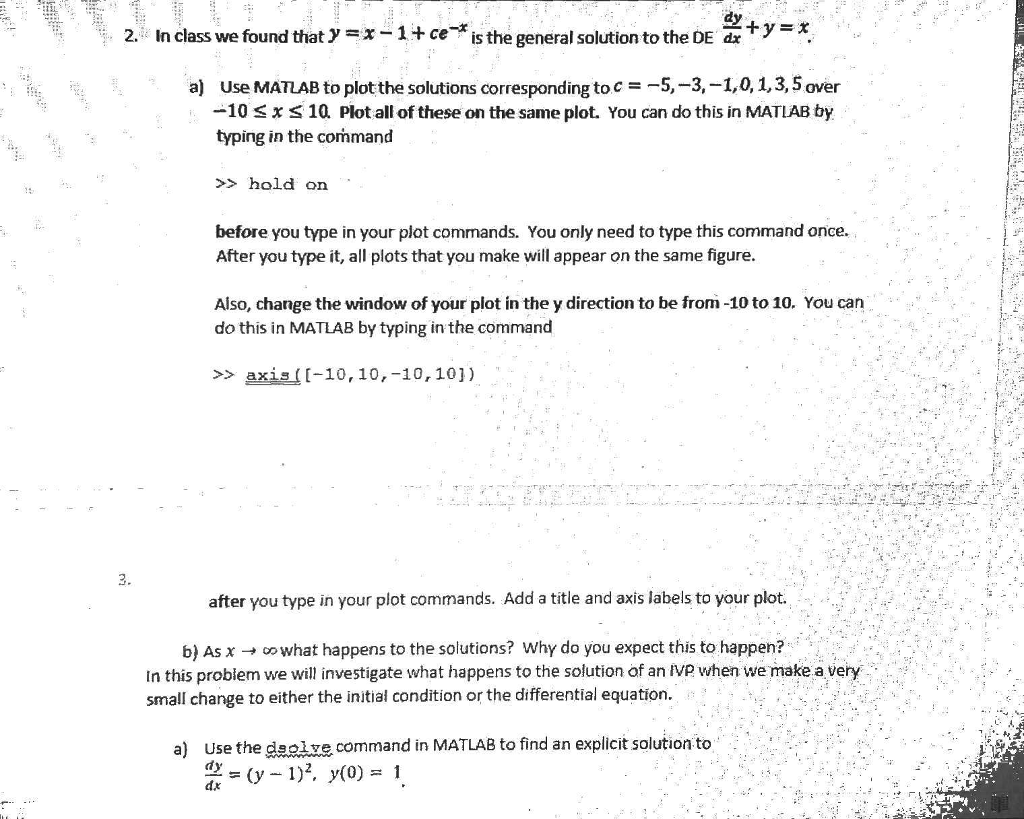
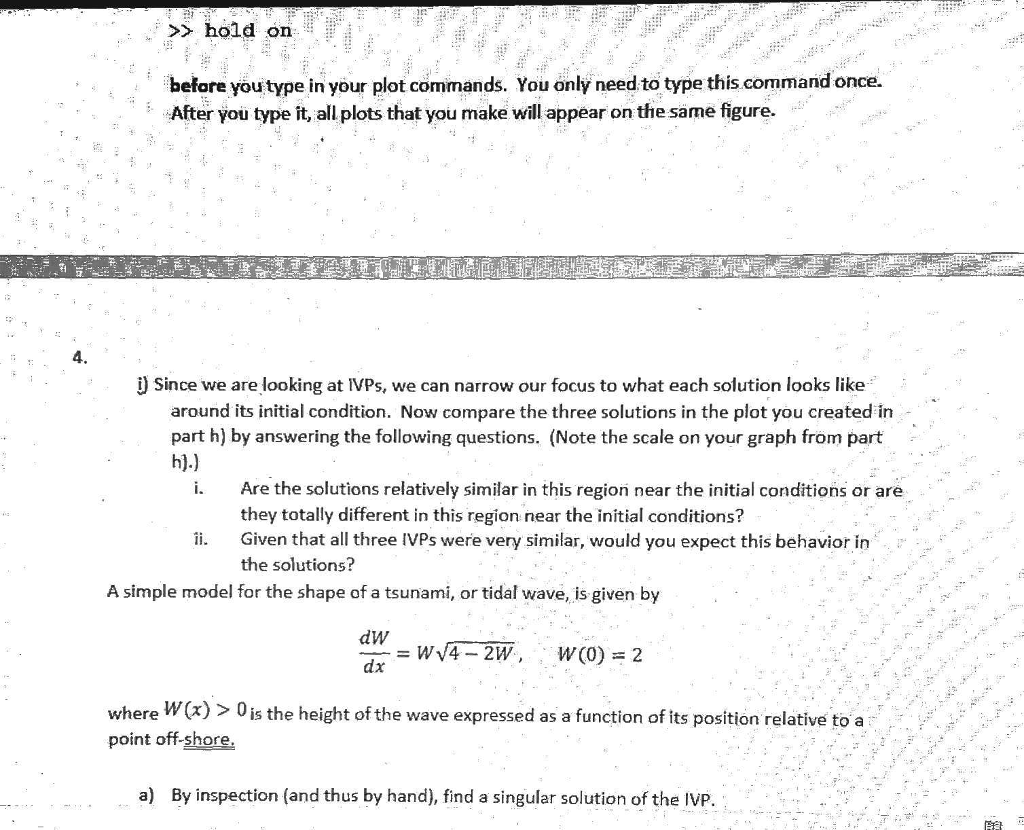
a) Use the dso ve command in MATLAB to tind an explicit solution to dy (y-1)2, y(0)= 1 b) Using MATLAB, plot your solution from part a) over-5sxs5 Let's see what happens when we make a very small change to the initial condition. c) Use the dsolve command in MATLAB to find an explicit solution to dy ax = (y-1)2, y(0)= 1.01 di Using MATLAB, plot your solution from part c) over -100 Sxs 250 Now, let's see what happens when we make a very small change to the differential equation. e) Use the dsoe command in MATLAB to find an explicit solution to 6x1)0.01. y(o) 1 f Using MATLAB, plot your solution from part e) over-20 SxS 20 and-5 3 ys5. (You can change the window in the y direction using the axis command-the same command you used in problem 2) above.) Compare the solutions to the three IVPs using the plots that you created in MATLAB in parts b), d), and f) by answering the following questions g) i. Are the solutions relatively similar or are they totally different? ii. f they are different, how are they different? ii. Given that all three IVPs were very similar, would you expect this behavior in the solutions? Now use MATLAB to plot al three of your solutions (found in parts a), c), and el) on the same plot and each over 1 x your plot. h) and 0.98 s y S 1.02, Add a descriptive title to a) Use the dso ve command in MATLAB to tind an explicit solution to dy (y-1)2, y(0)= 1 b) Using MATLAB, plot your solution from part a) over-5sxs5 Let's see what happens when we make a very small change to the initial condition. c) Use the dsolve command in MATLAB to find an explicit solution to dy ax = (y-1)2, y(0)= 1.01 di Using MATLAB, plot your solution from part c) over -100 Sxs 250 Now, let's see what happens when we make a very small change to the differential equation. e) Use the dsoe command in MATLAB to find an explicit solution to 6x1)0.01. y(o) 1 f Using MATLAB, plot your solution from part e) over-20 SxS 20 and-5 3 ys5. (You can change the window in the y direction using the axis command-the same command you used in problem 2) above.) Compare the solutions to the three IVPs using the plots that you created in MATLAB in parts b), d), and f) by answering the following questions g) i. Are the solutions relatively similar or are they totally different? ii. f they are different, how are they different? ii. Given that all three IVPs were very similar, would you expect this behavior in the solutions? Now use MATLAB to plot al three of your solutions (found in parts a), c), and el) on the same plot and each over 1 x your plot. h) and 0.98 s y S 1.02, Add a descriptive title to
Step by Step Solution
There are 3 Steps involved in it

Get step-by-step solutions from verified subject matter experts
 Study Help