







Question: mmediately after the switch is closed, what is the voltage across the capacitor? Learning Goal: To understand the dynamics of a series R-C circuit. Consider
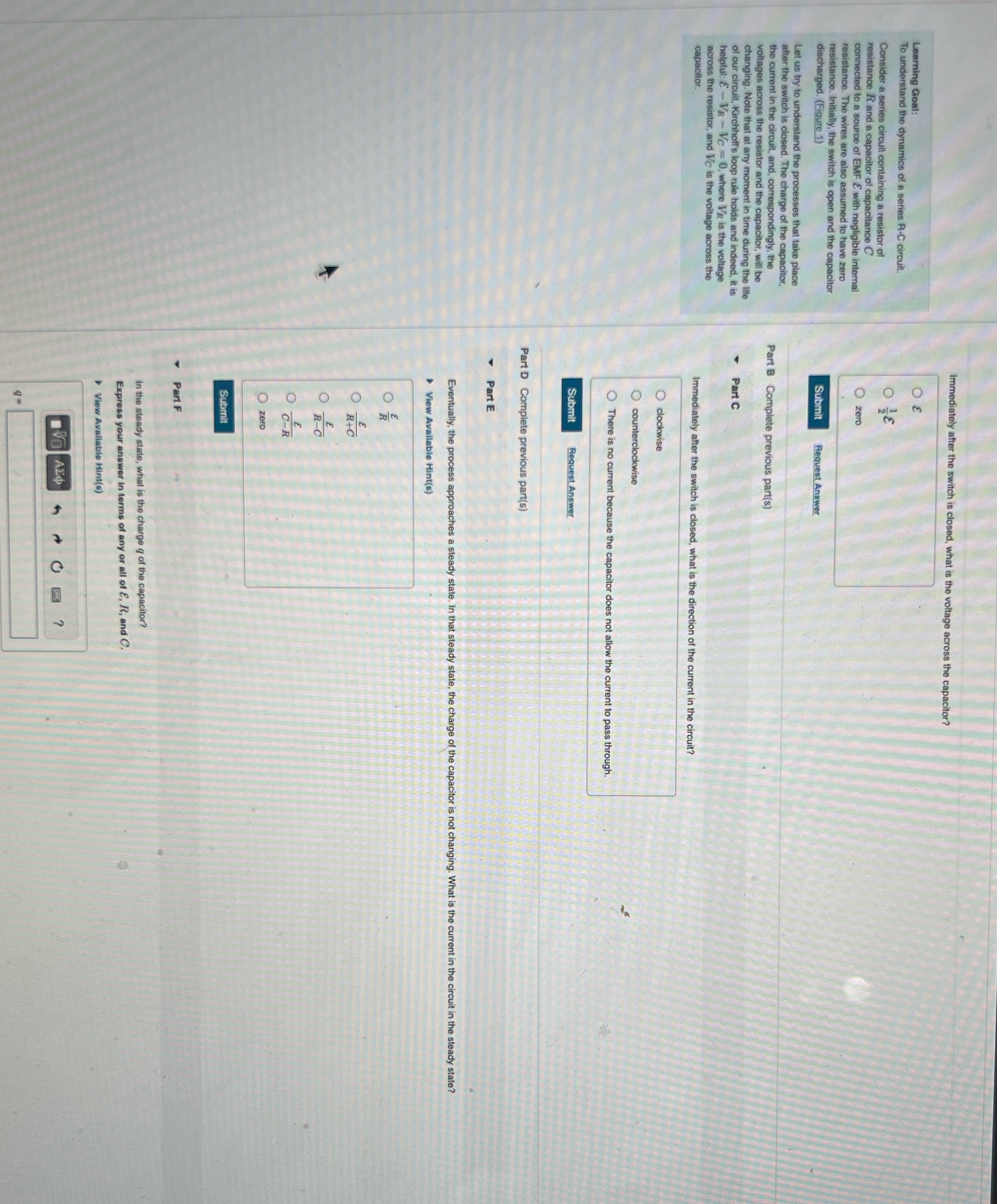
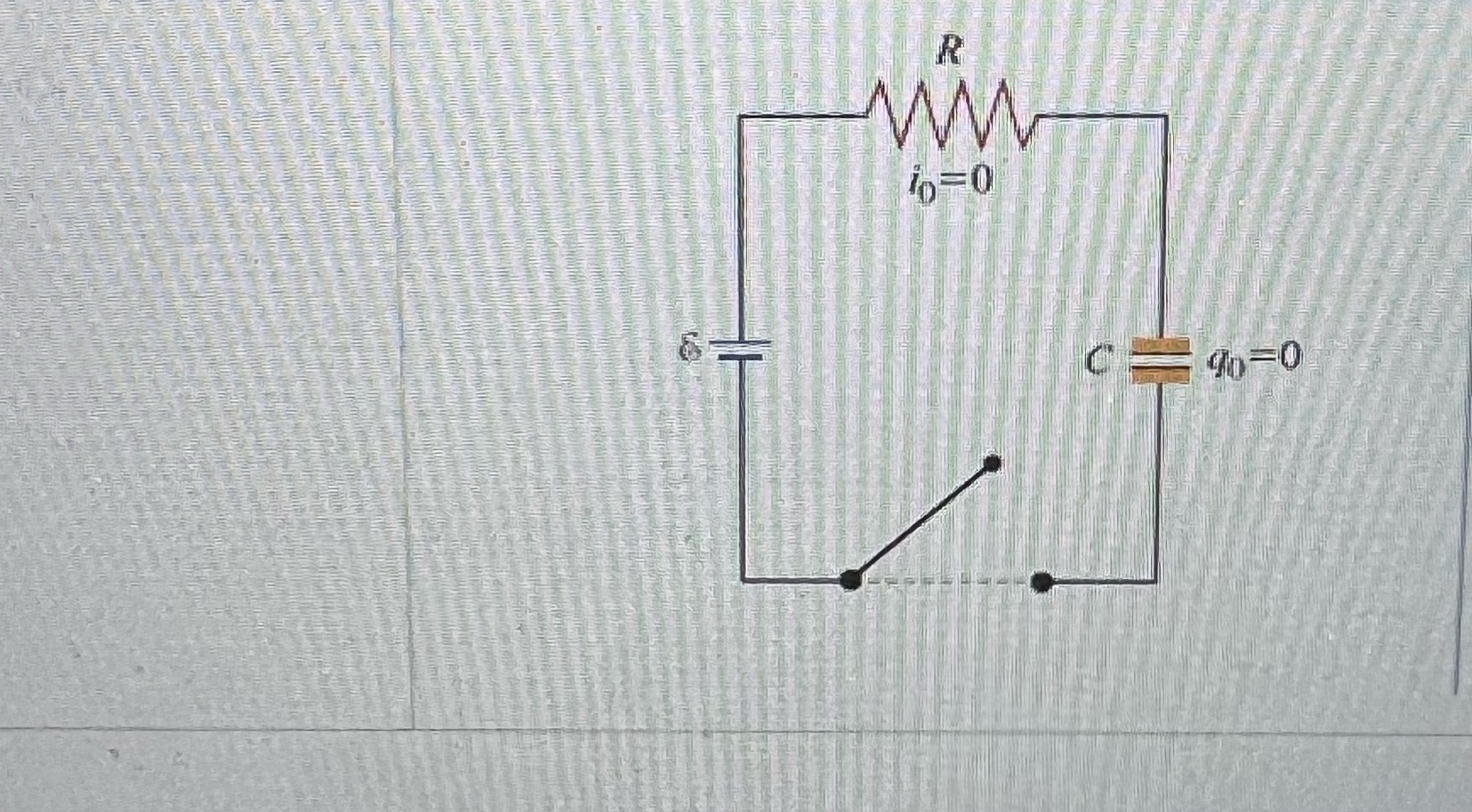
mmediately after the switch is closed, what is the voltage across the capacitor? Learning Goal: To understand the dynamics of a series R-C circuit. Consider a series circuit containing a resistor of resistance R and a capacitor of capacitance C connected to a source of EMF & with negligible internal zero resistance. The wires are also assumed to have zero resistance. Initially, the switch is open and the capacitor d. (Figure 1) Submit Request Answer Let us try to understand the processes that take place after the switch is closed. The charge of the capacitor, the current in the circuit, and, correspondingly, the Part B Complete previous part(s) voltages across the resistor and the capacitor, will be changing. Note that at any moment in time during the life of our circuit, Kirchhoff's loop rule holds and indeed, it is Part C helpful: E - VR - Vc = 0, where VR is the voltage across the resistor, and V/c is the voltage across the capacitor. imediately after the switch is closed, what is the direction of the current in the circuit? clockwise O counterclockwise There is no current because the capacitor does not allow the current to pass through Submit Request Answer Part D Complete previous part(s) Part E Eventually, the process approaches a steady state. In that steady state, the charge of the capacitor is not changing. What is the current in the circuit in the steady state? View Available Hint(s) O RIC ORO O C-R zero Submit Part F In the steady state, what is the charge q of the capacitor? Express your answer in terms of any or all of E, R, and C. * View Available Hint(s)
Step by Step Solution
There are 3 Steps involved in it

Get step-by-step solutions from verified subject matter experts
 Study Help