







Question: Teaching case Fixing the payment system at Alvalade XXI: a case on IT project risk management Ramon 0'Callaghan Tilbarg Lhiversily, The Netherlands Correspondence: Mo'Cellaghan, School
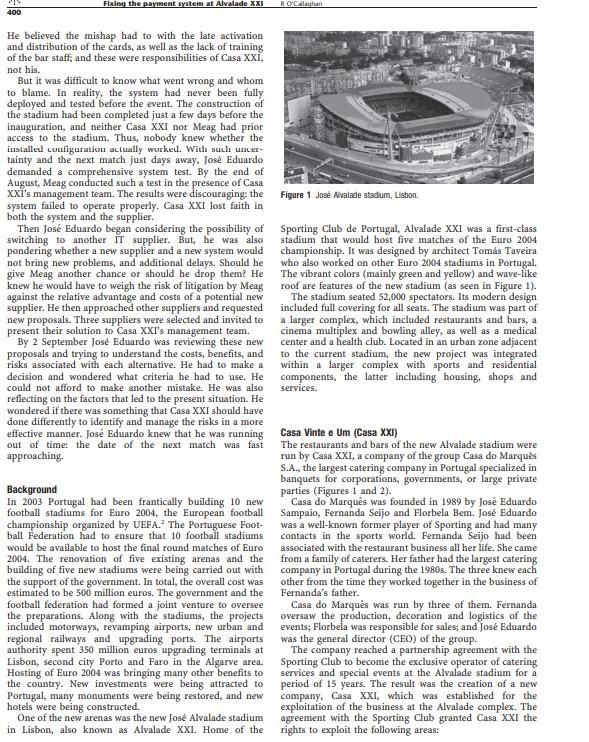
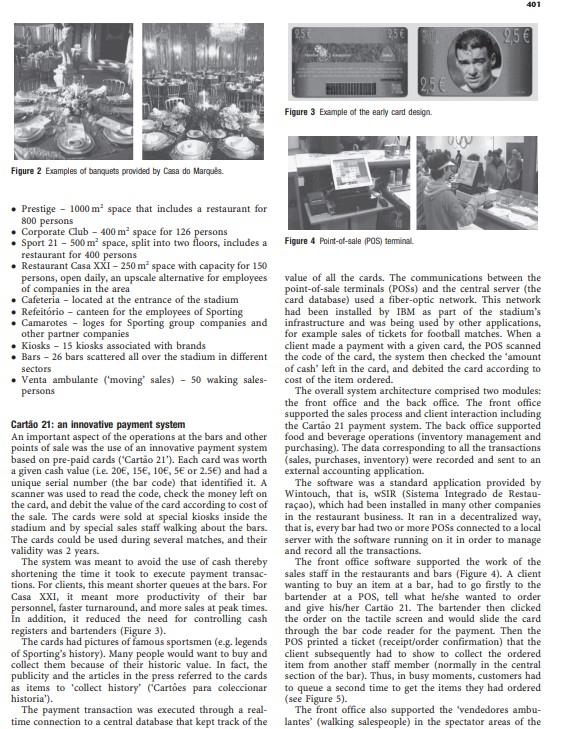
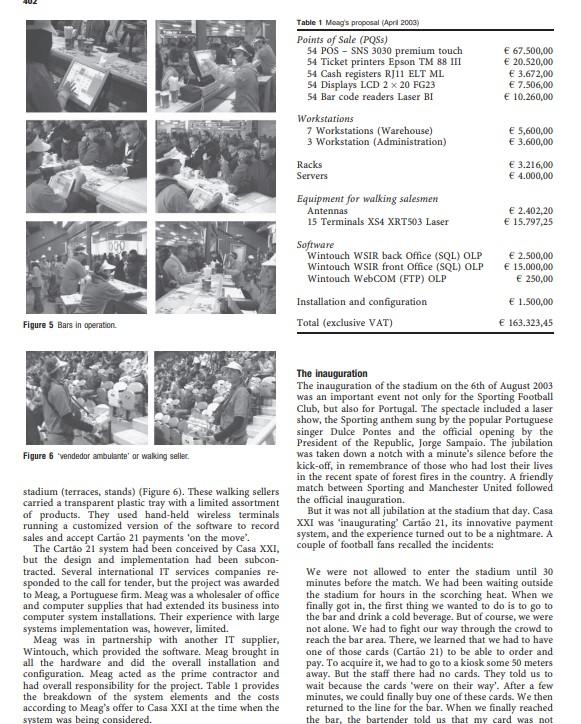
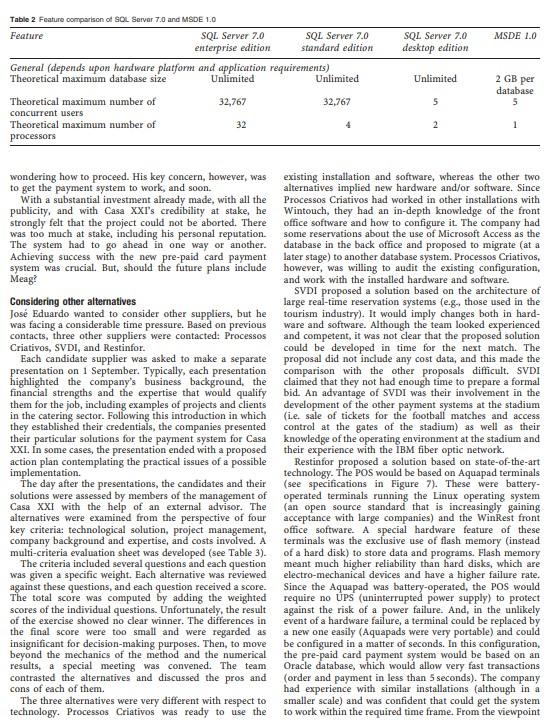
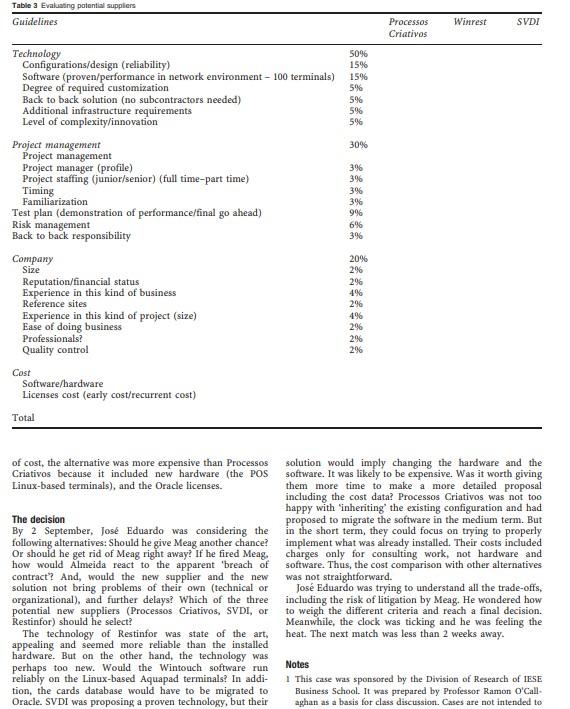
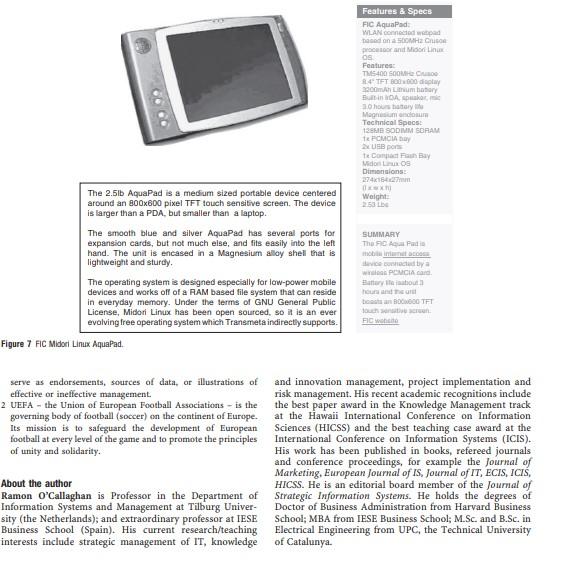
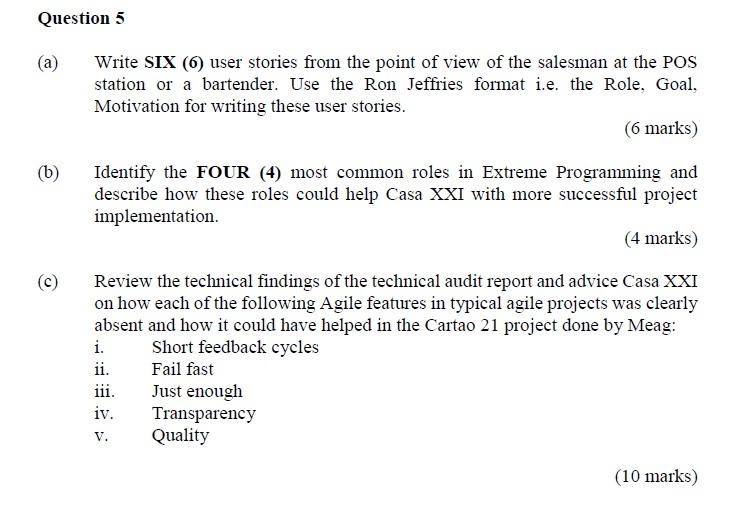
Teaching case Fixing the payment system at Alvalade XXI: a case on IT project risk management Ramon 0'Callaghan Tilbarg Lhiversily, The Netherlands Correspondence: Mo'Cellaghan, School of Eeonomics and Business Administration, Warandelaan 2, Tilburg Universily, P0 Box 90153 , 5000 LE, Trburg, The Netherlands. E-mail: r.ocallsghandiurt.nl Abstract This case describes the implementation and subsequent fallure of an innovative system installed in the bars of Alvalade XXI, the recently built football stadium in Lisbon, Portugal. Casa XXI, the company running the bars, had entrusted the project to an II supplier who had limited experience with large systems. During the inauguration, the system failed spectacularly creating a chaotic situation. The fiasco meant not only a financial loss, but also a blow to the reputation of the company. The management blamed the supplier for the fallure. The suppler, however, claimed that the problem was not technical but organizational, that is, poor planning of operations. Subsequent tests were inconclusive and failed to restore trust. At the end of the case, the CEO is considering the possiblity to switch to an aiternative supplier. He also wonders what they could have done to manage the project and the associated risks more effectively. The case highlights risk and project management issues in large systems implamentations. The discussion can be structured around cost/benefit analysis, risk assessment, and project management. Relevant dimensions include: company operations, project scope, degree of innovation, technology used, system architecture, supplier selection, and project crganization. In addition, the case raises governance questions: Who is responsible for the project? Even if the project is outsourced, how should the roles and responsibilites be apportioned between the company and the IT supplier(s)? What mechanisms should be used to plan and execute IT projects, and control their risks? Joumal of Information Technology (2007) 22, 399-409. doi:10.1057/palgrave.jit.2000116 Keywords: risk management; project management, innovation adoption; systems implementation; governance; outsourcing Introduction n August 2003, while many Europeans were heading to image of innovation and modernity enhanced also by all the the beaches to mitigate the effects of the worst heat wave free publicity it received in recent newspapers articles on record, Jos Eduardo Sampaio, the CEO of Casa XXI, covering the inaugaration. was faced with another kind of heat. Carto 21, the The failure of the system represented not only a innovative payment system of Casa XXI that he had significant financial loss for Casa XXI but also an personally conceived and subcontracted, had dramatically embarrassment for the Sporting Football Club as well as a failed on 6 August during the high-visibility inauguration of major blow to the reputation of Casa XXI and to the Alvalade XXI, the newly built football stadium of the credibility of Jos Eduardo, himself a former football Sporting Club of Portugal. Casa XXI had been granted the rights to exploit all the Jos Eduardo was quick to point the finger at Meag. bars and restaurants in the stadium. Based on pre-paid the company with whom he had contracted to design cards, the new payment system was supposed to make bar and implement the system. But Jos Almeida, Meag's operations more efficient by eliminating the use of cash. In manager, claimed that the system worked fine. In his addition, the system was sapposed to give Casa XXI an opinion, the nature of the problem was organizational. He believed the mishap had to with the late activation and distribution of the cards, as well as the lack of training of the bar staff; and these were responsibilities of Casa XXI, not his. But it was difficult to know what went wrong and whom to blame. In reality, the system had never been fully deployed and tested before the event. The construction of the stadium had been completed just a few days before the inauguration, and neither Casa XXI nor Meag had prior access to the stadium. Thus, nobody knew whether the installed configuration actually worked. With such uncertainty and the next match just days away, Jose Eduardo demanded a comprehensive system test. By the end of August, Meag conducted such a test in the presence of Casa XXI's management team. The results were discouraging: the system failed to operate properly. Casa XXI lost faith in both the system and the supplier. Then Jos Eduardo began considering the possibility of Sporting Club de Portugal, Alvalade XXI was a first-class switching to another IT supplier. But, he was also stadium that would host five matches of the Euro 2004 pondering whether a new supplier and a new system would championship. It was designed by architect Toms Taveira not bring new problems, and additional delays. Should he who also worked on other Euro 2004 stadiums in Portugal. give Meag another chance or should he drop them? He The vibrant colors (mainly green and yellow) and wave-like knew he would have to weigh the risk of litigation by Meag roof are features of the new stadium (as seen in Figure 1). against the relative advantage and costs of a potential new The stadium seated 52,000 spectators. Its modern design supplier. He then approached other suppliers and requested included full covering for all seats. The stadium was part of new proposals. Three suppliers were selected and invited to a larger complex, which included restaurants and bars, a present their solution to Casa XXI's management team. cinema multiplex and bowling alley, as well as a medical By 2 September Jos Eduardo was reviewing these new center and a health club. Located in an urban zone adjacent proposals and trying to understand the costs, benefits, and to the current stadium, the new project was integrated risks associated with each alternative. He had to make a within a larger complex with sports and residential decision and wondered what criteria he had to use. He components, the latter including housing, shops and could not afford to make another mistake. He was also services. reflecting on the factors that led to the present situation. He wondered if there was something that Casa XXI should have done differently to identify and manage the risks in a more effective manner. Jos Eduardo knew that he was running Casa Vinte e Um (Casa XXI) out of time: the date of the next match was fast The restaurants and bars of the new Alvalade stadium were approaching. run by Casa XXI, a company of the group Casa do Marqus S.A., the largest catering company in Portugal specialized in banquets for corporations, governments, or large private Background parties (Figures 1 and 2). In 2003 Portugal had been frantically building 10 new Casa do Marqus was founded in 1989 by Jos Eduardo football stadiums for Euro 2004, the European football Sampaio, Fernanda Seijo and Florbela Bem. Jos Eduardo championship organized by UEFA. 2 The Portuguese Foot- was a well-known former player of Sporting and had many ball Federation had to ensure that 10 football stadiums contacts in the sports world. Femanda Seijo had been would be available to host the final round matches of Euro associated with the restaurant business all her life. She came 2004. The renovation of five existing arenas and the from a family of caterers. Her father had the largest catering building of five new stadiums were being carried out with company in Portugal during the 1980s. The three knew each the support of the government. In total, the overall cost was other from the time they worked together in the business of estimated to be 500 million euros. The government and the Fernanda's father. football federation had formed a joint venture to oversee Casa do Marqus was run by three of them. Fernanda the preparations. Along with the stadiums, the projects oversaw the production, decoration and logistics of the included motorways, revamping airports, new urban and events; Florbela was responsible for sales; and Jos Eduardo regional railways and upgrading ports. The airports was the general director (CEO) of the group. authority spent 350 million euros upgrading terminals at The company reached a partnership agreement with the Lisbon, second city. Porto and Faro in the Algarve area. Sporting Club to become the exclusive operator of catering Hosting of Euro 2004 was bringing many other benefits to services and special events at the Alvalade stadium for a the country. New investments were being attracted to period of 15 years. The result was the creation of a new Portugal, many monuments were being restored, and new company, Casa XXI, which was established for the hotels were being constructed. exploitation of the business at the Alvalade complex. The One of the new arenas was the new Jose Alvalade stadium agreement with the Sporting Club granted Casa XXI the in Lisbon, also known as Alvalade XXL. Home of the rights to exploit the following areas: Figure 3 Example of the early card design. Figure 2 Examples of banquets provided by Cesa do Marqus. - Prestige - 1000m2 space that includes a restaurant for 800 persons - Corporate Clab - 400m2 space for 126 persons - Sport 21 - 500m2 space, split into two floors, includes a Figure 4 Point-ot-sale (P0S) temminal. restaurant for 400 persons - Restaurant Casa XXI - 250mI space with capacity for 150 persons, open daily, an upscale alternative for employees value of all the cards. The communications between the of companies in the area point-of-sale terminals (POSs) and the central server (the - Cafeteria - located at the entrance of the stadium card database) used a fiber-optic network. This network - Refeitorio - canteen for the employees of Sporting had been installed by IBM as part of the stadium's - Camarotes - loges for Sporting group companies and infrastructure and was being used by other applications, other partner companies for example sales of tickets for football matches. When a - Kiosks - 15 kiosks associated with brands client made a payment with a given card, the POS scanned - Bars - 26 bars scattered all over the stadium in different the code of the card, the system then checked the amount sectors of cash' left in the card, and debited the card according to - Venta ambulante ('moving' sales) - 50 waking sales- cost of the item ordered. persons The overall system architecture comprised two modules: the front office and the back office. The front office supported the sales process and client interaction including Carto 21: an innovative payment system the Carto 21 payment system. The back office supported An important aspect of the operations at the bars and other food and beverage operations (inventory management and points of sale was the use of an innovative payment system purchasing). The data corresponding to all the transactions based on pre-paid cards ('Carto 21'). Each card was worth (sales, purchases, inventory) were recorded and sent to an a given cash value (ie. 20E,15E110E,5E or 2.5E ) and had a external accounting application. unique serial number (the bar code) that identified it. A The software was a standard application provided by scanner was used to read the code, check the money left on Wintouch, that is, wSIR (Sistema Integrado de Restauthe card, and debit the value of the card according to cost of raao), which had been installed in many other companies the sale. The cards were sold at special kiosks inside the in the restaurant business. It ran in a decentralized way. stadium and by special sales staff walking about the bars. that is, every bar had two or more POSs connected to a local The cards could be used during several matches, and their server with the software running on it in order to manage validity was 2 years. and record all the transactions. The system was meant to avoid the use of cash thereby The front office software supported the work of the shortening the time it took to execute payment transac- sales staff in the restaurants and bars (Figure 4 ). A client tions. For clients, this meant shorter queues at the bars. For wanting to buy an item at a bar, had to go firstly to the Casa XXI, it meant more productivity of their bar bartender at a POS, tell what heishe wanted to order personnel, faster turnaround, and more sales at peak times. and give his/her Carto 21. The bartender then clicked In addition, it reduced the need for controlling cash the order on the tactile screen and would slide the card registers and bartenders (Figure 3 ). through the bar code reader for the payment Then the The cards had pictures of famous sportsmen (e-g. legends POS printed a ticket (receipt/order confirmation) that the of Sporting's history). Many people would want to buy and client subsequently had to show to collect the ordered collect them because of their historic value. In fact, the item from another staff member (normally in the central publicity and the articles in the press referred to the cards section of the bar). Thus, in busy moments, customers had as items to 'collect history' ('Cartes para coleccionar to queue a second time to get the items they had ordered historia'). (see Figure 5). The payment transaction was executed through a real- The front office also supported the "vendedores ambutime connection to a central database that kept track of the lantes' (walking salespeople) in the spectator areas of the The inauguration The inauguration of the stadium on the 6th of August 2003 was an important event not only for the Sporting Football Club, but also for Portugal. The spectacle included a laser show, the Sporting anthem sung by the popular Portuguese singer Dulce Pontes and the official opening by the President of the Republic, Jorge Sampaio. The jubilation Figure 6 'vendedar ambulante' ar walking seller. was taken down a notch with a minute's silence before the kick-off, in remembrance of those who had lost their lives in the recent spate of forest fires in the country. A friendly stadium (terraces, stands) (Figure 6). These walking sellers match between Sporting and Manchester United followed carried a transparent plastic tray with a limited assortment the official inauguration. of products. They used hand-held wireless terminals But it was not all jubilation at the stadium that day. Casa running a customized version of the software to record XXI was 'inaugurating' Carto 21, its innovative payment sales and accept Carto 21 payments 'on the move'. The Cartao 21 system had been conceived by Casa XXI, couple of football fans recalled the incidents: but the design and implementation had been subcontracted. Several international IT services companies re- We were not allowed to enter the stadium until 30 sponded to the call for tender, but the project was awarded minutes before the match. We had been waiting outside to Meag, a Portuguese firm. Meag was a wholesaler of office the stadium for hours in the scorching heat. When we and computer supplies that had extended its business into finally got in, the first thing we wanted to do is to go to computer system installations. Their experience with large the bar and drink a cold beverage. But of course, we were systems implementation was, however, limited. not alone. We had to fight our way through the crowd to Meag was in partnership with another IT supplier, reach the bar area. There, we learned that we had to have Wintouch, which provided the software. Meag brought in one of those cards (Carto 21 ) to be able to order and all the hardware and did the overail installation and pay. To acquire it, we had to go to a kiosksome 50 meters configuration. Meag acted as the prime contractor and away. But the staff there had no cards. They told us to had overall responsibility for the project. Table 1 provides wait because the cards 'were on their way'. After a few the breakdown of the system elements and the costs minutes, we could finally buy one of these cards. We then according to Meag's offer to Casa XXI at the time when the returned to the line for the bar. When we finally reached swstem was being considered. working. He couldn't tell whether the problem was with We were registering the sales manually: scribbling on a my card or their system. We then wanted to pay with piece of paper. We didn't look too professional, to put it cash, but he told us that this was not possible. I said we mildly! just wanted a bottle of water! We had no time to go and get a new card. I begged him. Faced with the same problem, some people next to us were getting really angry and started shouting. The bar staff didn't know how to hear anything, as if nothing happened! Then the start of Controlling was impossible. We caught people taking react. Some looked in another direction pretending not to the ceremony was announced through the loudspeakers. money out of the shoe box and giving it to others! We The crowd behind us got really impatient and started really caught them! complaining too. Some of the bartenders then began accepting the cash. Others gave away soft drinks to It turned out that the system was able to accept cash appease the angriest. Seeing this, many people then tried payments if properly configured. In principle, bar managers to grab water bottles and run to their seats not to miss the could have changed the configuration, but they needed a start of the ceremony. It was chaos! special password to do so. The passwords had not been distributed in advance, and the bar managers had not been trained to handle the situation. Miguel Seijo added: One of the bartenders explained what he experienced: When the stadium opened its doors, an avalanche of The POSs were not able to accept cash payments because thirsty people who had been waiting outside the stadium the bar managers had not received the codes nor the rushed to the bars to buy drinks, specially water. This instructions that would have allowed them to use the cash collapsed the bars. The pre-paid cards were supposed to registers. In the midst of the initial chaos, Meag staff, had have been activated at designated POSs, but this proved to run from bar to bar to reconfigure a total of 42 POSs. impossible because we were extremely busy coping with They had only two persons to do the job! They had no the avalanche of thirsty people trying to get water. When idea how big the stadium was, and how long it takes to they tried to pay, their cards did not work because they walk from one end of the stadium to the other end! When had not been activated. Then they wanted to pay with they arrived, it was too late. The damage was already done cash, but the POS had not been programmed to accept cash payments. The drawer in the cash register would not But there were other problems. Even in the few cases open. It was frustrating. We didn't know what to do. where the POSs were reconfigured to accept cash payments, There wasn't much we could do away! the system was not able to take orders for one of the most requested products: Water! Seijo explained: Miguel Seijo, responsible for bar operations at Casa XXI, It turned out that the price of water bottles had not been explained entered in the database, and the POS could not sell a The cards were sold at special kiosks in the corridors of product whose price was not in the product database. On. the stadium and by walking salespeople. We were afraid top, prices could not be entered manually. It was really a that, if the cards were activated before making them problem. Some salespeople at the bars were smart enough available to the kiosks and to the walking salespeople, to key in the code of another product with the same price hooligans might want to steal them. The monetary value (e.g. a coffee instead of a bottle of water). Others ended of all these (activated) cards is huge. So, for security up giving away the bottles of water without registering reasons, we had decided to activate them as late as the sale or even collecting the cash. possible, i.e. just when the clients are using them for the first time at the bars. But this proved impractical. We Another issue that worried Miguel Seijo was the relatively could not foresee the initial avalanche of people at the long time it took for the system to complete a transaction bars. In those circumstances, the obvious alternative was and its effect on operational efficiency at the bars: to resort to cash payments. But, that did not work because the POS were not ready to accept cash. During the inauguration and in subsequent trials, we discovered that the cycle time to complete a sales and Ready or not, clients and bar staff had no choice but to payment transaction was too long. The sequence - going resort to cash when the pre-paid cards were not working. through the menus on the screen, finding the product, The salespeople, therefore, tried to work around the system: clicking to register the order, and scanning the card to they started selling without recording the sale, and pay - took in total some 45 seconds. This was an accepting cash without recording the payment. And, in extremely long time. Even if everything else had worked some cases even selling without accepting any payment as OK, this long transaction time would have created a angry customers claimed they had already paid for the serious bottleneck. It certainly slowed things at the few cards. As one salesperson pointed out: POSs that managed to work that day. We had to use shoe boxes instead of the cash registers to To make things worse, the wireless terminals did not put the money because the cash register would not open! work at all. It turned out that the transmitters malfunctioned because of the unusually high temperature. They had been Until now our company had an excellent reputation. We placed on the roof of the stadium where the structure had a good image towards our clients, our employees, our reached temperatures higher than 50C As a result, the suppliers, and the Sporting Club. In our business, walking salespeople could not use the system. They had to prestige is very important. But this situation has damaged record things manually and accept payments in cash. Like our reputation. And for me personally it is a huge their colleagues at the bars, they were caught unprepared. embarrassment. Jos Eduardo, the CEO, reflected on the whole episode: We could try to find excuses in the difficult After the fiasco of the inaugural day, the trust between Casa stances XXI and the technology supplier (Meag) began deterioratoperate... We could say that the ing. Whereas the management of Casa XXI pointed out that th hour... But the system had clearly failed, Meag claimed that the system lity is that on the day of the inauguration, with so bad worked fine. much heat, the public needed to consume beverages, to Many questions were being asked. What caused the drink water, ... and we failed them! The fact remains that problem? Who was to blame for the failure? What should be our system did not work. It was chaotic. It was done now? los Eduardo wondered whether or not the embarrassing! problem was technical. It seemed that the circumstances during the inauguration were so exceptional that they could The day ended up on a positive note, however, with have rendered a perfectly working system useless anyway. Sporting beating Manchester United 3-1. The public was That was certainly Meag's viewpoint. In the words of Jos jubilant. They seemed to have forgotten the problems they Almeida, Meag's director: encountered when they entered the stadium and went to the bars. Sporting's victory over Manchester United helped There was no failure really. The system worked fine. It all shares of the club jump the next day by 4.03% on the had to do with an organization problem. Portuguese stock exchange. For Casa XXI, however, the picture was much darker. Jose Eduardo had more than one Jose Eduardo remained unconvinced. He became inreason to be concerned. creasingly critical of Almeida: An 'organizational problem? So what? Does this exonerate him from responsibility? We delegated the manageDamage assessment and responsibilities ment of the project to him. Almeida should have alerted With things literally running out of control, it is not us if he considered that there were risks or potential surprising that at the end of the day Casa XXI lost a lot of problems, especially if these were 'organizational' bemoney. Only through an inventory audit a few days later cause we, Casa XXI, could have managed the organizacould the management figure out how much it had really tional problems. For example, we could have been better been sold during the prepared: have an alternative plan (a 'plan B'), and train 'evaporated' in the processe Migul our salespeople for different contingencies. But, the only under normal cicro not olculated that thing that we kept hearing was: "do not worry, do not five times more. The loss for Casa XXI, however, was not only monetary. According to Jos Eduardo, Meag did not seem to be willing The articles published in the newspapers in the days (or capable) to deliver beyond the technical questions preceding the inauguration had created big expectations. surrounding the installation and test of the system. Jos Eduardo commented: The inauguration was an important event for everybody, What went wrong? not just for Casa XXI. Alvalade XXI was the first of Euro In the days after the event, Meag was particularly interested 2004 stadiums to be inaugurated. It was something big in establishing whether or not there had been technical that transcended the Sporting and Casa XXI. It was problems with the system during the inauguration. Almeida something grandiose that we wanted to do very well. We was hoping to prove his claim that there were no technical had important guests from all over the world. The Was hoping to prove his claim that there were no technical expectation was high. We (Casa XXI) had made publicity. problems. Did the POS not operate properly? Were the POS We said we had a very innovative system. So, everybody cards database? Were they not able to accept pre-paid card came here wanting to see and experience our innovation. payment? Meag brought some experts from Wintouch (the software But all the publicity that had helped create an image of vendor) to analyze the files in the back office that contained Casa XXI as a modern and innovative company began the activity logs of the POSs. Almeida examined these backfiring. The press now was being negative. They picked logs on a computer screen, and produced print-outs of up on the troubles and wrote negatively about the failure of the activities of several POSs. Apparently some POSs the much-expected system. The image and reputation of the had managed to record orders and accept payments. Some company were at stake. The situation was indeed serious, of these payments were done with cash and some with and Jos Eduardo was very worried. pre-paid cards. This evidence suggested that perhaps the transaction environment as during the match. The test resolve all technical problems to ensure that next time the was supposed to take place ten days before the second Carto 21 system will work flawlessly match, but they kept postponing and postponing it. We had only four days left before the next match, and then I In the meantime, and in preparation for the next match, told them: 'ready or not, you do the test tomorrow'. Casa XXI addressed the other organizational problems that That's it. Either it works, or it doesn't. Were not related to Carto 21. For example, the salespeople were given extensive training, including how to operate the And it did not work. When the test finally took place, POS to accept cash payments. The transaction time was both the results and conduct of the test itself were reduced from 45 to 8 seconds. This was achieved by limiting disappointing. Meag seemed to have overlooked key the product range (i.e. number of items available for sale at operational details, for example some hardware elements the bar) and also by simplifying the menu structure and the were not switched on, and some terminals were not properly number of screens (i.e. all products appear now in one configured. The following problems were reported: single screen). - Printers without proper connection or malfunctioning On August 23, the second football match of the season - The system printed invoices showing products that had took place. As planned, all the products sold by Casa XXI not been requested on that day had to be paid in cash. The bar staff and the - Equipment without proper configuration (i.e. different walking salespeople system had to tell clients to hold their points of sale were configured in different ways.) - Some displays were not connected or even working In the end, the result was positive. No major incidents Commenting on the printer problems, Miguel Seijo were reported. All the bars were able to sell all products to added: demonstrated that the Wintouch software was able to work properly with the configuration in the stadium. It became Meag didn't do an analysis of critical incidents. For clear that the problem was now confined to the part of the example, when you slide the card through the reader after system dealing with the Carto 21 payment system. But, having keyed in the order, the POS normally prints a what was wrong with the payment system? ticket. But, if the printer runs out of paper, then nothing happens. You think that the scanner cannot read the card (some cards were difficult to read). Then the tendency is Technical audit to try again. You slide the card a second time. Although In an attempt to clarify what was wrong with the payment the printer does not print anything, the system takes system, Wintouch asked help from one of its partner money from the card (the client is charged twice!). But companies, Processos Criativos, which had substantial the printer remains still. Nothing happens. What do you experience with Wintouch installations. do? You slide it again (and the card is charged yet a third The assessment by Processos Criativos revealed some time), but the printer does not react. You get impatient, facts that could have had a negative impact on the overall and repeat it four or five times. Then what happens? performance of the payment system running at full load Well, ... the POS hangs up! This is the result of a during a match. One of the potential problems had to do technical problem. The printer is connected through a with the way Meag had configured the Wintouch software parallel port and cannot send a signal back to the POS and how it communicated with the back office database to saying 'I am out of paper, I cannot print, put more paper'. record the transactions. This was cumbersome and took too We had to address this critical incident because it could long. But, the most significant finding was that the system compromise seriously the operation of the system. Was not using the right version of the SQL server. The SQL server was the core of the Carto 21 payment system, that The crucial test, which was supposed to provide reassur- is, the database for keeping track of the value of all the preance, only increased the level of anxiety. Under the paid cards. Meag had installed a configuration that was running the circumstances, and with only 3 days left before the next 'MSDE' version of the SQL. server. This was a desktop game, the fear that something would go wrong escalated. version intended to be used by software developers to program and test systems, but not to run full-scale configurations. Apparently Meag had not acquired the A match without cards The management of Casa XXI decided not to subject itself proper Microsoft software licenses, that is, the SQL Server to further risks for the match on 23 August. Jos Eduardo (for details see Table 2). maximum number of concurrent users is only five. This I decided we would not use the Carto 21 for the next constraint could explain why the system did not perform match. We could not run the risk of having a second when operating at full load (the potential number of failure. All the eyes were on us: the public, the press, the concurrent users at the stadium was around 70). It could Sporting Club. They were all waiting to see what certainly have been the reason why the system failed on the happened with the Carto 21 payment system. So, we day of the inauguration. resorted to the 'plan B, i.e. cash payments. I explained to This finding contributed to further discredit Meag. The the press that we at Casa XXI were taking the time to patience of Jose Eduardo was running thin, and he was of cost, the alternative was more expensive than Processos solution would imply changing the hardware and the Criativos because it included new hardware (the POS software. It was likely to be expensive. Was it worth giving L.inux-based terminals), and the Oracle licenses. them more time to make a more detailed proposal including the cost data? Processos Criativos was not too happy with 'inheriting' the existing configuration and had The decision By 2 September, Jos Eduardo was considering the in the short term, they could focus on trying to properly following alternatives: Should he give Meag another chance? implement what was already installed. Their costs included Or should he get rid of Meag right away? If he fired Meage charges only for consulting work, not hardware and how would Almeida react to the apparent 'breach of software. Thus, the cost comparison with other alternatives contract? And, would the new supplier and the new was not straightforward. solution not bring problems of their own (technical or Jose Eduardo was trying to understand all the trade-offs, organizational), and further delays? Which of the three including the risk of litigation by Meag. He wondered how potential new suppliers (Processos Criativos, SVDI, or to weigh the different criteria and reach a final decision. Restinfor) should he select? Meanwhile, the clock was ticking and he was feeling the The technology of Restinfor was state of the art, heat. The next match was less than 2 weeks away. appealing and seemed more reliable than the installed hardware. But on the other hand, the technology was perhaps too new. Would the Wintouch software run Notes reliably on the Linux-based Aquapad terminals? In addi- 1 This case was sponsored by the Division of Research of IEsE tion, the cards database would have to be migrated to Business School. It was prepared by Professor Ramon O'CallOracle. SVDI was proposing a proven technology, but their aghan as a basis for class discussion. Cases are not intended to The 2.51b AquaPad is a medium sized portable device centered around an 800600 pixel TFT touch sensitive screen. The device is larger than a PDA, but smaller than a laptop. The smooth blue and silver AquaPad has several ports for expansion cards, but not much else, and fits easily into the left hand. The unit is encased in a Magnesium alloy shell that is lightweight and sturdy. The operating system is designed especially for low-power mobile devices and works off of a FAM based file system that can reside in everyday memory. Under the lerms of GNU General Public License, Midori Linux has been open sourced, so in is an ever evolving free operating system which Transmeta indirectly supports. Figure 7 FIC Midori Limax AquaPad. serve as endorsements, sources of data, or illustrations of and innovation management, project implementation and effective or ineffective management. risk management. His recent academic recognitions include 2 UEFA - the Union of European Football Associations - is the the best paper award in the Knowledge Management track governing body of football (soccer) on the continent of Europe. at the Hawaii International Conference on Information Its mission is to safeguard the development of European Sciences (HICSS) and the best teaching case award at the football at every level of the game and to promote the principles International Conference on Information Systems (ICIS). of unity and solidarity. His work has been published in books, refereed journals and conference proceedings, for example the Journal of Marketing, European Journal of IS, Journal of IT, ECIS, ICIS, About the author HICSS. He is an editorial board member of the Journal of Ramon O'Callaghan is Professor in the Department of Strategic Information Systems. He holds the degrees of Information Systems and Management at Tilburg Univer- Doctor of Business Administration from Harvard Business sity (the Netherlands); and extraordinary professor at IESE School; MBA from IESE Business School; M.Sc. and B.Sc. in Business School (Spain). His current research/teaching Electrical Engineering from UPC, the Technical University interests include strategic management of IT, knowledge of Catalunya. a) Write SIX (6) user stories from the point of view of the salesman at the POS station or a bartender. Use the Ron Jeffries format i.e. the Role. Goal, Motivation for writing these user stories. (6 marks) b) Identify the FOUR (4) most common roles in Extreme Programming and describe how these roles could help Casa XXI with more successful project implementation. (4 marks) c) Review the technical findings of the technical audit report and advice Casa XXI on how each of the following Agile features in typical agile projects was clearly absent and how it could have helped in the Cartao 21 project done by Meag: i. Short feedback cycles ii. Fail fast iii. Just enough iv. Transparency v. Quality
Step by Step Solution
There are 3 Steps involved in it

Get step-by-step solutions from verified subject matter experts
 Study Help