







Question: An analog averager can be represented by the differential equation where y(t)is its output and x(t)the input. (a) If the input-output equation of the averager
An analog averager can be represented by the differential equation
![dy(t) dt Нко -в [x(t) – x(t – T)]](https://dsd5zvtm8ll6.cloudfront.net/si.question.images/images/question_images/1545/2/1/6/6635c1a2297956151545199248774.jpg)
where y(t)is its output and x(t)the input.
(a) If the input-output equation of the averager is
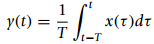
Show how to obtain the above differential equation and that y(t)is the solution of the differential equation.
(b) If x(t) = cos(πt) u(t), choose the value of Tin the averager so that the output y(t) = 0 in the steady state. Graphically show how this is possible for your choice of T. Is there a unique value for T that makes this possible? How does it relate to the frequency Ω0 = π of the sinusoid?
(c) Use the impulse response h(t) of the averager, to show using Laplace that the steady state is zero when x(t) = cos(Ï€t) u(t) and T is the above chosen value. Use MATLAB to solve the differential equation and to plot the response for the value of T you chose.
dy(t) dt Нко -в [x(t) – x(t – T)] У() T 1-т гр(1)x
Step by Step Solution
3.31 Rating (154 Votes )
There are 3 Steps involved in it
a The inputoutput equation for the analog averager is and its derivative is Likewise ... View full answer

Get step-by-step solutions from verified subject matter experts
 Study Help